

 English
 Español
 Deutsch
 中文简体
中文简体
Product Consultation
Your email address will not be published. Required fields are marked *
Multi-function Energy Meter: How to Choose the Right One for Billing and Monitoring
Sep 17,2026
Smart Meter FAQ (Part 2) | An Analysis of Communication, Accuracy, and Core Functions
Sep 11,2026
As the demand for AI computing power heats up, how is power management in data centers evolving?
Sep 11,2026Content
Ask any electrical contractor what they wish they had known before buying a multi-function energy meter, and the answer usually comes down to one thing: the meter itself is rarely the problem. The real challenge is matching its current input, communication interface, and certification to the installation. A multi-function energy meter is a single instrument that measures voltage, current, active and reactive power, frequency, power factor, and energy consumption in one DIN-rail or panel-mounted housing. The selection rule is simple: choose the connection architecture for your load first, then communication, then compliance.
A multi-function energy meter is not just a kWh counter; it is a compact power quality and energy monitoring device. In addition to active energy, it typically measures voltage, current, active power, reactive power, apparent power, power factor, and frequency. More advanced models also record demand, total harmonic distortion, and temporary events.
This capability matters because one meter can replace several analog instruments. For example, a single unit in a distribution board can provide all the data needed for tenant billing, energy audits, load monitoring, and basic power quality checks. The practical result is less panel space, lower installation cost, and a simpler spare-parts list for maintenance teams.
Inside the meter, voltage and current are scaled down to levels that an analog-to-digital converter can handle. In a direct-connected meter, the full load current flows through the device, usually up to 100 A. For larger loads, external current transformers or Rogowski coils provide isolation and scaling. The microcontroller then continuously samples voltage and current waveforms, calculates RMS values, phase angles, and derived power values, and updates the data on the display and communication ports.
This continuous calculation is why a multi-function meter can show real-time consumption one moment and historical demand values the next. The same core platform is used across product families, which is why you see one manufacturer offering similar DIN-rail meters with different communication options or accuracy classes.
Multi-function energy meters are not a single product category. They are organized by phase, mounting style, current input, and communication protocol. The main types you will meet are:
Choosing among these starts with the physical installation: where will the meter be mounted, what current range does the circuit require, and does the site need one measurement point or many?
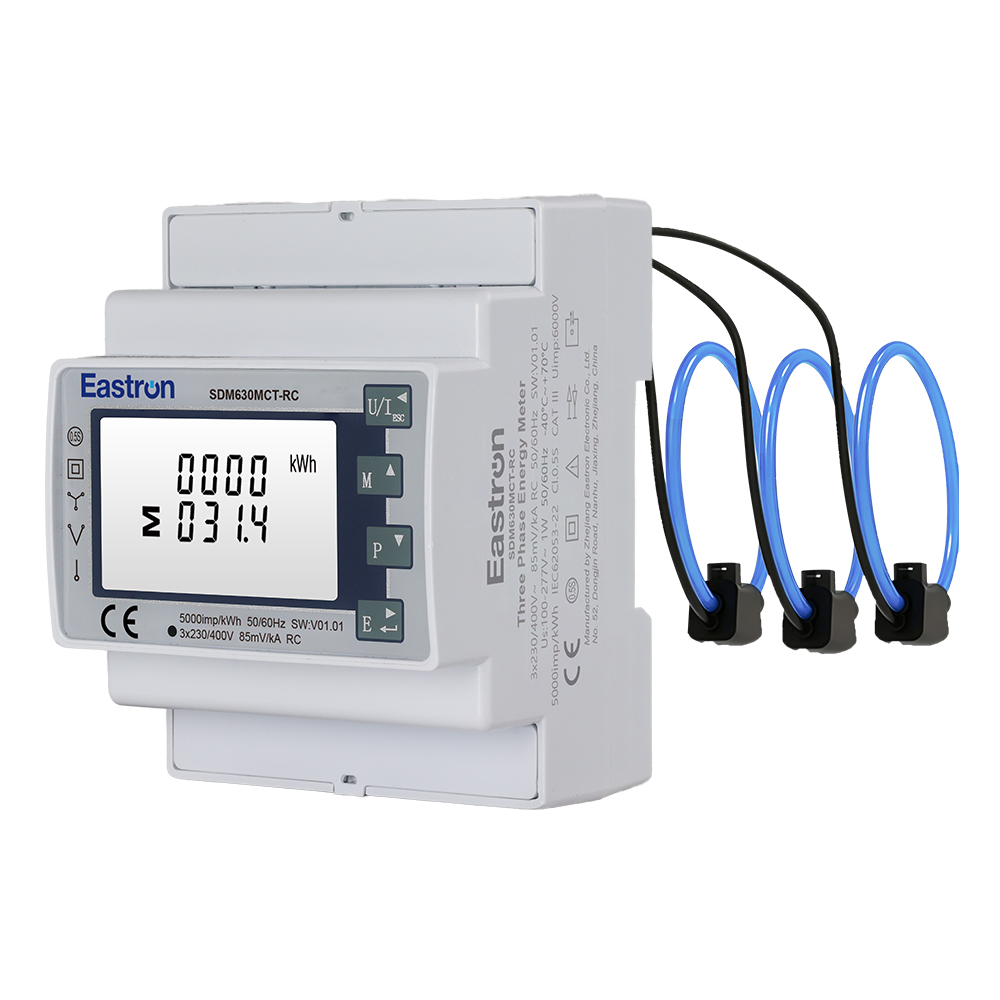
Your first decision is whether the meter will connect directly or through external current sensors. That choice determines the maximum current, the components you need, and the wiring effort on site. Direct connection is simple but limited to about 100 A. CT-operated meters can handle much larger loads while keeping the meter itself at a safe, standardized current level. Rogowski coils are flexible and easy to retrofit around existing busbars, but they need either an integral processor or a separate integrator.
| Connection | Typical current range | Best for |
|---|---|---|
| Direct | Up to 100 A | Small panels, residential loads, simple installations |
| CT operated | 5 A secondary from CTs rated at 50 A and above | Industrial feeders, large loads, sub-metering |
| Rogowski coil | Flexible, can handle thousands of amps | Retrofits, tight spaces, temporary monitoring |
After the current input, verify accuracy. Class 1 is adequate for general monitoring. Class 0.5S is expected for sub-billing and more precise measurement. For MID-approved fiscal metering, look for Class B or Class C. Then confirm the communication protocol: RS485 Modbus remains the most universal, but Ethernet, M-Bus, Wi-Fi, and LoRaWAN are all common in specific verticals. Finally, check certification, especially if the meter is used for billing or must meet a local electrical code.
EV charging stations need energy meters that support legal metrology where billing is involved. In Europe, MID approval is expected for public chargers, and Germany adds PTB/Eichrecht requirements for calibration. A three-phase meter with direct connection or CT input handles AC charging loads, while DC meters with shunt input are used in DC chargers. For example, an Eichrecht-approved three-phase multifunction energy meter for EV charging metering simplifies compliance by combining MID and Eichrecht approvals in a standard DIN-rail package.
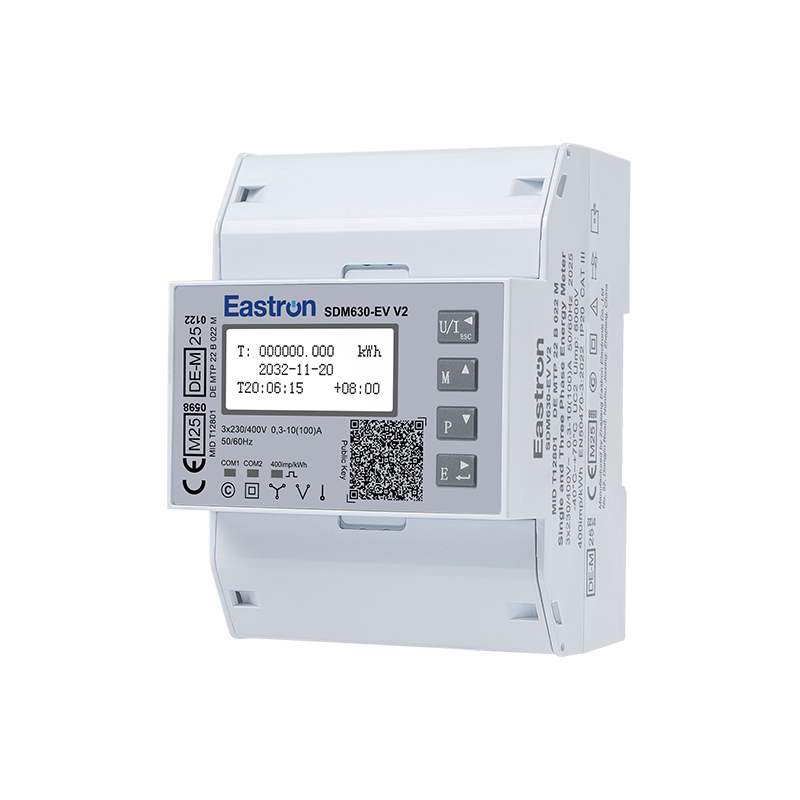 SDM630-EV V2 Eichrecht Approved Three Phase Multi-function Energy Meter for EV CEastron is China SDM630-EV V2 Eichrecht Approved Three Phase Multi-function Energy Meter for EV Charging Metering Manufacturers and Custo...View Product →
PV systems often use zero-export control to limit reverse power flow to the grid. This requires a meter that can report power and energy with low latency and support a communication protocol such as RS485 Modbus or Wi-Fi. The dual RS485 single-phase multifunction solar PV zero-export meter with 50 ms data update for VPP solutions is designed for this task, giving the inverter or charge controller enough speed to react to rapid changes in generation or load.
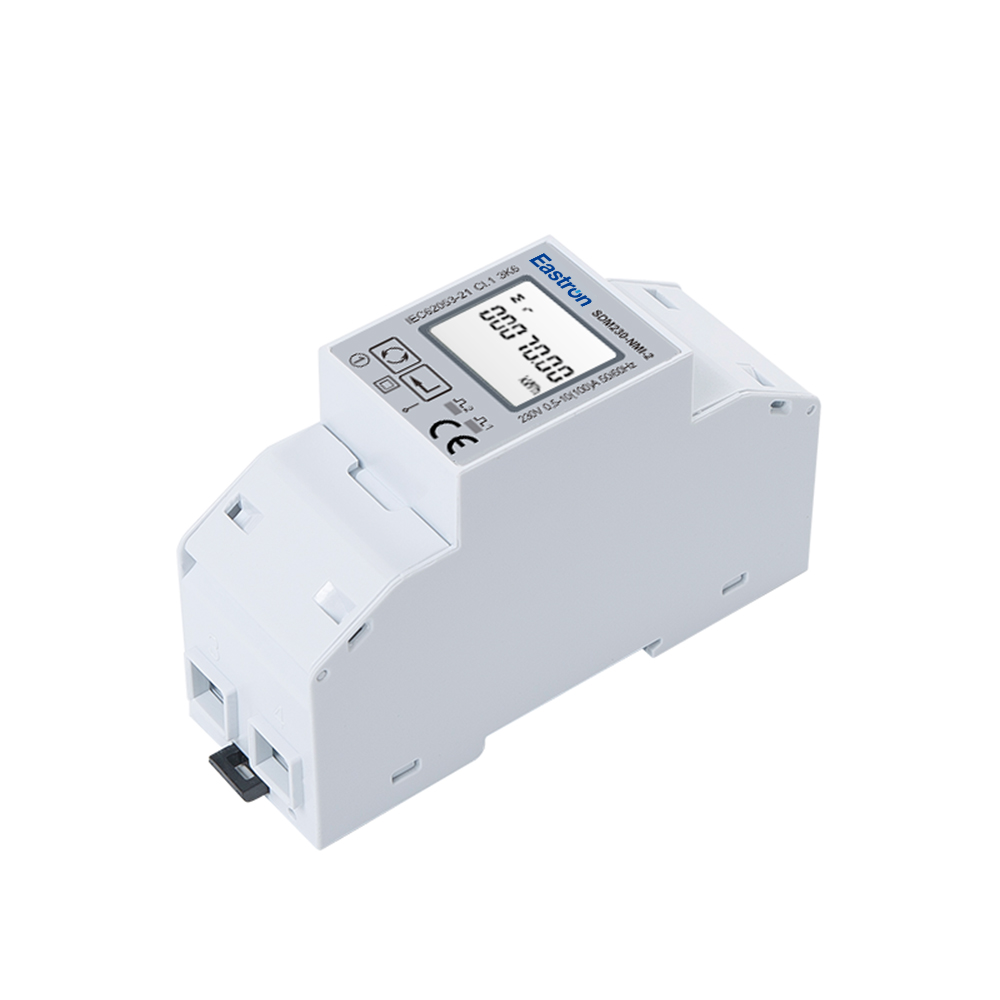 SDM230-NMI-2 Dual RS485 Din Rail Single Phase Multi-function Solar PV/Zero ExporEastron is China SDM230-NMI-2 Dual RS485 Din Rail Single Phase Multi-function Solar PV/Zero Export Meter with 50mS Data Update for VPP So...View Product →
Data centers monitor power at multiple points from the incoming feed down to individual racks. Instead of installing dozens of separate meters, a multi-circuit meter can measure several feeders from one unit. For racks and branch circuits, a CT- or Rogowski-coil-compatible three-phase multifunction power meter offers flexibility for retrofitting existing busbars because the flexible current coil can be wrapped around conductors without disconnecting them.
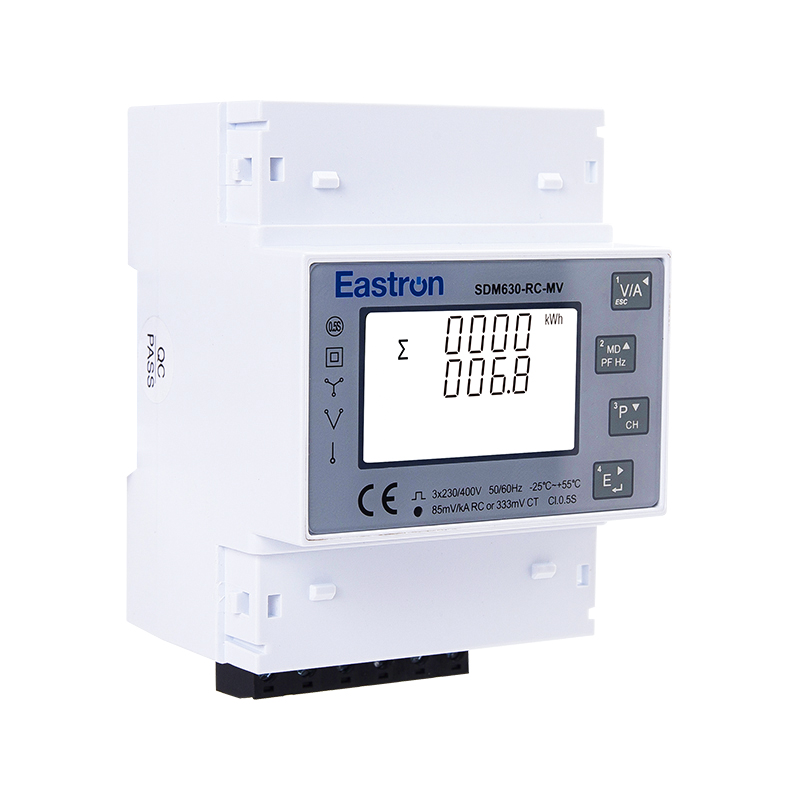 SDM630-RC-MV Din rail type three phase multi-function power meter, available forEastron is China SDM630-RC-MV Din rail type three phase multi-function power meter, available for CT or Rogowski coil connection Manufact...View Product →
A multi-function energy meter is most useful when its data can flow into a building management system, SCADA, solar controller, or billing platform. RS485 Modbus is the de facto standard for industrial and commercial meters because it is robust and noise-resistant. M-Bus is common in European sub-metering, Ethernet/Modbus TCP suits data centers, and wireless options such as Wi-Fi and LoRaWAN simplify retrofits without pulling new cables. Before buying, confirm that the meter protocol matches the gateway or controller you already use. Many suppliers publish detailed registers and user manuals; you can typically find these in the download center of the manufacturer's site.
Certification is not a marketing badge; it determines where the meter can be legally used. The Measuring Instruments Directive is required for billing in the European Union. UL or ETL listing is needed for North American installations where local codes require listed equipment. PTB/Eichrecht is specifically relevant to German EV charging applications, where billing accuracy is enforced by law. For industrial monitoring without fiscal billing, a Class 0.5S meter without MID may be sufficient and more affordable. In every case, verify the certificate number and the exact model listed in that certificate, not just the brand or series name.
Choosing a multi-function energy meter becomes manageable when you separate the decision into four layers: current input, accuracy class, communication interface, and compliance. If you work with an experienced meter manufacturer that covers the full spectrum, you can often get a single platform that scales from one small load to an entire building. Eastron, for example, manufactures DIN-rail and panel meters with RS485, M-Bus, Ethernet, Wi-Fi, and LoRaWAN, along with current sensors and gateways. More about their approach can be found on the about page. Start with the load profile and work outward; the right meter will then be obvious.
Your email address will not be published. Required fields are marked *

We develop and produce high performance electricity meters, power analyzers, current sensors, communication modules and management systems.
Address:NO. 52, Dongjin Road, Nanhu, Jiaxing, Zhejiang, China
Copyright @ Eastron Electronic Co., Ltd. All rights reserved
