

 English
 Español
 Deutsch
 中文简体

Product Consultation
Your email address will not be published. Required fields are marked *
Content
A 75mV shunt DC meter is really a pair of devices working together: a low-resistance shunt that drops 75 millivolts at its rated current, and a meter that knows how to read that small voltage. The shunt carries the heavy current. The meter turns the millivolt signal into amps, kilowatts, and kilowatt-hours. When the two are matched properly, a 100A/75mV shunt can deliver stable DC current data in chargers, battery cabinets, and solar DC circuits. When they are not, the reading can drift, sit low, or become noisy exactly when the system is working hardest.
This guide is written from the practical side of DC metering: selecting the shunt, checking the meter input, wiring the sense leads, and avoiding the small installation mistakes that turn a good measurement into a puzzling one. You can read more about our engineering and manufacturing background if you want context on how these products are built and supported.
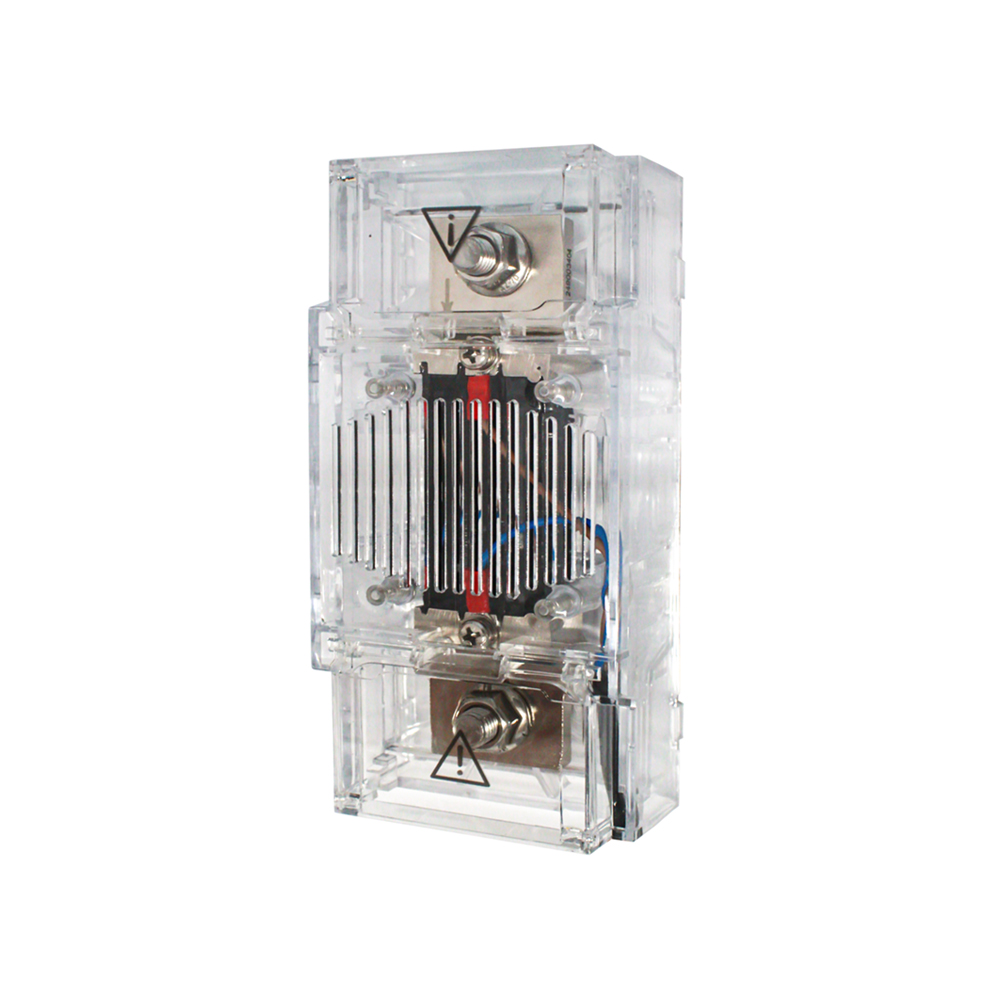
A shunt is a calibrated resistor. At its rated current, it produces a defined voltage drop, in this case 75mV. A 100A/75mV shunt therefore has a resistance of 0.00075 ohm, or 0.75 milliohm. At 50A it produces 37.5mV; at 100A it produces 75mV. The meter does not measure current directly. It measures the voltage across the shunt and applies the programmed shunt ratio.
That ratio matters. If the meter expects a 50mV shunt but is connected to a 75mV shunt, the same current will produce a higher voltage than the meter expects, and the current reading will be too high. At 50A, a meter set for 50mV at 100A will read about 75A when connected to a 75mV shunt. The error is not a small trim issue; it changes the scale of every amp, kilowatt, and kilowatt-hour value.
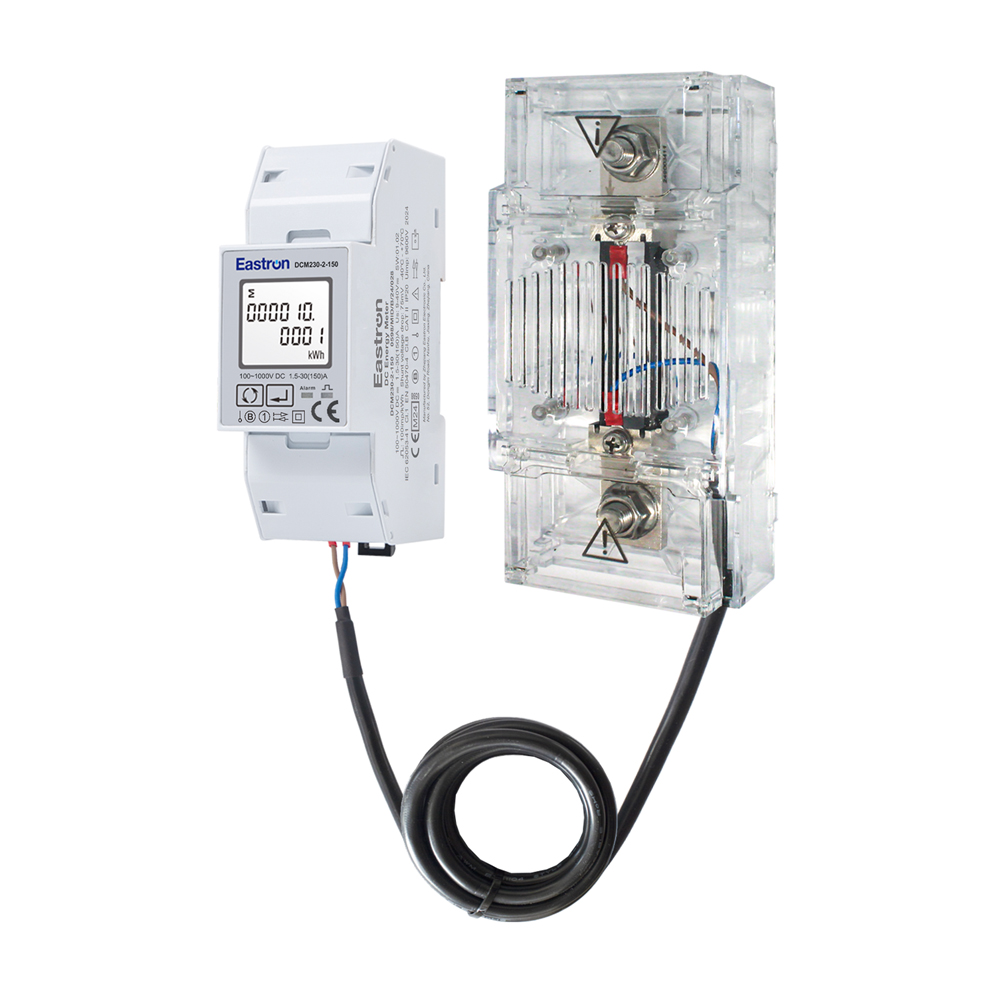
 Eastron DCM230-2-400 400A Shunt-Input DC Energy MeterA 400A DIN-rail DC meter for EV charging, with 75mV shunt input, Modbus RTU and MID approval for documented DC energy measurement.View Product →
For EV charging projects, a meter designed around a 75mV shunt input and 150A to 600A options removes one calibration step from the build. It also makes the current path easier to document, because the shunt ratio and meter scaling are treated as one measurement system.
Before ordering, confirm four things: the shunt rated current, the shunt full-scale output, the meter input range, and the meter scaling method. A meter may have a fixed 75mV input, a selectable 50/75/100mV input, or a fully programmable ratio. Fixed inputs are simple and less prone to configuration errors. Programmable inputs are flexible but need a commissioning check.
Eastron DCM230-2-400 DIN-Rail DC Meter with ModbusA DIN-rail 400A DC energy meter with fixed 75mV shunt input and RS485 Modbus RTU, suited to EV charging cabinet measurement.View Product →
In cabinet builds, a DIN-rail DC meter with a DC shunt input and RS485 Modbus or DLT645 communication can be a practical starting point. The key is not the housing style; it is whether the input range, scaling, and isolation suit the shunt and the DC system around it.
Shunt resistance falls as rated current rises, so the full-scale power loss rises with current. The table below uses the simple relationship R = 75mV / rated current and P = rated current x 75mV. It is a useful first check for heat, enclosure ventilation, and terminal sizing.
| Rated current | Shunt resistance | Power at full scale | Typical use |
|---|---|---|---|
| 100A | 0.75 mOhm | 7.5W | Small DC chargers, battery test benches |
| 200A | 0.375 mOhm | 15W | 20 to 30kW DC chargers |
| 300A | 0.25 mOhm | 22.5W | 50 to 60kW charging modules |
| 400A | 0.1875 mOhm | 30W | 80 to 120kW charger branches |
| 600A | 0.125 mOhm | 45W | High-power charging and busbar sections |
These figures are full-scale values. A shunt running at half current dissipates one quarter of the full-scale power, which is why partial-load operation can look comfortable while a long full-load test still overheats a poorly ventilated enclosure.
Most DC metering problems we see are not caused by the shunt or the meter alone. They come from the voltage sense path. A shunt has large current terminals and separate small sense terminals for a reason. Use the sense terminals, keep the leads short, and treat them as a signal circuit rather than a power circuit.
Also check the meter supply and communication wiring. A meter that shares a supply with noisy contactors may communicate well on the bench and poorly in the cabinet. Separation, filtering, and proper earthing are part of the measurement, not an afterthought.
At the same rated current, a 50mV shunt has two-thirds the resistance and two-thirds the power loss of a 75mV shunt. That can matter in sealed enclosures or high-current racks. A 75mV shunt produces a larger signal, which can be helpful when sense leads are longer, when the meter input has limited resolution, or when electrical noise is present. Neither is automatically better. The meter input and the system conditions decide.
Choose 75mV when the meter is designed for it, when the signal needs more margin against noise, or when the existing product family and spares are built around 75mV shunts. It is also a common choice in DC charger metering where the shunt and meter are supplied as a matched pair.
Choose 50mV when heat is tight, when the meter supports selectable inputs, and when the lower full-scale loss is more valuable than the larger signal. Do not swap a 50mV shunt for a 75mV unit unless the meter scaling is changed and the installation is rechecked. The terminals may fit, but the numbers will not.
For DC EV charging, the meter usually needs a wide DC voltage range, a shunt input that matches the chosen 150A to 600A shunt, and communication that the charger controller can use. Billing-related projects may also need the applicable metering approval for the market. It is worth confirming the approval scope, not just the product title.
For battery, photovoltaic, and telecom DC systems, the current may be lower but the duty cycle can be continuous. Look at the shunt's continuous rating, the meter's input range, and whether bidirectional measurement is needed for charge and discharge. A meter that reads only one direction can miss energy flowing back during testing or regeneration.
For data center and industrial DC distribution, isolation and communication stability matter as much as accuracy. Confirm the meter's supply arrangement, the common-mode voltage, and the protocol details before the panel is drilled. A 75mV shunt DC meter is a small part of the build, but it sits directly in the current path, so it deserves a proper specification review.
Datasheets, manuals, and protocol documents help here. Our download library is the place to confirm terminal details, register maps, and version-specific behavior before you freeze a design.
If you are replacing an existing shunt, measure the old installation before ordering. Record the shunt label, the meter setting, and a known-load reading. That small record often explains why a new meter reads differently from the one it replaced.
A reliable 75mV shunt DC meter is not the most complicated part of a DC system, but it is one of the easiest places to introduce a scale error. Match the shunt output to the meter input, use four-wire sensing, respect heat and torque, and commission with a known load. Do those things and the millivolt signal becomes what it should be: a quiet, repeatable basis for current, power, and energy data.
Your email address will not be published. Required fields are marked *

We develop and produce high performance electricity meters, power analyzers, current sensors, communication modules and management systems.
Address:NO. 52, Dongjin Road, Nanhu, Jiaxing, Zhejiang, China
Copyright @ Eastron Electronic Co., Ltd. All rights reserved
