

 English
 Español
 Deutsch
 中文简体
中文简体
Product Consultation
Your email address will not be published. Required fields are marked *
Content
A single phase MID energy meter is an electricity metering device designed for residential and light commercial applications that comply with the Measuring Instruments Directive (MID), a European regulatory framework governing the accuracy and legal use of measuring instruments. MID certification ensures that a meter has undergone rigorous testing and meets standardized accuracy requirements, making it legally acceptable for billing purposes across European Union member states and other regions that recognize the directive.
Unlike non-certified meters that may be used for general monitoring purposes, MID-certified meters carry legal weight in commercial transactions, tenant billing, and utility applications where accurate, verifiable energy consumption data is required. Single phase versions specifically measure electricity usage in standard household circuits, which typically operate on a single alternating current phase rather than the three-phase systems used in industrial settings.
MID certification serves as a quality assurance benchmark that protects both consumers and energy providers from inaccurate billing. Without this certification, there is no guaranteed standard ensuring that a meter's readings reflect actual energy consumption within an acceptable margin of error. This becomes particularly important in scenarios involving submetering, such as landlords billing tenants for individual electricity usage, or businesses tracking energy costs across multiple units within a shared building.
The certification process involves rigorous type testing, production quality assessments, and periodic verification to confirm that meters maintain their accuracy over time. Meters bearing the MID mark, along with the notified body number responsible for certification, provide documented proof of compliance that can be referenced in legal or contractual disputes involving energy billing accuracy.
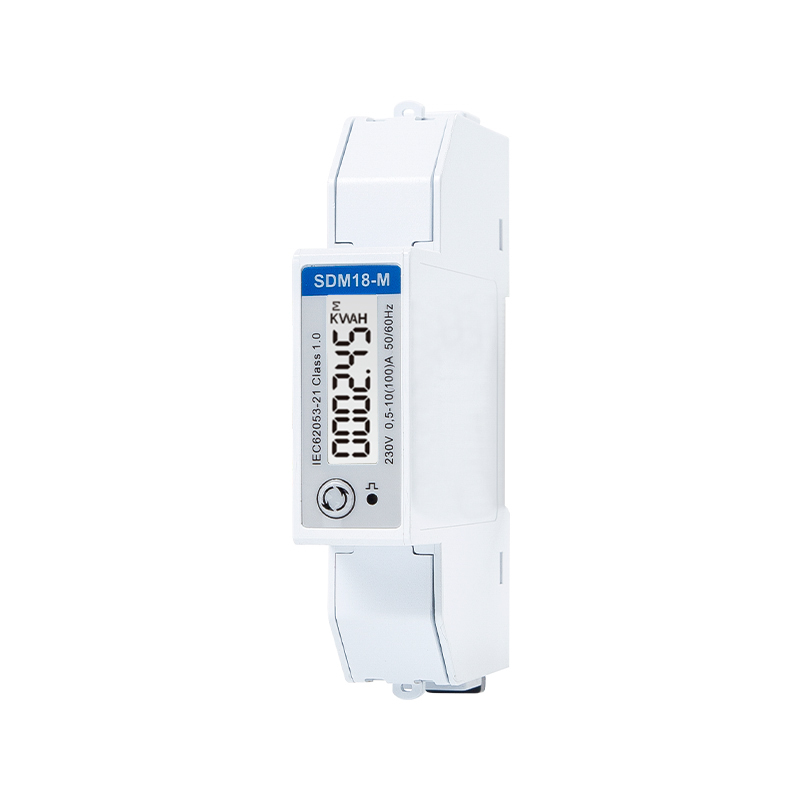
When selecting a single phase MID energy meter, several technical specifications directly influence its suitability for a given application. Understanding these parameters helps ensure the meter matches the electrical characteristics of the installation.
Single phase MID energy meters generally use one of two primary measurement technologies, each with distinct advantages depending on the application and budget considerations.
| Technology | Measurement Method | Typical Use Case |
| Electromechanical | Rotating disc mechanism | Legacy installations, lower cost |
| Static (Digital) | Electronic sensors and microprocessors | Modern residential and submetering |
| Smart Meter | Digital with remote communication | Utility-grade billing, remote monitoring |
Static meters have largely replaced electromechanical models due to their superior accuracy, longer lifespan, and ability to support advanced features such as remote reading and time-of-use billing. Because they lack moving mechanical parts, static meters experience less wear over time, resulting in more consistent measurement accuracy throughout their operational life.
Single phase MID energy meters serve a variety of practical purposes across residential, commercial, and utility contexts. Their certified accuracy makes them suitable wherever legally defensible billing is required.
Proper installation directly affects the accuracy and reliability of a single phase MID energy meter. While installation should always be performed by a qualified electrician familiar with local wiring regulations, understanding key considerations helps ensure a successful setup.
The meter should be mounted in a location protected from excessive moisture, direct sunlight, and extreme temperature fluctuations, as these conditions can affect long-term accuracy and component lifespan. Wiring connections must be secure and properly torqued according to manufacturer specifications, since loose connections can cause measurement errors or, in severe cases, overheating at the terminal points. It is also essential to verify that the current transformer or direct connection rating matches the expected load to avoid exceeding the meter's rated capacity.
MID-certified meters typically include physical seals on the terminal cover and casing to prevent unauthorized tampering. Breaking these seals without proper authorization can void the meter's certification and may have legal implications in billing disputes, so installers and property owners should be aware of seal integrity requirements before performing any maintenance.
Although single phase MID energy meters generally require minimal maintenance compared to older mechanical models, periodic verification helps ensure continued compliance with accuracy standards. Depending on regional regulations, meters may require recalibration or replacement after a specified service period, often ranging from ten to fifteen years for static meters.
Routine visual inspections can help identify potential issues such as display malfunctions, damaged seals, or loose wiring connections. If a meter's readings appear inconsistent with expected consumption patterns, arranging for professional testing can confirm whether recalibration or replacement is necessary. Keeping records of installation dates and any maintenance activities also supports compliance documentation.
Selecting an appropriate single phase MID energy meter involves balancing technical requirements with practical considerations such as budget, communication needs, and long-term reliability. For straightforward residential billing, a basic static meter with local display functionality may suffice. However, applications requiring remote monitoring, integration with building management systems, or detailed consumption analytics benefit from meters equipped with communication modules such as RS485 or M-Bus interfaces.
It is also worth verifying that the chosen meter's certification remains valid and that the manufacturer provides adequate documentation and support. Working with reputable suppliers who offer clear technical specifications and compliance certificates helps ensure that the metering solution will meet both current needs and future regulatory requirements.
Your email address will not be published. Required fields are marked *

We develop and produce high performance electricity meters, power analyzers, current sensors, communication modules and management systems.
Address:NO. 52, Dongjin Road, Nanhu, Jiaxing, Zhejiang, China
Copyright @ Eastron Electronic Co., Ltd. All rights reserved
