

 English
 Español
 Deutsch
 中文简体
中文简体
Product Consultation
Your email address will not be published. Required fields are marked *
Content
A multi-function energy meter is a measuring device that tracks multiple electrical parameters simultaneously, going far beyond the simple kilowatt-hour readings provided by traditional meters. In addition to energy consumption, these meters typically measure voltage, current, power factor, frequency, active and reactive power, and in many cases, harmonic distortion. This makes them valuable tools for facility managers, electrical engineers, and building owners who need detailed visibility into how electricity is being used across a system, not just how much is being consumed.
Unlike basic meters that serve primarily as billing devices, multi-function energy meters are often used for power quality monitoring, load analysis, energy auditing, and equipment diagnostics. Because they can reveal issues like voltage imbalance, poor power factor, or unusual harmonic content, they play an important role in identifying inefficiencies and preventing equipment damage before it becomes a costly problem.
Understanding what a multi-function meter actually measures helps clarify why it offers so much more value than a standard utility meter. The table below summarizes the core parameters found in most multi-function models.
| Parameter | What It Reveals |
| Voltage (V) | Line voltage levels across each phase, useful for detecting sags or surges |
| Current (A) | Actual current draw, helping identify overloaded circuits |
| Active Power (kW) | Real power being consumed to do useful work |
| Reactive Power (kVAR) | Power used to maintain magnetic fields in motors and transformers |
| Power Factor | Efficiency of power usage; low values indicate wasted energy |
| Frequency (Hz) | Stability of the electrical supply, typically 50Hz or 60Hz |
Multi-function meters come in several configurations designed for different installation environments and monitoring needs.
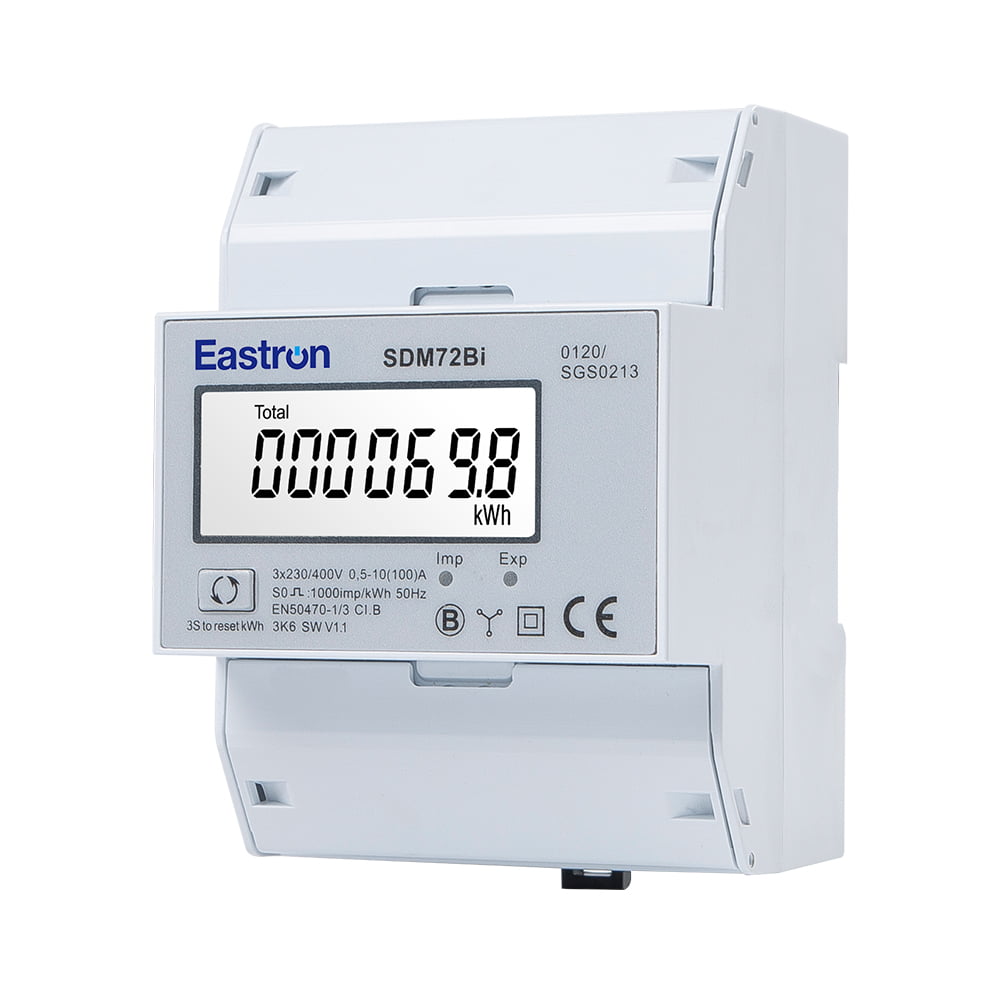
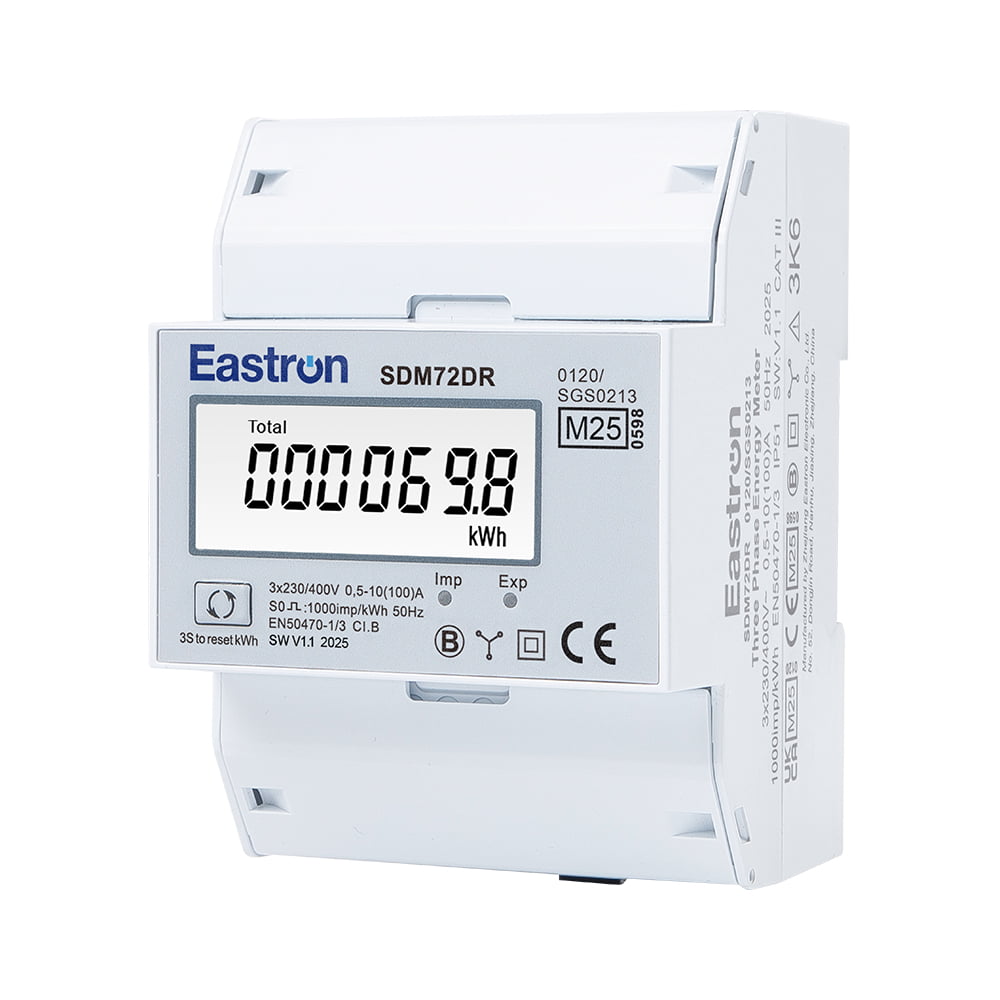
Panel-mounted meters are installed directly into electrical panels or switchboards, providing a local digital display for on-site readings. These are commonly used in industrial facilities and commercial buildings where personnel need quick, direct access to real-time electrical data without connecting to a separate monitoring system.
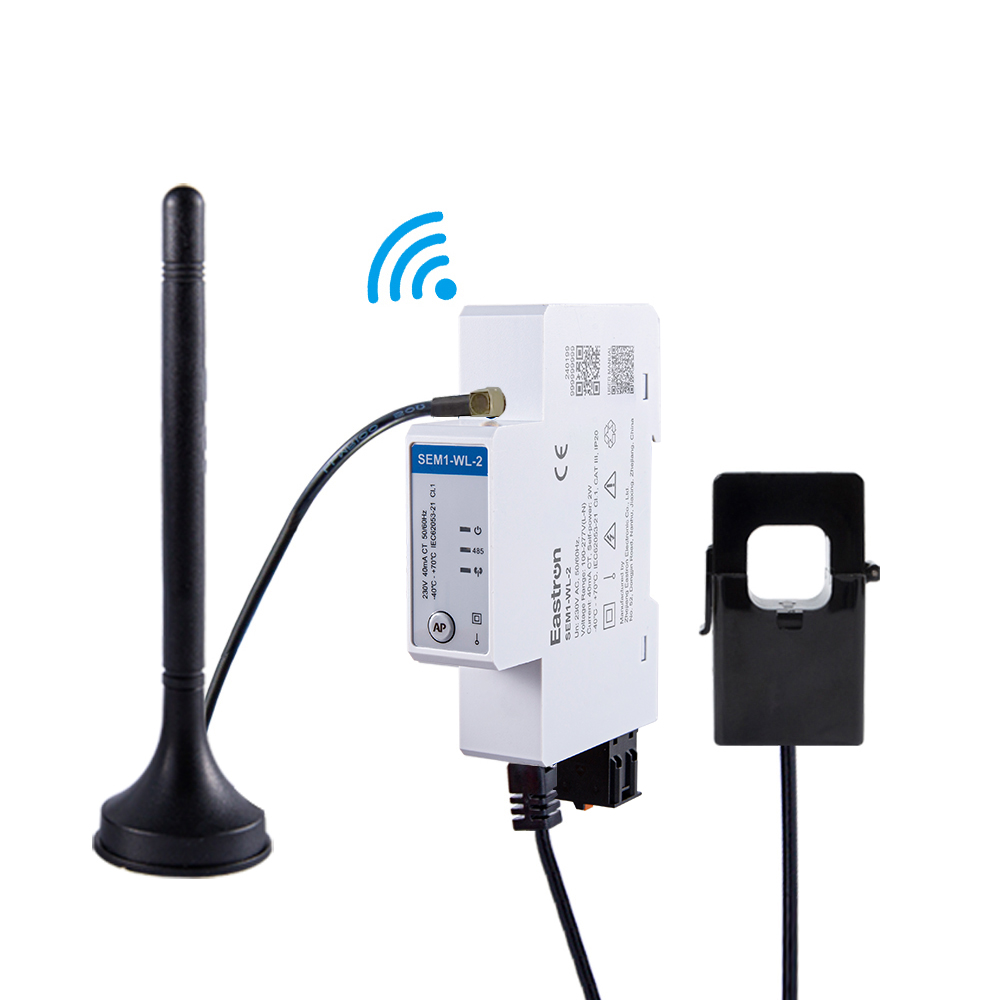
DIN rail meters are compact units designed to mount on standard DIN rails inside distribution boards, making them a popular choice for submetering individual circuits, tenant spaces, or specific equipment loads within a larger building.
Networked meters include communication protocols such as Modbus, BACnet, or Ethernet connectivity, allowing data to be transmitted to a centralized building management system or cloud-based monitoring platform. These are increasingly common in facilities pursuing detailed energy analytics or automated demand response programs.
Multi-function energy meters are used across a wide range of settings where detailed electrical visibility supports better operational decisions.
Two of the most valuable insights a multi-function meter provides are power factor and harmonic distortion readings, both of which have direct financial and operational implications. A low power factor means electrical equipment is drawing more current than necessary to perform the same amount of useful work, which can result in higher utility charges in facilities billed under power factor penalty structures, as well as increased strain on wiring and transformers.
Harmonic distortion, often caused by nonlinear loads like variable frequency drives, LED lighting, or computer equipment, can lead to overheating in transformers and motors, nuisance tripping of protective devices, and reduced equipment lifespan if left unaddressed. By continuously monitoring these parameters, a multi-function meter allows facility teams to identify problems early and take corrective action, such as installing power factor correction capacitors or harmonic filters, before equipment failures occur.
Selecting a multi-function energy meter starts with identifying what level of detail and connectivity the application actually requires. For simple submetering of individual circuits or tenant spaces, a basic DIN rail meter with standard parameter tracking is often sufficient. For facilities that need centralized monitoring across multiple points, a networked meter with Modbus or BACnet communication allows integration into a larger building management or energy monitoring platform.
Accuracy class is another important consideration, particularly for meters used in billing or cost-allocation applications. Meters are typically rated according to accuracy classes such as Class 0.5S or Class 1, with lower class numbers indicating higher measurement precision. Facilities using meter data for revenue billing purposes should confirm the meter meets the accuracy requirements set by local utility or regulatory standards.
Proper installation is critical to getting accurate readings from a multi-function energy meter. Current transformers (CTs) used alongside the meter must be correctly sized and oriented, since improperly installed CTs are one of the most common sources of measurement error in energy monitoring systems. Voltage connections should also be verified against the correct phase sequence to avoid inaccurate power and power factor calculations.
Periodic calibration checks, especially for meters used in billing-critical applications, help maintain long-term measurement accuracy. Many facilities schedule calibration verification annually or in accordance with local regulatory requirements, ensuring that the data being used for cost allocation, energy audits, or compliance reporting remains reliable over the meter's operational life.
Your email address will not be published. Required fields are marked *

We develop and produce high performance electricity meters, power analyzers, current sensors, communication modules and management systems.
Address:NO. 52, Dongjin Road, Nanhu, Jiaxing, Zhejiang, China
Copyright @ Eastron Electronic Co., Ltd. All rights reserved
