

 English
 Español
 Deutsch
 中文简体
中文简体
Product Consultation
Your email address will not be published. Required fields are marked *
UL and ETL Listed Energy Meters: Safety Certification, Applications, and Buying Guide
Sep 21,2026
Smart Meter FAQ (Part 3) | Certification, Installation, and Procurement: Addressing 5 Practical Application Issues
Sep 20,2026
National Quality Month | A Look Inside Eastron Electronic: Quality Embedded in Every Stage
Sep 20,2026Content
An ETL or UL energy meter is not just a compliance badge. In commercial, industrial, and utility-connected installations across North America, the absence of one can stop an electrical inspection, delay commissioning, or void an insurance claim. The conclusion is simple: if the meter will be permanently mounted to measure power for billing, safety monitoring, or load management, it should carry a listing mark from a Nationally Recognized Testing Laboratory (NRTL).
This article explains what ETL/UL certification actually means for energy meters, where it matters most, and how to select a certified model without overbuying.
UL Solutions and Intertek's ETL mark are both OSHA-recognized NRTLs. A "UL Listed" or "ETL Listed" label means an independent laboratory tested the product against applicable UL and ANSI safety standards. Those standards cover shock protection, dielectric strength, temperature rise, enclosure flammability, and conductor spacing.
The practical difference between UL and ETL is smaller than many specifiers think. UL develops many of the standards and also performs testing. ETL tests to the same UL and ANSI standards. For most electrical inspectors, either mark is acceptable for the same application. If your project also needs Canadian approval, look for cUL or cETL, which indicates compliance with the corresponding Canadian standards.
One point matters more than the logo: the listing must apply to the exact model number you are buying. A mark on the factory or a similar product is not enough. The meter's nameplate and the certificate should reference the same part number, voltage range, and current rating.
In short, any installation that falls under the National Electrical Code can trigger a requirement for listed equipment. Common situations include:
In each case, the meter is part of the permanent wiring system. An electrical inspector will likely look for a listing mark that matches the model on the data sheet. Even in unregulated retrofit jobs, many insurance policies and facility standards now require NRTL-certified components, so skipping the mark can create problems beyond the initial inspection.
The certification is the entry ticket. Once you have confirmed that a meter is listed, the real work is matching the electrical and communication characteristics to your site. The table below summarizes the questions that come up most often during meter selection.
| Parameter | Typical Options | What to Verify |
|---|---|---|
| Phase configuration | Single-phase, three-phase | Check nominal voltage: 120/240V, 208V, 480V, or 277/480V. |
| Current input | Direct up to 100A, CT-operated | Confirm CT output, burden, and whether the meter supports 5A or 1A secondary. |
| Mounting | DIN rail, panel mount | Measure enclosure space and module width before ordering. |
| Communication | Pulse, RS485 Modbus, M-Bus, Wi-Fi, Ethernet | Match protocol, baud rate, and register map to your controller or gateway. |
| Tariff and functions | Multi-tariff, bidirectional, demand | Determine whether you need TOU billing, reverse energy metering, or alarm outputs. |
If you are replacing an existing meter, also check the data sheet for wire gauge, terminal torque, and whether the meter needs auxiliary power. These details are easy to overlook but cause most field problems.
Eastron offers a documented UL/ETL certified portfolio of DIN rail energy meters, with variants for direct connection and current transformers. The series is designed for OEMs, panel builders, and facility teams that want one supplier for both single-phase and three-phase metering.
For single-phase branch circuits and EV wallboxes, a compact meter with pulse output is often enough. The UL-listed single-phase DIN rail meter covers straightforward kWh measurement and can be wired into a PLC or building controller. It fits neatly into a distribution board without taking up excess space.
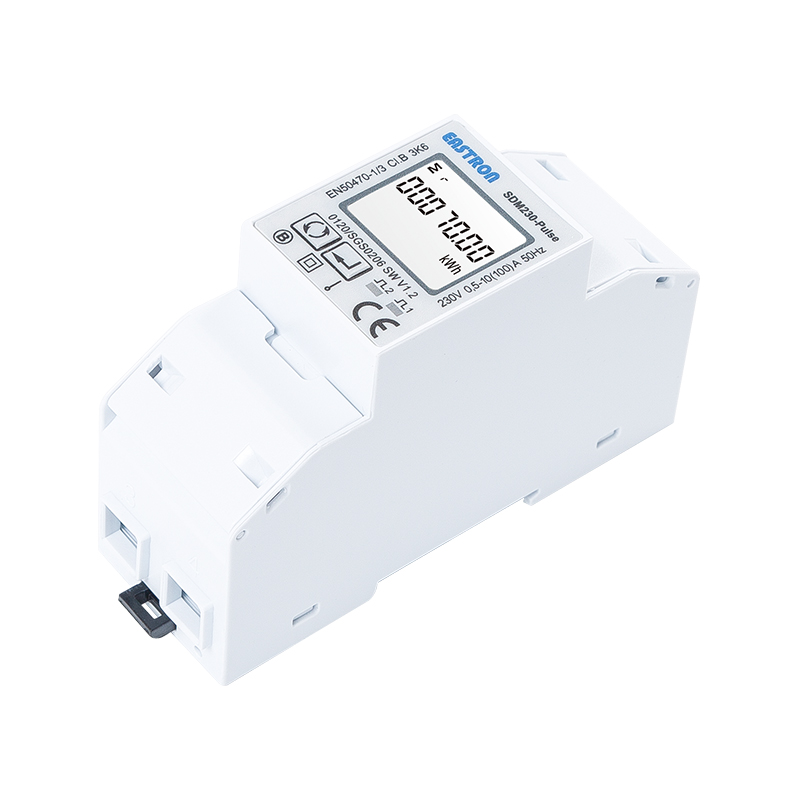 SDM230-P Pulse Output Din Rail Multi-functional Single Phase UL Energy Meter ManEastron is China SDM230-P Pulse Output Din Rail Multi-functional Single Phase UL Energy Meter Manufacturers and Custom Suppliers, Factory...View Product →
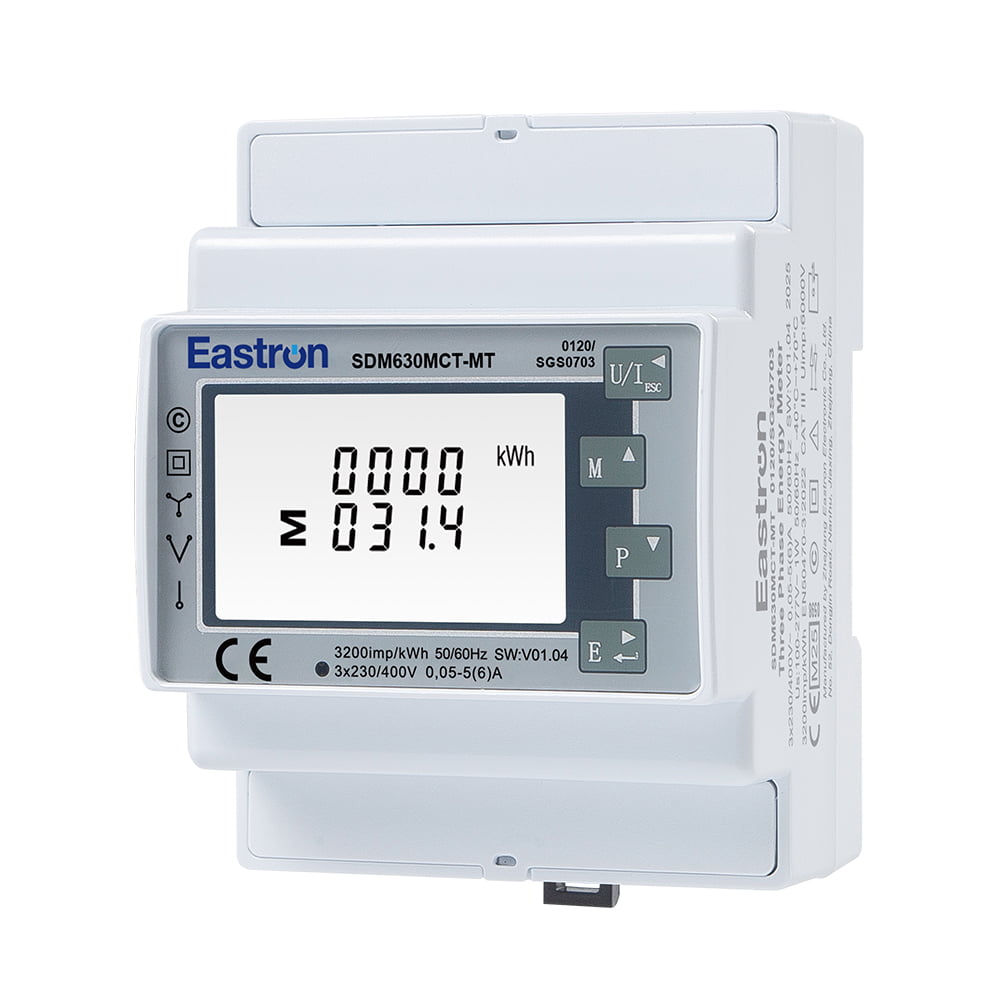
For three-phase feeders, subpanels, and solar PV sites, a CT-operated model makes it easier to size the installation. The three-phase UL meter with CT input and RS485 Modbus gives you remote reading and lets you choose CTs based on the actual load rather than running the full service through the meter.
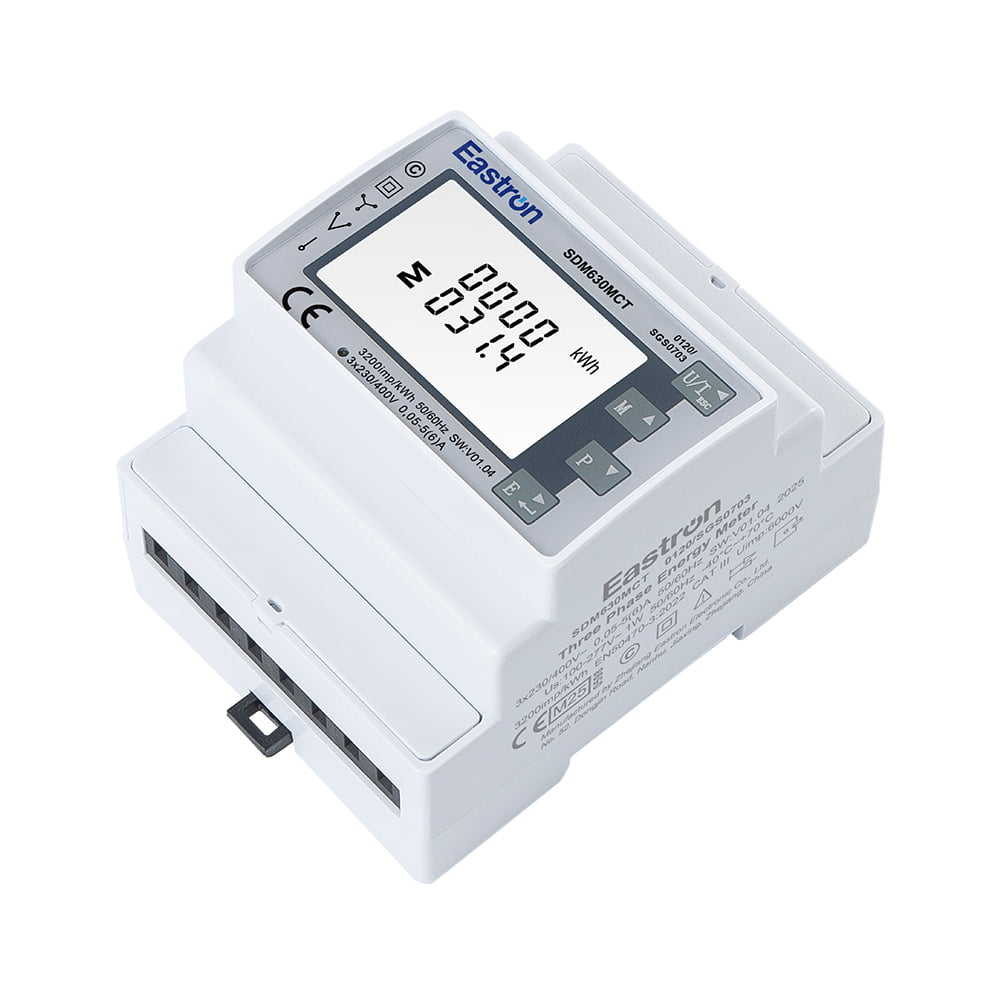 SDM630MCT CT Operated RS485 Modbus Din Rail Three Phase UL Energy Meter ManufactEastron is China SDM630MCT CT Operated RS485 Modbus Din Rail Three Phase UL Energy Meter Manufacturers and Custom Suppliers, Factory, SD...View Product →
Charging networks face their own set of requirements, especially when a utility program needs interval data. Eastron's ETL-approved single-phase meter for EV charging supports multi-tariff setup and digital communication, making it a practical fit for AC chargers sold into North America.
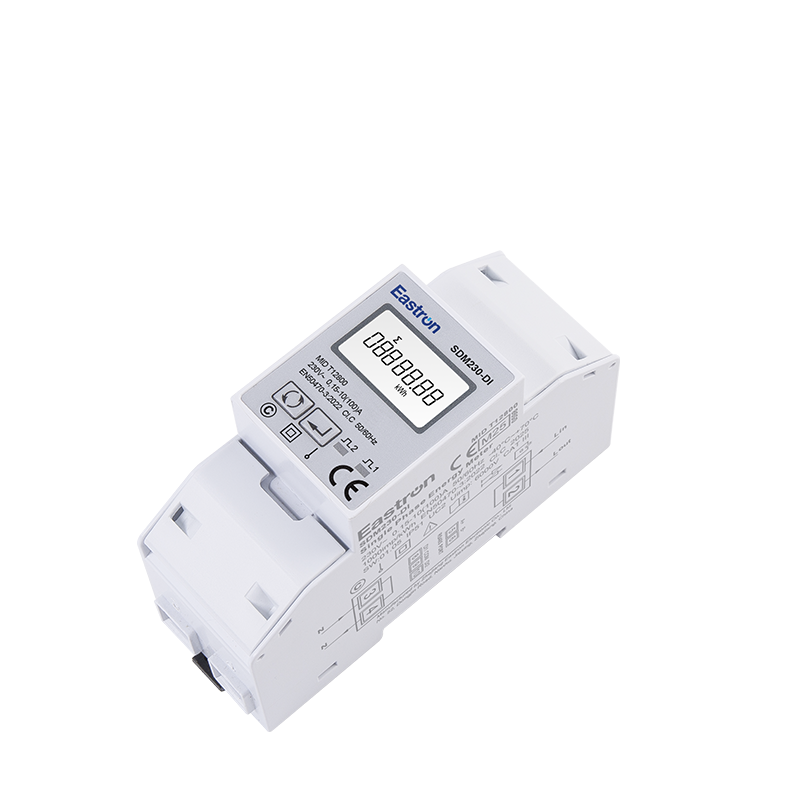 SDM230-DI MID/ UL Approved Single Phase Din Rail Type Multi-function Energy MeteEastron is China SDM230-DI MID/ UL Approved Single Phase Din Rail Type Multi-function Energy Meter for EV Charging Metering Manufacturers...View Product →
This family shares similar terminal layouts and wiring conventions, so an engineering team can qualify one platform and then extend it to other projects by changing only the CT ratio or communication module.
A listing mark is only as useful as the paper behind it. Reputable suppliers publish current data sheets and can provide the certificate on request. Eastron keeps the latest product documentation in its download center, so installers can review wiring diagrams, dimensions, and protocol notes before starting work.
During installation, respect the torque spec on the terminal screws, keep CT secondaries shorted until the circuit is connected, and verify phase rotation on three-phase units. These steps may sound basic, but they cause the majority of commissioning failures we see in metering projects.
If you are still comparing meter families, our guide to choosing the right energy meter covers the communication and accuracy trade-offs in more depth.
No matter which certification mark you prefer, the practical goal is the same: a meter that will pass inspection, survive in the field, and give you data you can trust. Start with the application requirements, then match the connection type, communication interface, and housing. Once the shortlist is down to ETL/UL listed meters, ask the supplier to confirm the listing status for each part number. That step alone can save you a costly rework.
Your email address will not be published. Required fields are marked *

We develop and produce high performance electricity meters, power analyzers, current sensors, communication modules and management systems.
Address:NO. 52, Dongjin Road, Nanhu, Jiaxing, Zhejiang, China
Copyright @ Eastron Electronic Co., Ltd. All rights reserved
