

 English
 Español
 Deutsch
 中文简体
中文简体
Product Consultation
Your email address will not be published. Required fields are marked *
Content
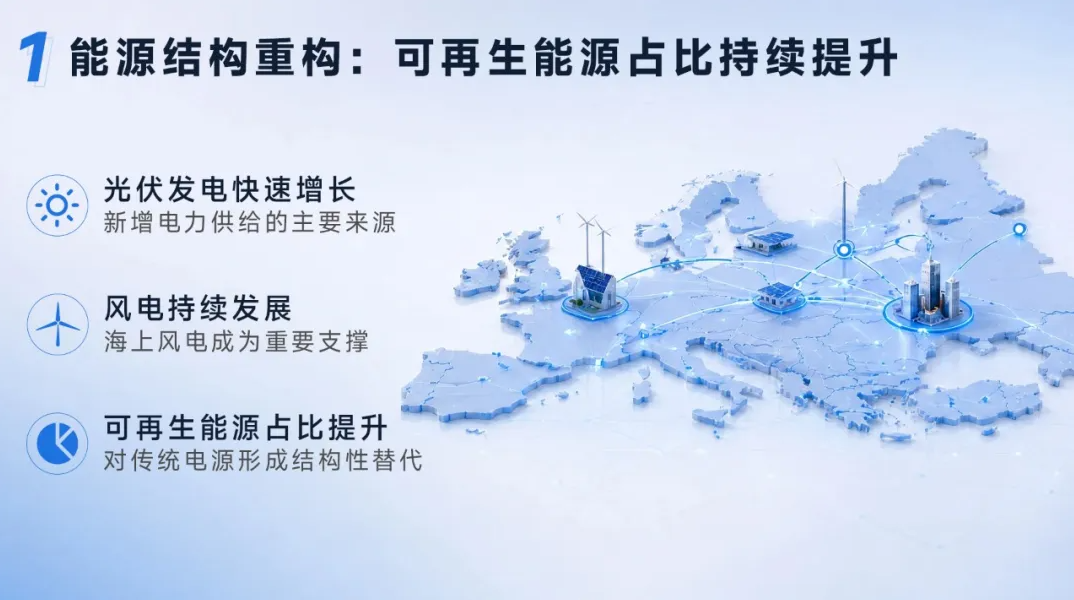
According to research from the IEA’s Electricity 2026 and Ember’s European Electricity Review, the European power system is steadily evolving toward a structure characterized by a high share of renewable energy.
Solar PV and wind power account for an increasing proportion of new electricity supply and are gradually becoming the primary drivers of growth within the power system. In several European markets, renewable energy has already structurally displaced traditional power sources during specific periods, necessitating adjustments to power system operations.
This shift extends beyond the energy mix itself; it is reshaping how the power system operates, driving a transition from a traditional centralized supply model to a distributed energy system.
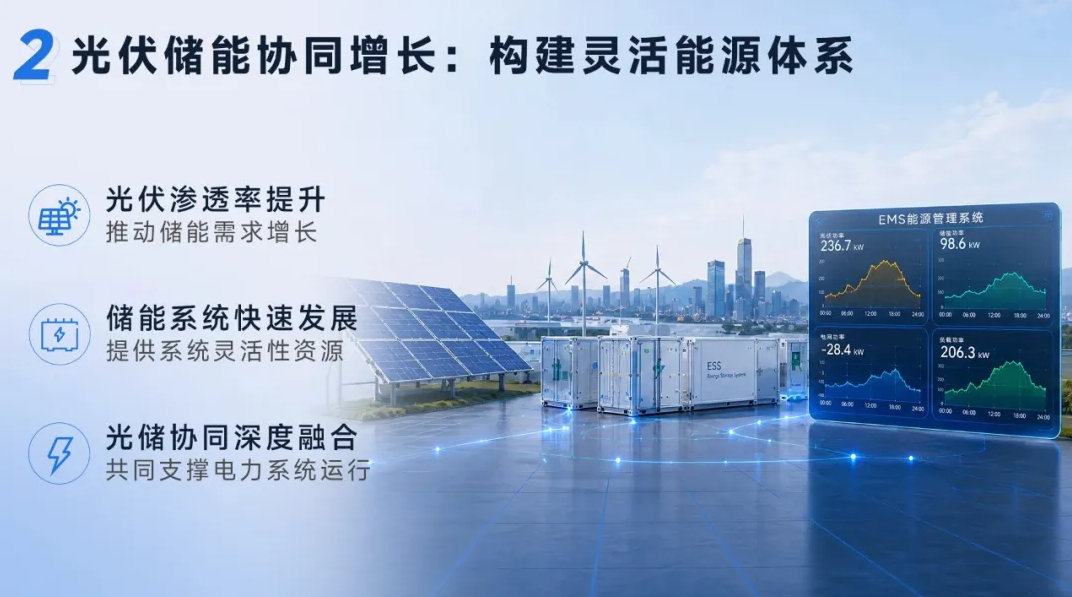
According to SolarPower Europe’s EU Battery Storage Market Outlook and related studies, the European energy storage market has experienced rapid growth in recent years, emerging as one of the most dynamic sectors in the energy transition.
There is a clear synergistic relationship between the growth of energy storage and rising PV penetration. As installed PV capacity expands, the power system’s demand for flexibility resources rises in tandem, causing energy storage to evolve from a supplementary resource into a critical component of power system operations.
The relationship between PV and energy storage is shifting from a simple “generation plus supplement” combination to an integrated system characterized by the coordinated operation of generation, storage, dispatch, and consumption.
As the share of renewable energy continues to rise, the operational characteristics of the European power system are changing.
In regions with high PV penetration, electricity supply has become increasingly concentrated in time, while electricity demand remains relatively stable, resulting in structural supply-demand mismatches during specific periods. This shift is reflected in power market prices; some markets have experienced significant price drops—or even negative prices—during periods of peak PV generation.
Simultaneously, the large-scale integration of distributed energy resources has complicated energy flows within distribution networks. The rapid proliferation of rooftop PV, small-scale energy storage, and electric vehicle charging infrastructure has significantly increased the complexity of power system observability and dispatch.
Against this backdrop, the operation of energy storage systems increasingly relies on multi-dimensional data, including key parameters such as PV output, load fluctuations, and electricity price signals. Research trends from organizations like the IEA indicate that future power systems will require not only more clean energy but also enhanced capabilities in flexible regulation, dispatching, and data support.
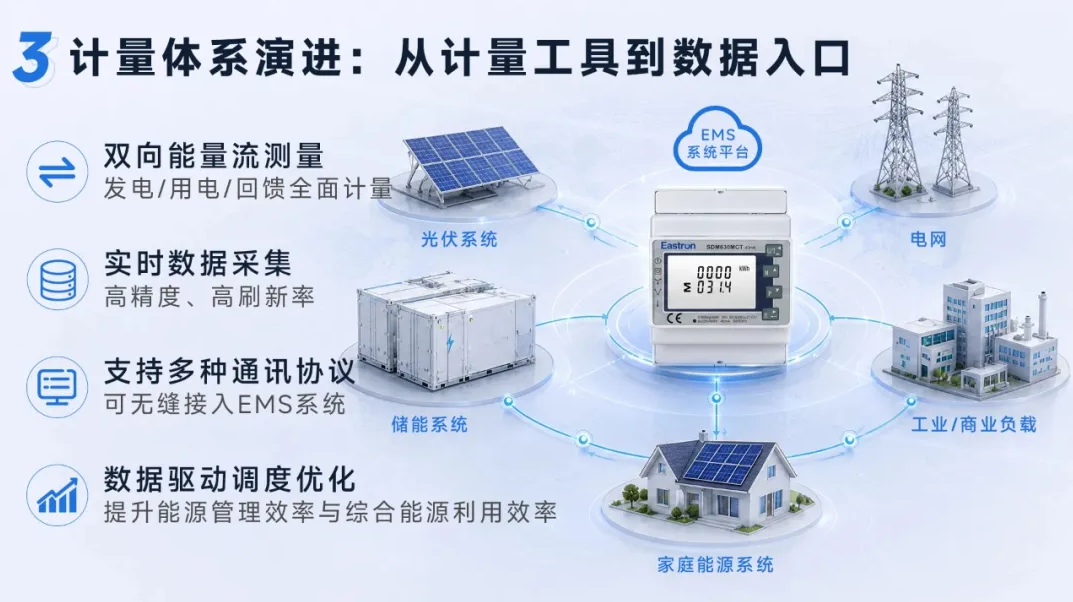
As energy systems become increasingly complex, electric energy metering systems are undergoing a significant functional evolution.
In traditional power systems, metering devices were primarily used for electricity consumption statistics and billing. In distributed energy systems, however, energy flows are characterized by bidirectionality and dynamism, causing metering systems to evolve into data gateways for the energy system.
Metering devices no longer merely record “how much electricity is consumed”; they must continuously collect multidirectional energy data, including generation, consumption, energy storage charge/discharge, and surplus energy feed-in.
This shift is particularly evident in commercial and industrial (C&I) energy storage systems. Taking a typical “PV + storage + load” configuration as an example, system operation relies on the precise measurement of real-time power flows and stable data input.
In such scenarios, the SDM630MCT series Energy Meter is widely used for C&I energy metering. Supporting three-phase bidirectional metering, it adapts to various current ratings via current transformers (CTs) or Rogowski coils and offers Class 0.5S high-precision measurement. This provides a stable data foundation for energy storage systems, supporting the optimization of charge/discharge strategies and load management within Energy Management Systems (EMS).
In residential and small-scale energy storage systems, energy structures are more decentralized and dynamic. For instance, in residential PV and storage setups, the SEM series smart meter enables real-time monitoring of home energy systems. Supporting both single-phase and three-phase applications, this series features a data refresh rate of up to 50ms and supports Wi-Fi and RS485 communication. It enables real-time data exchange with inverters and home energy management systems, thereby facilitating the dynamic management of PV generation, self-consumption, and surplus energy feed-in.
Across these applications, the role of metering devices has expanded from simple measurement tools to vital sources of operational data for energy systems.
As European energy systems continue to transition toward a structure with a high share of renewable energy, their operational logic is undergoing further transformation.
The focus of competition within European energy systems is shifting from “maximizing installed capacity and generation output” to “achieving clear visibility, dispatchability, and effective control.” Photovoltaic systems handle energy input, energy storage ensures dynamic balance, and the power grid manages overall coordination, while the metering system serves as the data foundation connecting these various components.
In this framework, the operational efficiency of the energy system hinges on the integrity, real-time nature, and consistency of data. As the starting point of the data chain, metering infrastructure is evolving from a traditional tool for recording electricity consumption into a critical component supporting the operation of distributed energy systems.
Your email address will not be published. Required fields are marked *

We develop and produce high performance electricity meters, power analyzers, current sensors, communication modules and management systems.
Address:NO. 52, Dongjin Road, Nanhu, Jiaxing, Zhejiang, China
Copyright @ Eastron Electronic Co., Ltd. All rights reserved
