

 English
 Español
 Deutsch
 中文简体

Product Consultation
Your email address will not be published. Required fields are marked *
How Does Bi-Directional Energy Metering Support Solar Power, EV Charging, V2G, and Two-Way Current Flow?
Nov 23,2026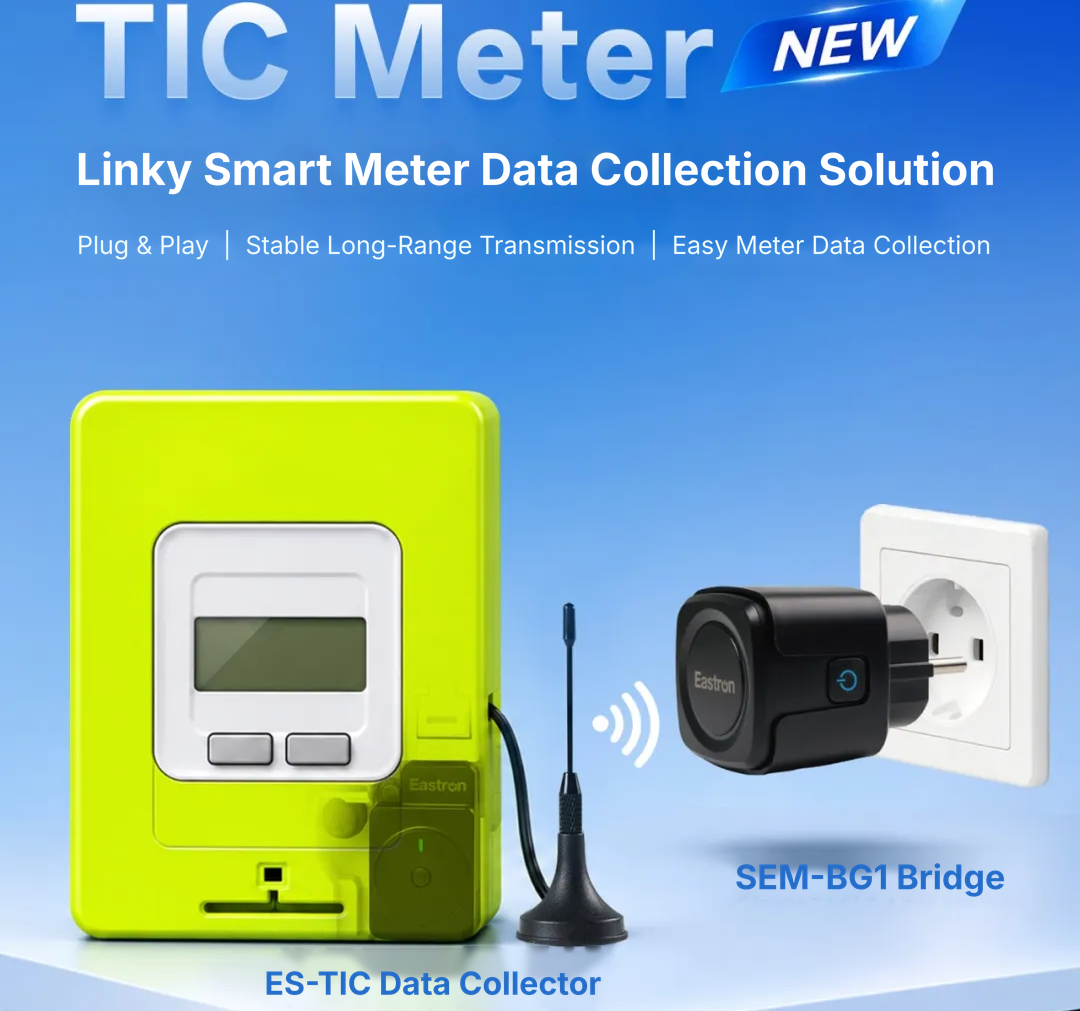
Eastron TIC Meter: Bridging the Data Connection Between Linky Meters and Home Energy Management Systems
Nov 23,2026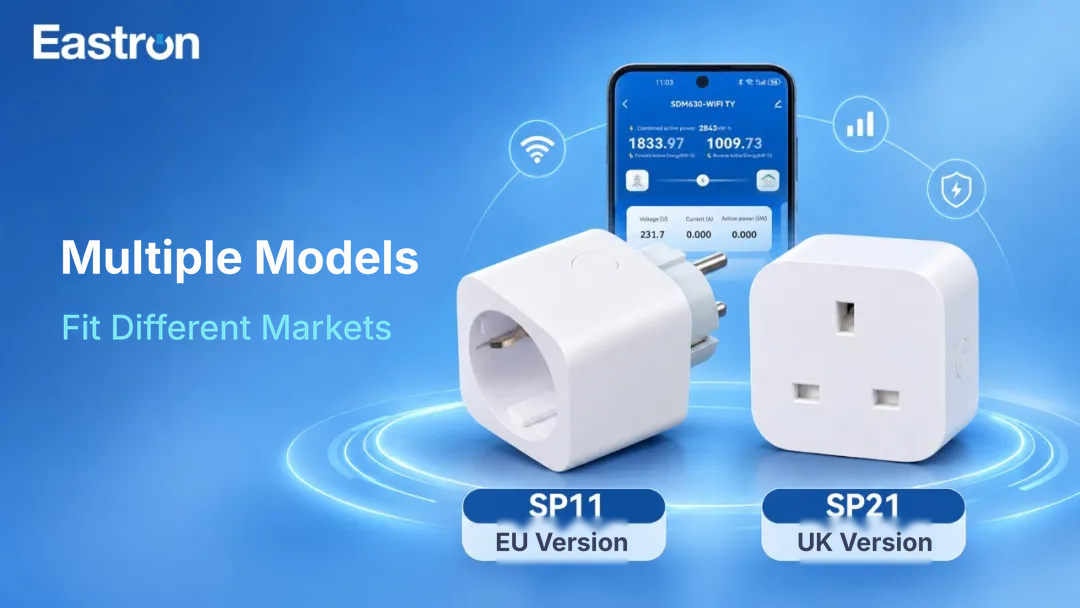
[Application Solution] A New Experience with Eastron Smart Sockets | Simplifying Appliance Control
Nov 20,2026Content
Bi-directional is one of those terms that sounds technical until you stand in front of a real installation. A solar roof sending power back to the grid, a battery charging overnight and discharging at dinner time, or an electric vehicle taking energy from a charger and later returning it — these are all practical examples of energy moving in two directions.
At Eastron, we spend our working days around meters, current sensors, gateways and the people who install them. Our about page explains where we sit in that chain. This article looks at the term from an electrical and metering point of view: what bi-directional current means, why it matters now, and what to check when the meter has to keep import and export data straight.
The word also appears in automotive diagnostics, where a bi-directional scan tool can send commands to a module and read its response. In networking, it can describe traffic moving both ways. Here, we are using it in the energy sense: current, power and data that need to work in two directions without losing accuracy.
In plain language, bi-directional means capable of working in two opposite directions. In a DC circuit, bi-directional current can flow into a battery during charging and out of it during discharge. That sounds obvious, but it has real consequences for wiring, fuses, shunts, sensors and meters. Every part of the path has to tolerate current in both directions.
AC systems need a little more care in how we describe them. AC current alternates every cycle, so the current in the conductor is always changing direction. When an installer says “bi-directional meter” in an AC installation, they usually mean the meter can measure power flowing into the site and power flowing back out. That is a question of energy direction, not just electron movement in a wire.
The most useful distinction is between the current itself and the energy transaction. A battery can have bi-directional current. A building can have bi-directional power flow. A meter may need separate import and export registers, four-quadrant measurement, or both. Keeping those ideas separate makes product selection much easier.
| Term | What it means | Why it matters |
|---|---|---|
| Bi-directional current | Current that can reverse direction in a circuit, common in battery charging and DC EV systems. | Wiring, shunts, sensors and protective devices must handle both directions. |
| Import and export | Energy drawn from the grid versus energy delivered back to it. | Billing, reporting and control often need the two values kept separate. |
| Four-quadrant measurement | Measurement across all combinations of voltage and current polarity. | Helps when loads regenerate energy or when power factor changes direction. |
| Net metering | Accounting based on net import after export is subtracted over a period. | Requires consistent time stamps and clear register logic. |
| Zero export | A control strategy that prevents or limits export to the grid. | Needs fast, reliable directional data from the meter. |
Ten years ago, many meters were chosen mainly to count consumption. Today, the same meter may need to show a facility manager how much power a building draws, how much a solar array exports, and how a battery is cycling. The direction of flow changes during the day, sometimes within seconds.
This is why bi-directional metering shows up in so many conversations:
In each case, the meter is not just a scorekeeper. It is part of the control loop. If it reports the wrong direction, a controller may import when it should export, or a billing report may show a credit where there should be a charge.
A good bi-directional meter does more than add a minus sign to a total. It separates the data so users can see what happened. Typical functions include active import and export energy, reactive energy in each quadrant, per-phase values, demand registers and time-stamped logs. Some models also provide fast updates for zero-export control, dual RS485 ports for separate systems, or Ethernet and wireless communications for remote monitoring.
Accuracy class matters, but so does consistency. If import is measured with one time base and export with another, the numbers become difficult to reconcile. For billing or settlement, look for clear register maps, stable firmware behaviour and documentation that explains how totals are accumulated. For control, look at update rate and communication reliability. A meter that is perfect on a monthly bill may still be too slow for a zero-export controller.
In PV and storage projects, the meter often has to do two jobs at once. It has to provide accurate energy totals for reporting, and it has to feed a controller with fast directional data. That is especially true where export limitation is required. If the meter sees export late, the inverter may already have pushed more power back than the site allowed.
For those projects, we often point installers toward meters with fast data updates, separate import and export registers, and CT or direct connection options that match the service size. A dual RS485 model can be useful when the inverter or logger and the site monitoring system need separate access. The practical benefit is simple: one meter can serve the energy account and the control loop without either side fighting for data.
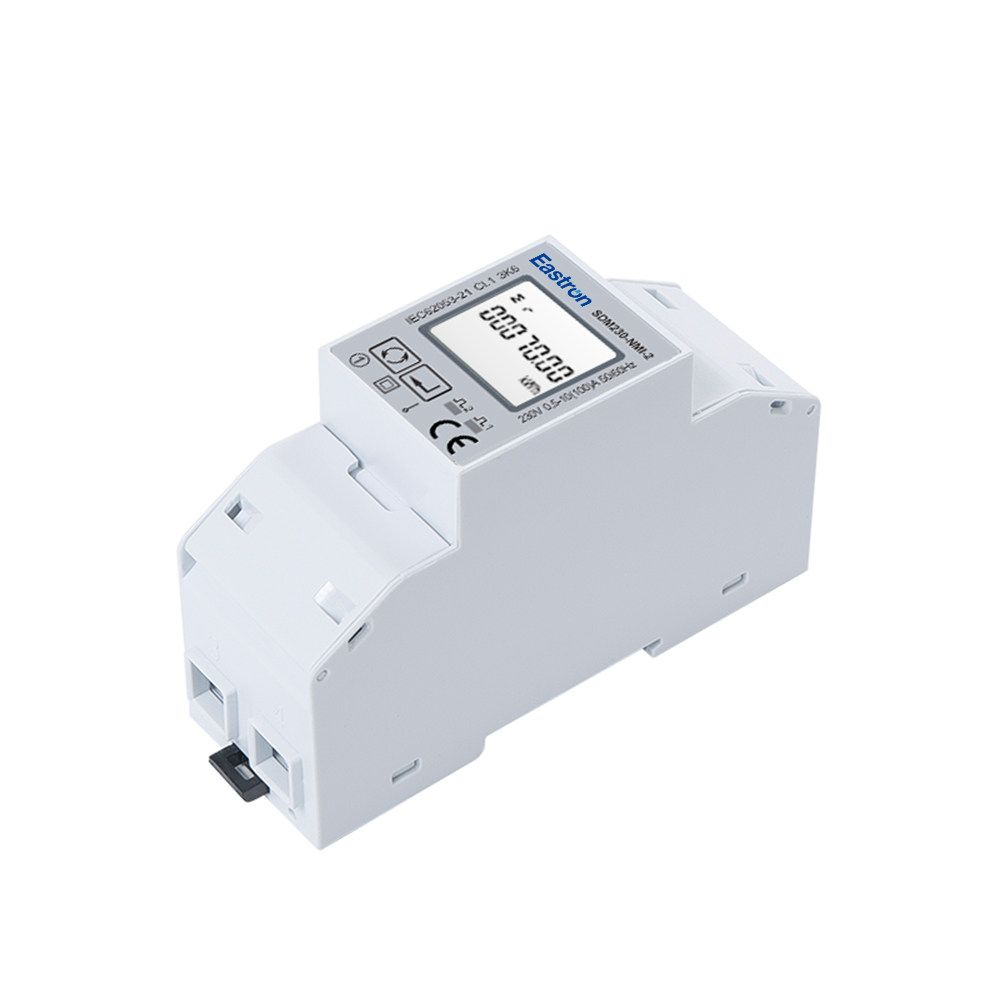 SDM230-NMI-2 Dual RS485 Single-Phase MeterBi-directional single-phase meter with 50 ms updates and two RS485 ports, suited to solar PV, zero-export and VPP monitoring.View Product →
EV charging makes bi-directional current easy to picture. A battery electric vehicle draws DC current while charging. In a vehicle-to-grid or vehicle-to-home system, that current can later flow the other way. The charger, the vehicle and the meter all need to agree on what “forward” means, and the meter has to keep import and export values distinct.
DC fast charging adds another layer because the meter may sit on the DC side, often with a shunt. The current can be high, the direction can change, and the installation may be subject to metering rules for commercial charging. In these projects, check the shunt rating, the voltage range, the communication protocol and the way the meter handles reverse current. A meter that merely counts total kWh can hide the very flow direction the operator needs to see.
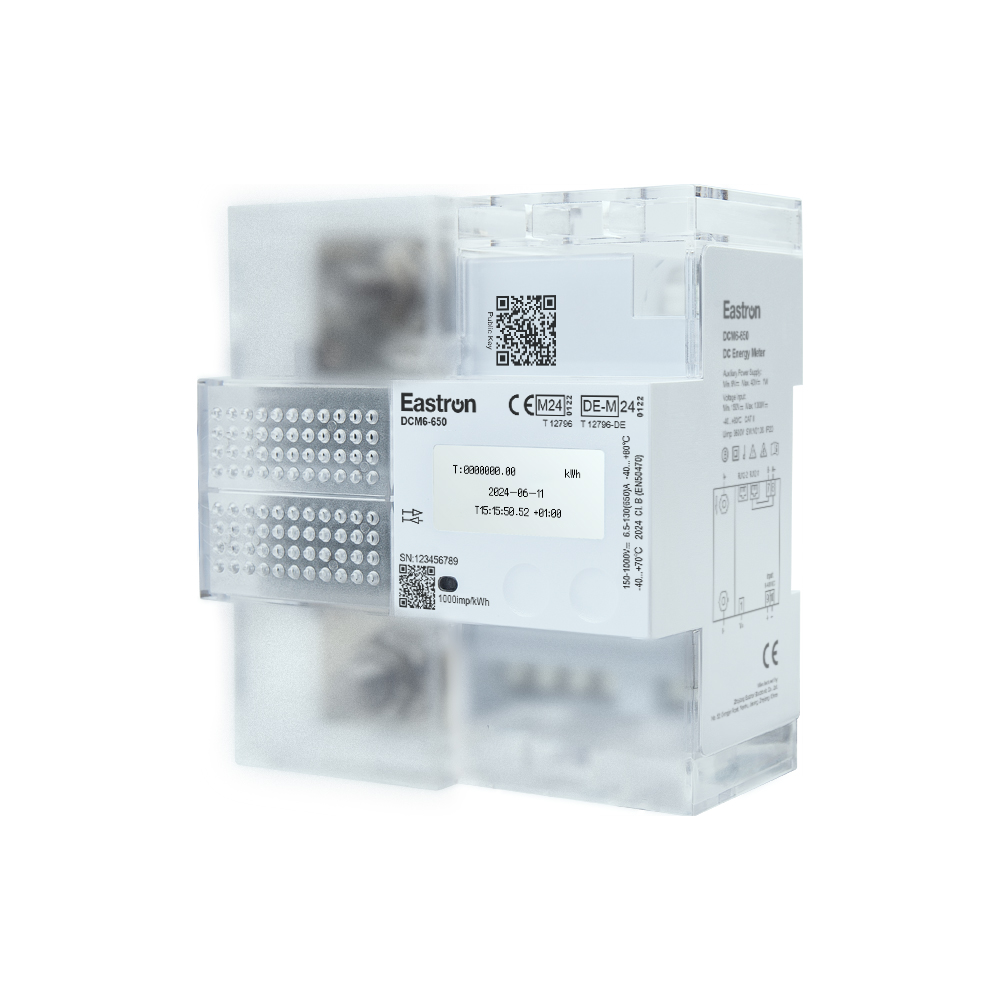 DCM6-650 MID-Approved DC Energy MeterMID- and Eichrecht-approved DC meter for EV chargers, with encrypted charging data, 1000 V DC and up to 650 A measurement.View Product →
When charging is billed, the conversation shifts from energy management to trust. The driver expects the kWh figure to be defensible. The operator needs a meter that fits the local metering regime, communicates cleanly with the back end, and keeps its registers stable over time. In AC public charging, three-phase multifunction meters are common because they can cover import, export, demand and power quality data in one DIN-rail unit.
For German Mess- und Eichrecht projects, the meter also has to fit a specific legal and technical framework. That is not a place for vague product descriptions. Look for the approved model, the right firmware, and documentation that matches the installed configuration. The same discipline applies to MID and UL/ETL projects: the certificate matters, but so does the exact variant and the way it is wired.
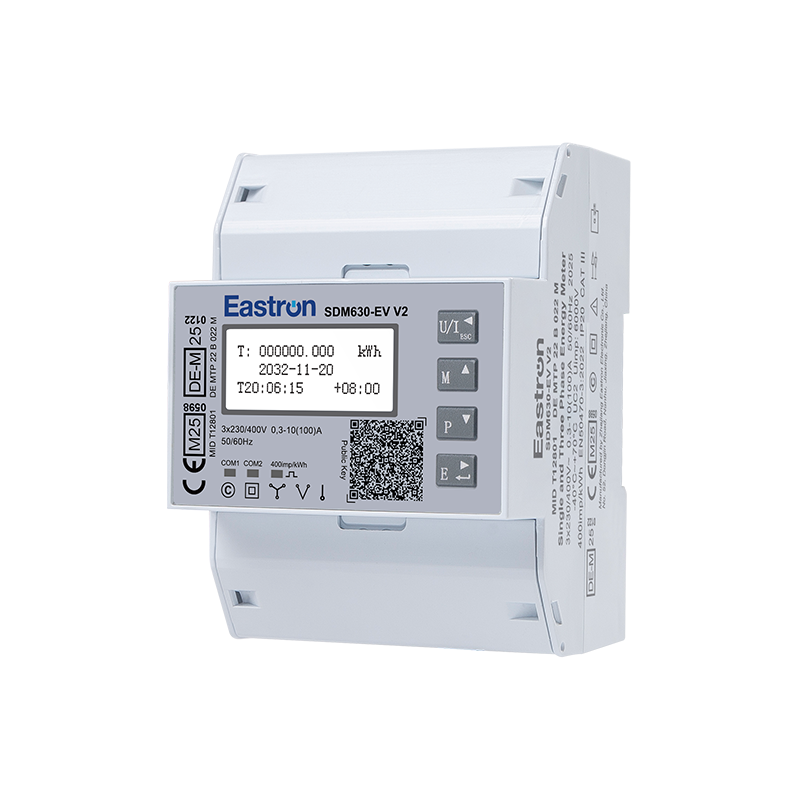 SDM630-EV V2 Three-Phase EV Billing MeterEichrecht-approved three-phase meter with ECC encryption, direct 100 A connection and dual RS485 for EV charger billing.View Product →
Start with the physical reality of the installation, not the brochure. A few questions will narrow the field quickly:
Answer those questions before comparing model numbers. A feature that looks useful on a datasheet can be irrelevant if the CT ratio, firmware version or protocol does not fit the site.
Bi-directional installations are less forgiving than simple consumption metering. CT orientation matters. Phase sequence matters. The definition of forward and reverse must match the drawing and the controller setup. If a CT is reversed, the meter may report export as import, or the controller may see the opposite sign to what the inverter expects.
Commissioning should include a deliberate import test and a deliberate export test, not just a voltage check. Record the register values before and after each test, and confirm that the communication system sees the same direction. For DC systems, check the shunt polarity and the meter’s reverse-current behaviour. For AC systems, confirm per-phase values and phase angle. Our technical documentation library is useful here because the register maps, wiring diagrams and protocol notes help the site team verify the setup rather than guess.
Bi-directional is not just a marketing word attached to a meter. It describes a real operating condition: current that can reverse, power that can flow back to the grid, and data that has to stay clear when it does. Whether the project is a rooftop PV system, a battery store, a DC fast charger or a public charging point, the meter needs to match the physical direction of energy and the commercial rules around it.
The best approach is practical: define the direction you need to measure, choose a meter that separates import and export properly, and test both directions before handover. That is how bi-directional energy flow becomes useful data rather than a confusing reading.
Your email address will not be published. Required fields are marked *

We develop and produce high performance electricity meters, power analyzers, current sensors, communication modules and management systems.
Address:NO. 52, Dongjin Road, Nanhu, Jiaxing, Zhejiang, China
Copyright @ Eastron Electronic Co., Ltd. All rights reserved
