

 English
 Español
 Deutsch
 中文简体
中文简体
Product Consultation
Your email address will not be published. Required fields are marked *
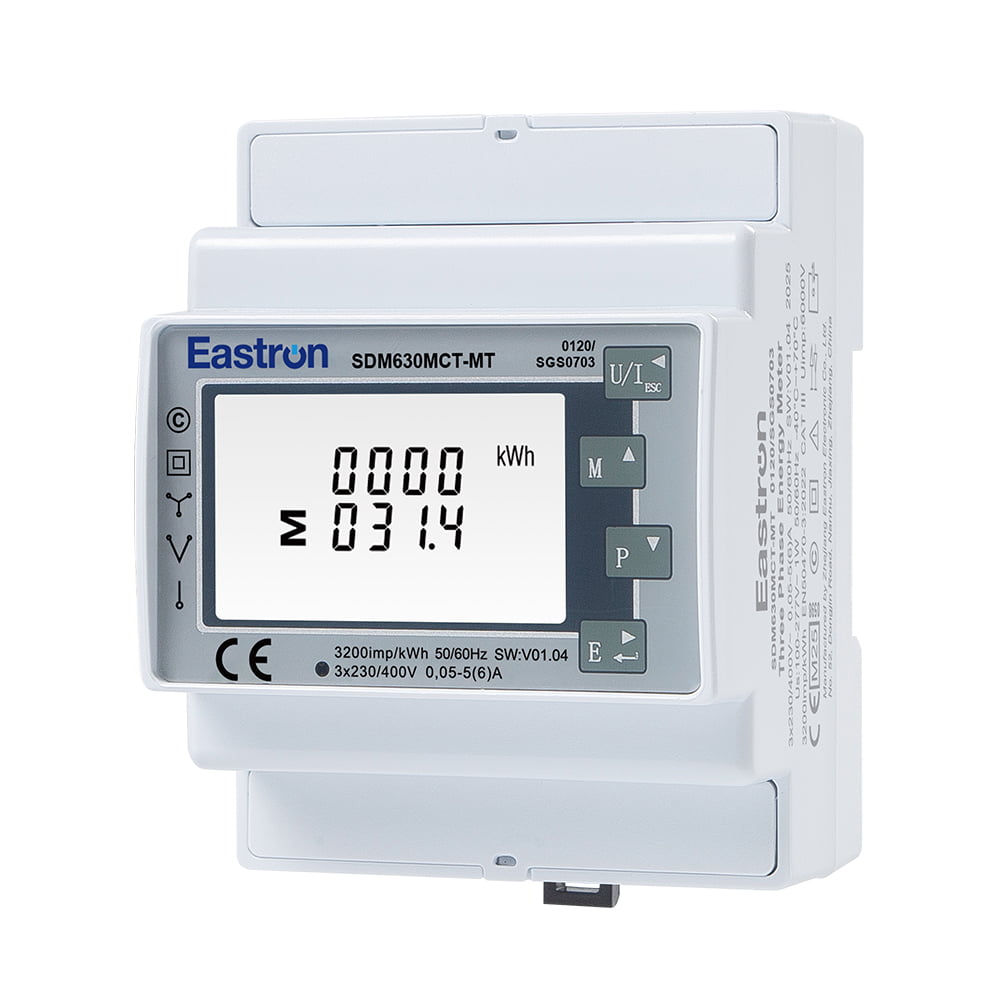
UL and ETL Listed Energy Meters: Safety Certification, Applications, and Buying Guide
Sep 21,2026
Smart Meter FAQ (Part 3) | Certification, Installation, and Procurement: Addressing 5 Practical Application Issues
Sep 20,2026
National Quality Month | A Look Inside Eastron Electronic: Quality Embedded in Every Stage
Sep 20,2026Content
A three phase MID energy meter is an electrical energy measurement device designed to accurately record the active energy consumption — and in many models, reactive energy, power factor, and harmonic content — of three phase electrical installations, while holding a valid type approval certificate issued under the European Measuring Instruments Directive (MID), formally designated as Directive 2014/32/EU. The MID framework establishes legally binding accuracy, durability, and performance requirements for measuring instruments used in trade and commercial transactions, meaning that a meter bearing the MID marking and a notified body certificate number has been independently tested and confirmed to meet defined metrological standards — not simply self-declared compliant by the manufacturer. This legal traceability is what distinguishes a MID-certified three phase energy meter from a technically similar but uncertified monitoring device, and it is the certification that makes the meter's readings admissible as the basis for energy billing, tenant charging, EV charging session invoicing, and energy cost allocation between business units or properties.
Three phase energy meters measure electrical energy across all three current-carrying conductors of a balanced or unbalanced three phase supply, which is the standard distribution arrangement for commercial, industrial, and multi-residential electrical installations above approximately 11 kW connected load. Unlike single phase meters — which measure energy on a single live conductor relative to neutral — three phase meters must process voltage and current signals from three independent phases simultaneously, compute instantaneous power for each phase, and accumulate the combined energy total in kilowatt-hours (kWh) to the accuracy class defined by the MID and the meter's own specification.
The Measuring Instruments Directive establishes a harmonised legal framework across European Union member states and a number of associated countries, ensuring that measuring instruments used for commercial purposes meet consistent minimum standards regardless of where they are manufactured or sold. For electricity meters, MID certification is governed by Annex MI-003 of the Directive, which specifies accuracy classes, influence quantity tolerances, environmental performance requirements, and the conformity assessment procedures that manufacturers must follow before placing a certified meter on the market.
MID Annex MI-003 defines three accuracy classes for active energy meters: Class A, Class B, and Class C. Class A is the minimum requirement, permitting a maximum permissible error of ±2% under reference conditions, and is acceptable for residential and light commercial applications. Class B tightens the maximum permissible error to ±1% and is the most commonly specified class for commercial submetering and tenant billing applications. Class C achieves ±0.5% accuracy and is used in high-value industrial billing, energy performance contracting, and applications where metrological precision directly affects significant financial settlements. The accuracy class required for a specific installation is typically determined by the applicable national metrological regulation or the requirements of the energy supplier, network operator, or building management specification.
MID certification does not only test accuracy at reference conditions — it requires that the meter maintains its accuracy class across a defined range of influence quantities that reflect real-world installation variables. These include ambient temperature variation (typically -25°C to +55°C for outdoor-rated meters), supply voltage variation (typically ±10% of nominal), power frequency variation (±2% of 50 Hz), electromagnetic disturbances including conducted and radiated RF interference, electrostatic discharge, magnetic field influence, and harmonic distortion in the supply voltage. A meter that passes accuracy testing at reference conditions but fails when temperature varies or when harmonics are present in the supply — a common condition near variable speed drives, welding equipment, or UPS systems — would not achieve MID type approval because the certification process specifically evaluates performance under these degraded conditions.
MID type approval requires involvement of an EU-accredited notified body — an independent third-party testing and certification organisation designated by a member state — which reviews the technical documentation, witnesses type testing, and issues the EC type-examination certificate. The meter's nameplate must display the MID marking (the letter M surrounded by a rectangle), the two-digit code identifying the notified body that issued the certification, and the year of certification. This information allows any purchaser, inspector, or energy supplier to trace the certification back to the original type approval file and verify its validity. Meters bearing CE marking alone without the MID symbol are not MID-certified and cannot legally be used for billing purposes within the MID framework, regardless of any accuracy claims in the product literature.
Three phase MID energy meters are available in two fundamental connection architectures — direct connection and current transformer (CT) connected — and the choice between them is determined by the current rating of the installation being metered and the physical constraints of the installation location.
| Parameter | Direct Connection Meter | CT-Connected Meter |
| Typical Current Range | Up to 100A per phase | Unlimited (CT ratio defines range) |
| Installation Complexity | Lower; conductors wired directly | Higher; CTs must be fitted and programmed |
| Physical Size | Compact; DIN rail mount common | Larger meter; separate CT housings |
| Cost | Lower unit cost | Higher total cost including CTs |
| MID Certification Scope | Meter only | Meter plus specified CT class and ratio |
| Typical Application | SME premises, submetering, EV charging | Large industrial, main incomer metering |
For direct connection meters, the supply conductors are wired directly through the meter's internal current measurement circuits, which are typically rated for continuous currents between 5A and 100A depending on the meter model. These meters are straightforward to install in consumer units, distribution boards, and sub-distribution panels, and are the most commonly specified option for commercial submetering, multi-tenant office and retail submetering, EV charge point energy measurement, and small to medium industrial installations. CT-connected meters accept a standardised 5A or 1A secondary signal from external current transformers clamped around the main supply conductors, allowing metering of supplies far exceeding what direct-wired meters can accommodate — from 200A up to thousands of amperes — by selecting the appropriate CT primary rating and programming the meter with the CT ratio for correct energy calculation.
Beyond MID certification and connection type, several additional features differentiate three phase MID energy meters in ways that significantly affect their suitability for specific applications. Evaluating these features systematically against application requirements prevents the common mistake of selecting purely on price without accounting for functionality gaps that become costly to address after installation.
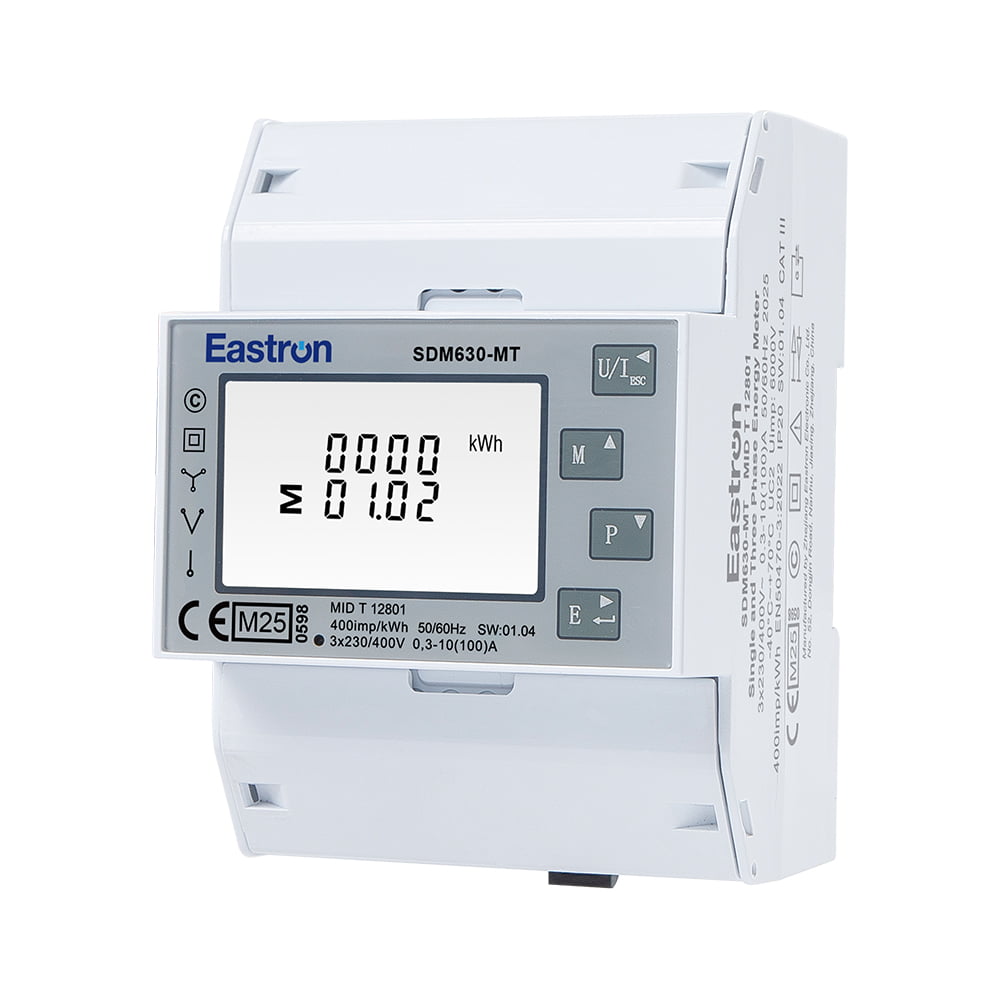
Understanding the specific use cases where MID certification is a legal requirement — rather than simply a quality indicator — helps installers and specifiers avoid the legal and financial risks of deploying uncertified meters in regulated applications.
When a building owner or landlord recharges electricity costs to commercial tenants based on individual consumption measured by submeters, those meters are being used as the basis for a financial transaction — precisely the application that MID regulation is designed to govern. In most EU member states, using a non-MID-certified meter to bill tenants for energy is a regulatory violation that can result in the invalidation of energy charges, regulatory fines, and civil liability for overcharging or undercharging. Three phase MID Class B meters installed at each tenant distribution board, reading in kWh and communicated to a central billing platform via Modbus or M-Bus, represent the standard technically and legally compliant solution for commercial multi-tenant metering.
The rapid expansion of public and semi-public EV charging infrastructure across Europe has created a significant and growing market for MID-certified energy meters in charge point applications. EU regulations require that public EV charge points display energy delivered in kWh and that this measurement is based on a MID-certified meter, enabling drivers to verify the accuracy of the kWh-based charges they pay for each charging session. Three phase MID meters integrated into 22 kW AC charge points — which use three phase power delivery — must be certified to MID Annex MI-003 and physically incorporated into the charge point in a manner that prevents tampering with the meter's readings or bypassing the certified measurement path. Charge point manufacturers increasingly integrate MID-certified meter modules directly into their hardware platforms to simplify compliance certification for the complete charge point as a system.
Energy performance contracts (EPCs) — where an energy service company (ESCO) guarantees specific energy savings and receives payment based on measured savings against a defined baseline — rely on metered data whose accuracy and legal traceability must withstand contractual and potentially legal scrutiny. MID-certified three phase meters provide the metrological foundation for this measurement and verification process, ensuring that neither party to the contract can challenge the validity of the measured energy data on accuracy or certification grounds. Similarly, BREEAM, LEED, and other green building certification schemes that require sub-metering of energy consumption by end use category typically specify or recommend MID-certified meters to ensure that the reported consumption data meets the evidentiary standard required for certification audit.
Correct installation is essential not only for accurate measurement but for maintaining the legal validity of the meter's MID certification. Several installation practices directly affect whether the meter will perform within its certified accuracy class in service.
The market for three phase energy meters includes products that carry MID-style markings or claim MID compliance without holding a valid type approval certificate from an accredited notified body. Verifying genuine MID certification before purchase protects against the financial, legal, and operational risks of deploying non-compliant meters in regulated applications. The verification process is straightforward and should be standard practice for any procurement of meters intended for billing use.
Start by locating the MID marking on the meter nameplate and noting the four-digit notified body identification number that accompanies it. This number identifies the EU-accredited body that issued the type approval. The European Commission maintains a publicly accessible database of notified bodies and their designated scope at the NANDO (New Approach Notified and Designated Organisations) information system, where the notified body number can be verified as currently accredited for MID Annex MI-003 electricity meters. The meter manufacturer should be able to provide a copy of the EC type-examination certificate, which specifies the meter model, accuracy class, measurement range, applicable standards, and any conditions or restrictions on the certification. Reviewing this certificate against the intended application — confirming that the certified current range covers the installation load, that the accuracy class meets the billing requirement, and that the certificate remains valid and has not been suspended or withdrawn — completes the due diligence process and provides documented evidence of compliance for regulatory or contractual purposes.
Your email address will not be published. Required fields are marked *

We develop and produce high performance electricity meters, power analyzers, current sensors, communication modules and management systems.
Address:NO. 52, Dongjin Road, Nanhu, Jiaxing, Zhejiang, China
Copyright @ Eastron Electronic Co., Ltd. All rights reserved
