

 English
 Español
 Deutsch
 中文简体
中文简体
Product Consultation
Your email address will not be published. Required fields are marked *
Content
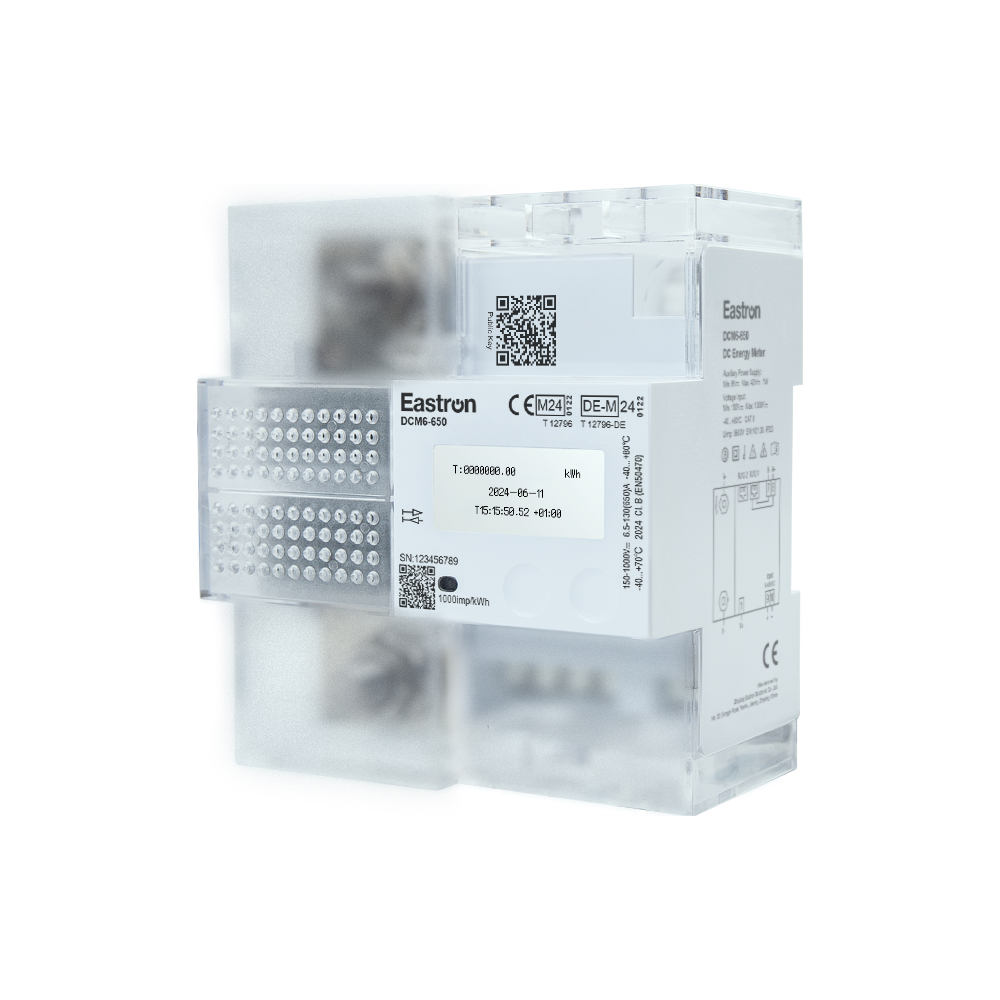
A DC MID energy meter is a direct current electricity meter that carries the Measuring Instruments Directive (MID) certification — a mandatory conformity standard enforced across the European Union and several other jurisdictions for meters used in commercial billing and legal trade. The "DC" designation distinguishes these devices from conventional AC energy meters, as they are purpose-built to accurately measure electrical energy in direct current circuits, where current flows in a single direction rather than alternating sinusoidally. This makes them fundamentally different in both hardware design and calibration methodology from standard AC meters.
The significance of MID certification cannot be overstated for commercial applications. A meter bearing the MID mark — the CE mark accompanied by the letter M and a two-digit notified body identification number — has been independently tested and verified to meet the accuracy and reliability requirements set out in Annex MI-003 of Directive 2004/22/EC (and updated under 2014/32/EU). This means the measurement data it produces is legally admissible for billing purposes, whether that involves charging electric vehicle (EV) drivers at a public charging station, metering solar energy fed into the grid, or monitoring energy flows in a DC microgrid environment.
The rapid expansion of DC-based infrastructure across multiple sectors is creating strong and sustained demand for certified DC energy metering solutions. Understanding the primary use cases helps clarify the specific technical requirements that distinguish one product from another.
DC fast chargers and ultra-fast charging stations — operating at voltages from 200 V to 1,000 V DC and delivering power levels from 50 kW up to 350 kW or more — require MID-certified DC meters to enable transparent and legally compliant billing per kilowatt-hour. In the European Union, regulations such as AFIR (Alternative Fuels Infrastructure Regulation) specifically mandate that publicly accessible EV chargers provide kWh-based billing, which is only possible with a MID-approved meter in the circuit. The DC MID meter in a fast charger typically sits between the AC/DC power conversion stage and the charging output, measuring the precise energy delivered to each vehicle session.
Photovoltaic systems generate DC electricity before it is inverted to AC for grid injection or local consumption. DC MID meters placed on the DC bus between the solar array and the inverter provide an accurate and certified record of energy generation — essential for feed-in tariff payments, power purchase agreements (PPAs), and green energy certification schemes. Battery energy storage systems (BESS) similarly benefit from DC-side metering that captures both charge and discharge energy flows independently, enabling precise state-of-charge management and revenue metering for grid services such as frequency regulation and peak shaving.
Data centers, telecom facilities, maritime vessels, and rail electrification systems increasingly operate on DC distribution networks for efficiency reasons — DC-to-DC conversion losses are lower than the repeated AC/DC conversions required in traditional AC distribution. In these environments, DC MID meters provide certified sub-metering at the rack, floor, or zone level, enabling cost allocation between tenants or departments and supporting energy management system (EMS) integration.
Selecting the right DC MID energy meter requires a careful evaluation of several interdependent technical parameters. The following table summarizes the most critical specifications and typical value ranges found in commercially available products:
| Parameter | Typical Range | Relevance |
| Voltage Range | 5 V – 1,000 V DC | Must match system bus voltage |
| Current Range | 5 A – 1,000 A | Determines max measurable power |
| Accuracy Class | Class B (±0.5%), Class C (±1%) | MID requires Class B minimum for billing |
| Communication Interface | RS-485 (Modbus), M-Bus, CAN, OCPP | Integration with EMS, SCADA, or CPMS |
| Display | LCD with backlight or no display | Required for MID in some applications |
| Bidirectional Measurement | Yes / No | Essential for battery storage systems |
| Operating Temperature | -25°C to +70°C | Critical for outdoor EV charger installs |
| Protection Rating | IP20 – IP65 | Enclosure suitability for environment |
Beyond these headline figures, engineers should also verify the meter's starting current threshold (the minimum current at which measurement begins), its power consumption on the auxiliary supply, and whether its calibration seal meets the anti-tamper requirements mandated by MID for legally relevant measurements.
The MID directive defines accuracy classes specifically for DC energy meters under Annex MI-003. For DC active energy measurement, the directive recognizes two primary accuracy classes relevant to commercial metering:
It is important to note that accuracy class alone does not guarantee billing legality. The meter must also have been tested by a notified body — an EU-designated independent testing laboratory — and the manufacturer must have obtained a type examination certificate. The installation itself must also comply with the manufacturer's installation conditions as stated in the product documentation accompanying the MID declaration of conformity. Any deviation, such as operating the meter outside its rated temperature range or in a position not specified by the approval, can invalidate its MID status in a legal dispute.
Modern DC MID energy meters are rarely standalone instruments. They must communicate measurement data to higher-level management systems in real time or near-real time to enable billing, monitoring, and control functions. The choice of communication protocol significantly affects how easily the meter integrates into the target application.
The most widely supported protocol in industrial and commercial metering environments. Modbus RTU allows the meter to be polled by a master controller — typically an EV charge point management system (CPMS), energy management controller, or SCADA system — at intervals as short as every second. The register map provided in the meter's datasheet defines which Modbus registers contain energy totals, instantaneous voltage, current, and power values. Wiring is straightforward using a twisted-pair cable with termination resistors at both ends of the RS-485 bus, supporting up to 32 devices on a single segment without repeaters.
Preferred in utility metering and building management applications, M-Bus offers robust two-wire communication designed specifically for energy meters over long cable runs. It supports automatic meter reading (AMR) scenarios where a central data collector periodically interrogates a large number of meters. M-Bus-equipped DC MID meters are common in district energy and multi-tenant building applications where the metering infrastructure must interface with utility billing systems.
For EV charging applications, the Open Charge Point Protocol (OCPP) — versions 1.6J and 2.0.1 — includes provisions for metering data exchange between the charge point and the central management system. DC MID meters embedded within OCPP-compliant charge points must provide signed meter values to satisfy transparency requirements under emerging smart charging regulations. The meter's output is encapsulated within the OCPP MeterValues message and transmitted to the backend, providing an auditable record of each charging transaction.
Even a correctly specified DC MID energy meter can fail to perform accurately or retain its legal metrology status if installed incorrectly. The following points represent the most common errors encountered in field installations:
The DC MID energy meter market has matured considerably over the past five years, driven by the EV charging boom. Products from manufacturers such as Carlo Gavazzi, Eastron, Inepro Metering, and Phoenix Contact now offer feature sets that go well beyond simple energy totalisation. Buyers should look for the following capabilities when comparing current-generation products:
DC MID energy meters occupy a critical position at the intersection of legal metrology, power electronics, and digital infrastructure. As direct current systems proliferate across EV charging, renewable energy, and DC microgrid applications, the demand for accurate, certified, and communicative DC metering will only intensify. Selecting the right meter requires a thorough understanding of accuracy class requirements, communication protocol compatibility, installation constraints, and the specific regulatory framework of the target market. Investing time in this evaluation process at the design stage avoids costly retrofit work and ensures that the metering infrastructure remains legally compliant and commercially reliable throughout its operational lifetime.
Your email address will not be published. Required fields are marked *

We develop and produce high performance electricity meters, power analyzers, current sensors, communication modules and management systems.
Address:NO. 52, Dongjin Road, Nanhu, Jiaxing, Zhejiang, China
Copyright @ Eastron Electronic Co., Ltd. All rights reserved
