

 English
 Español
 Deutsch
 中文简体
中文简体
Product Consultation
Your email address will not be published. Required fields are marked *
UL and ETL Listed Energy Meters: Safety Certification, Applications, and Buying Guide
Sep 21,2026
Smart Meter FAQ (Part 3) | Certification, Installation, and Procurement: Addressing 5 Practical Application Issues
Sep 20,2026
National Quality Month | A Look Inside Eastron Electronic: Quality Embedded in Every Stage
Sep 20,2026Content
A single phase electronic kWh meter is a precision device used to measure electrical energy consumption in residential and light commercial installations. Unlike older electromechanical meters with spinning discs, electronic versions use solid-state components and digital signal processing to accurately record how many kilowatt-hours (kWh) of electricity a property consumes over time. These meters are now the standard choice for utility companies and private users alike, offering superior accuracy, tamper detection, remote reading capability, and long service life.
Single phase power systems operate on a single alternating current (AC) waveform, typically at 230V/50Hz in Europe and many parts of Asia, or 120V/60Hz in North America. Most homes, small offices, and retail outlets are connected to single phase supply, making this type of meter the most widely deployed energy measurement device in the world. Understanding how it works and what to look for when selecting one can help engineers, electricians, facility managers, and homeowners make informed decisions.
The core operating principle of an electronic kWh meter revolves around continuous sampling of voltage and current signals on the incoming supply line. Inside the meter, a dedicated energy measurement IC (integrated circuit) samples the instantaneous voltage and current at high frequency — often thousands of times per second. It then multiplies these two values together to calculate instantaneous power in watts, and integrates this value over time to produce energy in watt-hours or kilowatt-hours.
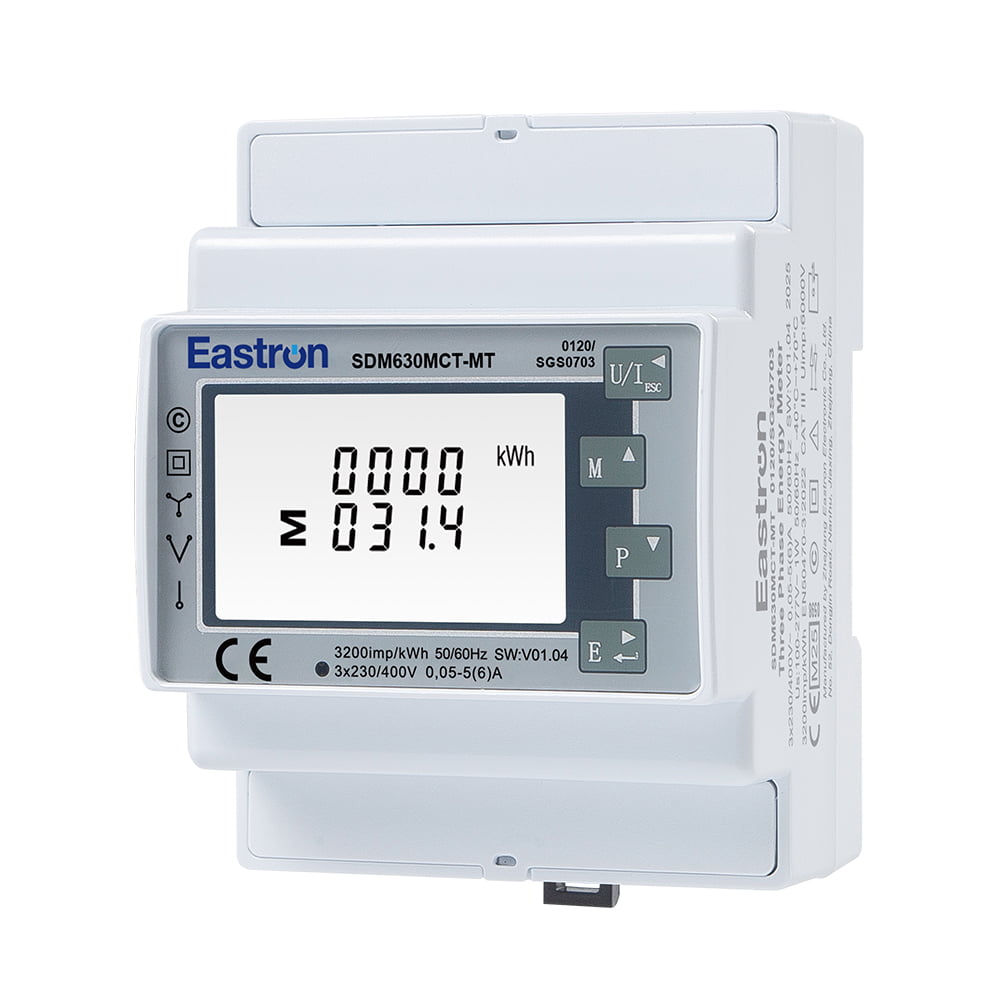
The resulting energy data is stored in non-volatile memory and displayed on an LCD or LED display in kWh. Most modern single phase electronic meters also output a pulse signal (typically 1000 imp/kWh or 800 imp/kWh) via an LED pulse indicator, which can be used by external energy monitoring systems for verification and sub-metering. The metering IC handles power factor correction internally, ensuring that reactive loads such as motors or fluorescent lighting circuits are accurately accounted for in the final reading.
When evaluating a single phase electronic kWh meter, several technical parameters determine its suitability for a given application. The table below summarizes the most important specifications and what they mean in practice:
| Specification | Typical Value | What It Means |
| Accuracy Class | Class 1 or Class 2 | ±1% or ±2% error limit per IEC 62053 |
| Rated Voltage | 230V AC (or 120V AC) | Must match local grid voltage |
| Rated Current (Ib/Imax) | 5(60)A, 10(80)A, 20(100)A | Base current / maximum current |
| Frequency | 50Hz or 60Hz | Must match local supply frequency |
| Starting Current | 0.4% of Ib | Minimum load level the meter can detect |
| Pulse Constant | 800 or 1000 imp/kWh | Output pulses for external monitoring |
| Operating Temperature | -25°C to +55°C | Environmental range for reliable operation |
| Compliance Standard | IEC 62053-21 / ANSI C12.20 | International certification benchmark |
Accuracy class is one of the most critical parameters. A Class 1 meter guarantees measurement error within ±1% across the rated current range, which is required for billing purposes in most jurisdictions. Class 2 meters, with ±2% tolerance, are acceptable for sub-metering or energy monitoring in non-billing scenarios.
Today's single phase electronic kWh meters go well beyond simply counting energy. Manufacturers have added a range of features that improve usability, security, and integration with smart infrastructure. Key features to look for include:
Proper installation of a single phase electronic kWh meter is essential for accurate measurement and long-term reliability. Whether installing on a DIN rail inside a distribution board or in a dedicated meter enclosure, following these guidelines ensures the meter performs within specification.
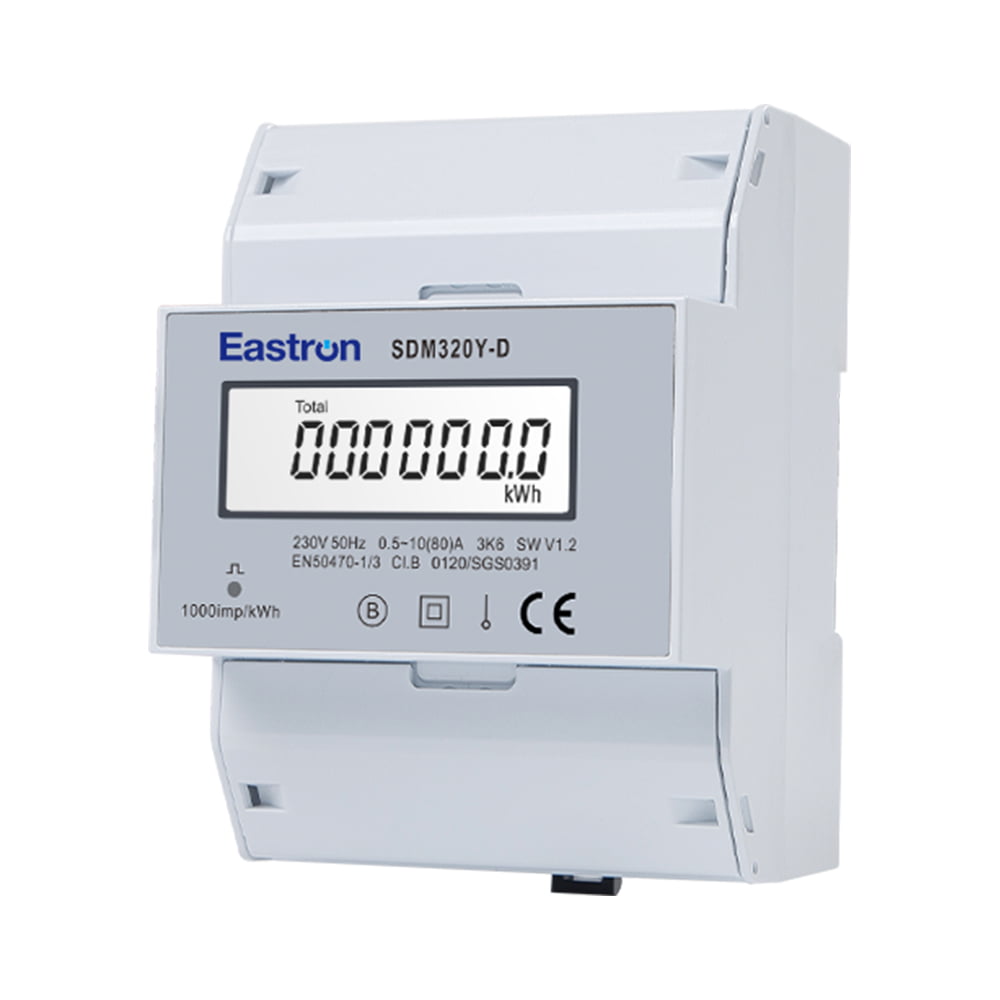
Always connect the meter strictly according to the wiring diagram printed on the meter body or provided in the datasheet. For a standard direct-connected single phase meter, the live (L) and neutral (N) conductors enter the line terminals and exit through the load terminals. Incorrect wiring — such as reversing line and load — can cause reverse energy recording or damage to the measurement circuit. Conductor cross-sections must be sized to handle the maximum rated current of the meter without excessive voltage drop or heat buildup.
Most single phase electronic meters are designed for vertical mounting with terminals at the bottom. Horizontal or inverted mounting may affect thermal management inside the meter and can void the manufacturer's warranty. Install the meter in a dry, well-ventilated location away from direct sunlight, excessive vibration, and strong magnetic fields — such as those generated by nearby transformers or large motors — which can interfere with the measurement IC and potentially trigger tamper alerts.
After connection verification, the terminal cover and meter body should be sealed with the appropriate utility seals. This prevents unauthorized access to the wiring and is a legal requirement in most billing meter installations. Never operate a billing meter without seals in place, and ensure the sealing points are compatible with the seal type required by the local utility or regulatory authority.
Selecting the correct meter for a specific application requires matching technical parameters to site conditions and operational requirements. The following checklist helps narrow down the choice:
A common question among electricians and engineers is when to use a single phase meter versus a three phase meter. Single phase meters are the correct choice for any installation supplied by a single phase and neutral connection — which covers the vast majority of domestic properties, small shops, and light office spaces with total loads typically below 10–15 kW. In these settings, a single phase electronic kWh meter provides all the measurement capability needed at a lower cost and in a more compact form factor than a three phase unit.
Three phase meters become necessary when the installation is connected to a three phase supply, such as industrial workshops, large commercial buildings, agricultural pump stations, or any site with three phase motors or equipment. Attempting to measure a three phase load with a single phase meter will only capture a fraction of the total consumption, producing severely inaccurate billing and monitoring results. If there is any uncertainty about the supply configuration at a site, the utility connection paperwork or DNO (distribution network operator) documentation will confirm whether the service is single or three phase.
Single phase electronic kWh meters are largely maintenance-free during their service life, but periodic verification ensures continued accuracy. Utility companies typically test meters on a statistical sampling basis using portable reference standards traceable to national metrology institutes. Field testing involves comparing the meter's pulse output against a certified reference meter under controlled load conditions. Any meter showing error outside its class tolerance should be removed from service and replaced.
For privately owned sub-meters used in landlord-tenant energy billing scenarios, it is good practice to have meters verified by an accredited calibration laboratory every five to ten years. Most manufacturers also publish mean-time-between-failure (MTBF) data — typically exceeding 50 years for the electronics under normal operating conditions — though environmental factors such as overvoltage events, lightning surges, or sustained overload can shorten service life considerably. Installing surge protection devices (SPDs) upstream of sensitive metering equipment is a worthwhile investment in locations prone to lightning or grid transients.
Your email address will not be published. Required fields are marked *

We develop and produce high performance electricity meters, power analyzers, current sensors, communication modules and management systems.
Address:NO. 52, Dongjin Road, Nanhu, Jiaxing, Zhejiang, China
Copyright @ Eastron Electronic Co., Ltd. All rights reserved
