

 English
 Español
 Deutsch
 中文简体
中文简体
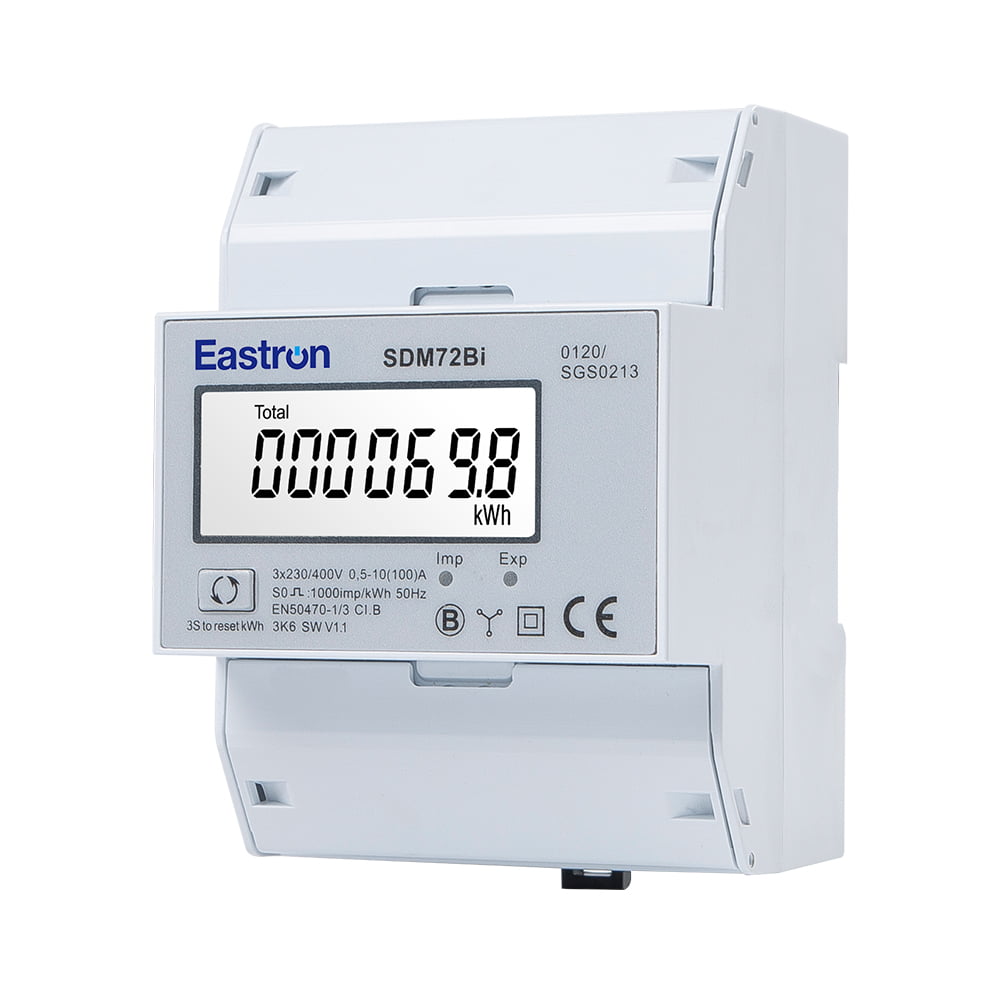
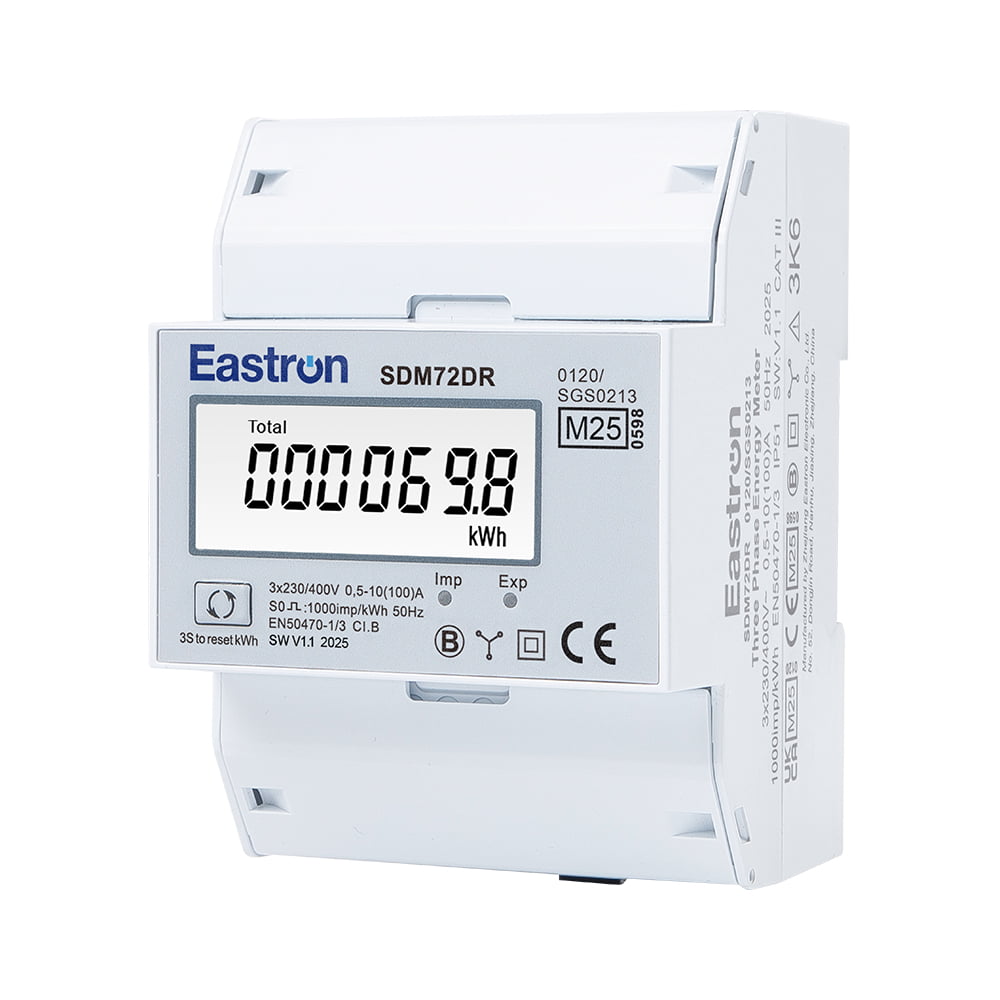
Product Consultation
Your email address will not be published. Required fields are marked *
Content
A single phase electronic kWh meter is a solid-state device that measures the amount of electrical energy consumed by a load connected to a single-phase AC supply, typically operating at 230V in Europe and the UK or 120V in North America. Unlike older electromechanical meters — which use a spinning aluminium disc to register consumption — electronic meters use current transformers, voltage sensing circuits, and dedicated energy metering integrated circuits (ICs) to calculate power digitally and accumulate the result in kilowatt-hours (kWh). The reading is displayed on an LCD or LED screen, and many modern units also output data via pulse outputs, RS485, Modbus RTU, or M-Bus communication interfaces for remote monitoring and data logging.
Single phase electronic kWh meters are used across an enormous range of applications: sub-metering in apartment blocks, monitoring individual circuits in commercial premises, measuring the output of solar PV systems, tracking energy use in rental properties, and billing tenants in shared industrial units. Their digital architecture gives them significant advantages over mechanical meters in terms of accuracy, tamper resistance, data output capability, and long-term reliability without moving parts to wear out.
The operating principle of an electronic kWh meter is based on continuous, real-time multiplication of instantaneous voltage and current measurements. A voltage divider circuit samples the line voltage, while a precision shunt resistor or current transformer samples the current flowing through the meter. A dedicated metering ASIC — such as those produced by Analog Devices, STMicroelectronics, or Microchip Technology — multiplies these two signals together thousands of times per second to produce instantaneous power in watts. This instantaneous power value is then integrated over time to produce energy in watt-hours, which is divided by 1,000 and accumulated on the display as kilowatt-hours.
Because all measurement is performed digitally with no moving parts, electronic meters are inherently more accurate than their electromechanical predecessors. They are also far less susceptible to tampering via magnets — a common method used to slow or stop a spinning disc meter. Most electronic meters include magnetic field detection circuits that log a tamper event if a strong external magnet is detected near the measurement circuitry. This tamper event can be flagged on the display or transmitted via the communications interface to the monitoring system.
Comparing single phase electronic kWh meters requires understanding a specific set of technical parameters. Purchasing based on price alone without verifying these specifications frequently results in a meter that is either under-specified for the load being measured or over-specified and unnecessarily expensive for a simple sub-metering task.
Accuracy class defines the maximum permissible percentage error in the meter's energy measurement across its rated operating range. The IEC 62053 standard defines Class 1 (±1% error), Class 2 (±2% error), and Class 0.5 (±0.5% error) for active energy meters. For sub-metering and tenant billing, Class 1 is the typical minimum requirement and is mandatory under the Measuring Instruments Directive (MID) in the EU for trade use. Class 2 meters are acceptable for non-billing monitoring and energy management purposes where precise billing is not the application.
Single phase meters are rated by three current values. Ib (basic current) is the current at which the meter's accuracy is defined. Imax (maximum current) is the highest continuous current the meter can handle without damage or degradation. Imin (minimum current) is the lowest current at which the meter maintains its specified accuracy class. A common rating such as 5(100)A means a basic current of 5A and a maximum current of 100A. For most domestic and light commercial sub-metering, a 10(100)A or 20(100)A meter is appropriate. Always verify that Imax exceeds the maximum demand of the circuit being metered with adequate margin.
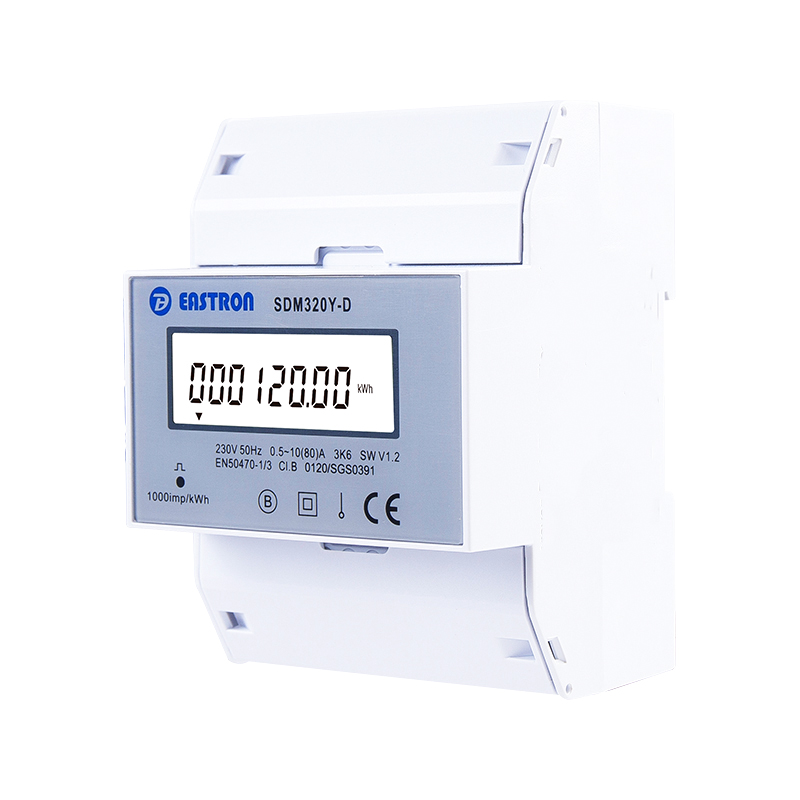
Most single phase electronic kWh meters include an LED pulse output or an open-collector transistor pulse output. Each pulse represents a fixed increment of energy — commonly 1000 pulses per kWh (1 pulse = 1 Wh) or 800 pulses per kWh on DIN rail units. This pulse output can be wired to a data logger, building management system, or energy monitoring controller to accumulate readings remotely without reading the display. The pulse rate specification must match the input specification of whatever logging device is being used.
Advanced single phase electronic kWh meters offer digital communication in addition to or instead of pulse outputs. RS485 with Modbus RTU is the most widely supported protocol in industrial and commercial energy monitoring systems, allowing up to 32 meters to share a single two-wire bus and be read by a SCADA system or energy management platform. M-Bus (Meter-Bus) is common in European district heating and utility metering applications. Some meters also offer DLMS/COSEM protocol support for smart metering infrastructure. Selecting the correct communication interface at the time of purchase is essential since retrofitting communication capability to a meter that lacks it is not possible.
The table below summarises the main categories of single phase electronic kWh meters and their distinguishing characteristics to help match the right type to a specific application.
| Meter Type | Accuracy Class | Output | Mounting | Best For |
| Basic DIN Rail Meter | Class 1 or 2 | Pulse LED | 35mm DIN rail | Panel boards, sub-metering |
| MID-Certified Meter | Class 1 | Pulse + display | DIN rail or panel | Tenant billing, trade use |
| Modbus RS485 Meter | Class 1 | RS485 Modbus RTU | DIN rail | BMS, SCADA, energy management |
| Smart Prepayment Meter | Class 1 | Keypad / token | Enclosure or panel | Rental properties, landlords |
| Bi-directional Meter | Class 1 | Pulse + display | DIN rail or panel | Solar PV, export monitoring |
If a single phase electronic kWh meter will be used as the basis for billing a third party — whether a residential tenant, a commercial subtenant, or an EV charging point user — it must carry MID (Measuring Instruments Directive) approval in the European Union and UK. MID certification, governed by EN 50470 and the IEC 62053 series, verifies that the meter meets Class 1 accuracy requirements, has been independently tested by a notified body, and bears the CE marking along with the specific MID module identifier (typically Module D or Module F). Using a non-MID meter for billing purposes is illegal in the EU and UK under metrology law and exposes the meter operator to legal liability if the measurement is later disputed. Always request the MID certificate number and the notified body reference when purchasing meters for billing applications.
Installation of a single phase electronic kWh meter must be performed by a qualified electrician in most jurisdictions. The following steps describe a typical DIN rail meter installation within a distribution board or metering panel. Always isolate and lock off the circuit before beginning any wiring work and verify isolation with a calibrated voltage tester.
When a single phase electronic kWh meter is used in a solar photovoltaic installation, standard unidirectional meters are insufficient. A grid-connected solar system exports surplus energy back to the grid during periods of high generation and imports energy from the grid at night or during low-generation periods. A bi-directional (or import/export) meter records both energy flows independently, displaying a separate kWh total for imported energy and exported energy. This is essential for calculating the net energy position of the installation, verifying feed-in tariff entitlements, and providing accurate data for battery storage system control.
Bi-directional electronic kWh meters use the same metering IC architecture as standard units but include directional power flow detection logic. Some models display both import and export totals alternating on a single LCD screen, while others use separate register displays. For Modbus-connected meters used in solar monitoring platforms, both import and export register addresses are defined in the meter's Modbus register map and can be polled independently by the monitoring system at any interval down to one second on most modern units.
Single phase electronic kWh meters are highly reliable devices, but a small number of issues do arise in service. Understanding the most common fault presentations helps resolve problems quickly without replacing the meter unnecessarily.
The single phase electronic kWh meter market offers options ranging from basic panel-mount units costing under £20 to sophisticated MID-certified Modbus meters with data logging capability costing several hundred pounds. Matching the specification to the application avoids both the risk of under-specification and the waste of over-specification. For simple energy awareness monitoring of a single circuit where billing is not involved, a basic Class 2 DIN rail meter with LED pulse output is entirely adequate and cost-effective. For tenant billing in residential or commercial property, a MID-certified Class 1 meter is legally mandatory and the additional cost is a necessary compliance requirement, not an optional upgrade. For integration into a building energy management system or SCADA platform, selecting a meter with native Modbus RS485 output eliminates the need for pulse-counting intermediary hardware and provides richer real-time data including instantaneous voltage, current, power factor, and frequency alongside accumulated energy totals. Defining these requirements clearly before purchasing saves time, money, and the disruption of replacing incorrectly specified meters after installation.
Your email address will not be published. Required fields are marked *

We develop and produce high performance electricity meters, power analyzers, current sensors, communication modules and management systems.
Address:NO. 52, Dongjin Road, Nanhu, Jiaxing, Zhejiang, China
Copyright @ Eastron Electronic Co., Ltd. All rights reserved
