Product Consultation
Your email address will not be published. Required fields are marked *

A power analyzer is an essential instrument for measuring electrical energy consumption, power quality, and load behavior in residential, commercial, and industrial settings. If you need a single device for billing or legal compliance, choose a MID approved power analyzer. If you need comprehensive diagnostics — harmonics, power factor, reactive power — a multi-function power analyzer is the right tool. Understanding the distinction saves both time and money.
Content
A power analyzer measures and records electrical parameters in real time. Unlike a basic voltmeter or clamp meter, it captures multiple values simultaneously — voltage, current, active power (W), reactive power (VAR), apparent power (VA), power factor (PF), and energy (kWh) — and often logs data over time for trend analysis.
Modern power analyzers are used across a wide range of applications:
The accuracy class of a power analyzer is critical. Most industrial-grade devices offer Class 0.5 or Class 1 accuracy, meaning measurement error stays within ±0.5% or ±1% of the reading, respectively. For billing purposes, Class 1 or better is typically required.
A multi-function power analyzer goes far beyond measuring kilowatt-hours. It simultaneously monitors dozens of electrical parameters across single-phase and three-phase systems, making it indispensable for power quality analysis and energy auditing.
A typical multi-function power analyzer measures all of the following in real time:
One standout feature of advanced multi-function power analyzers is harmonic analysis up to the 63rd harmonic. This is critical in facilities with variable frequency drives (VFDs), LED lighting, or switched-mode power supplies — all common sources of harmonic distortion. A THD exceeding 8% can cause overheating in transformers, nuisance tripping of breakers, and interference with sensitive equipment.
Most multi-function power analyzers support Modbus RTU (RS-485), with many newer models also offering Modbus TCP/IP, BACnet, or pulse output. This enables seamless integration into building management systems (BMS) and SCADA platforms. Some models include an integrated web server for direct browser-based access without additional software.
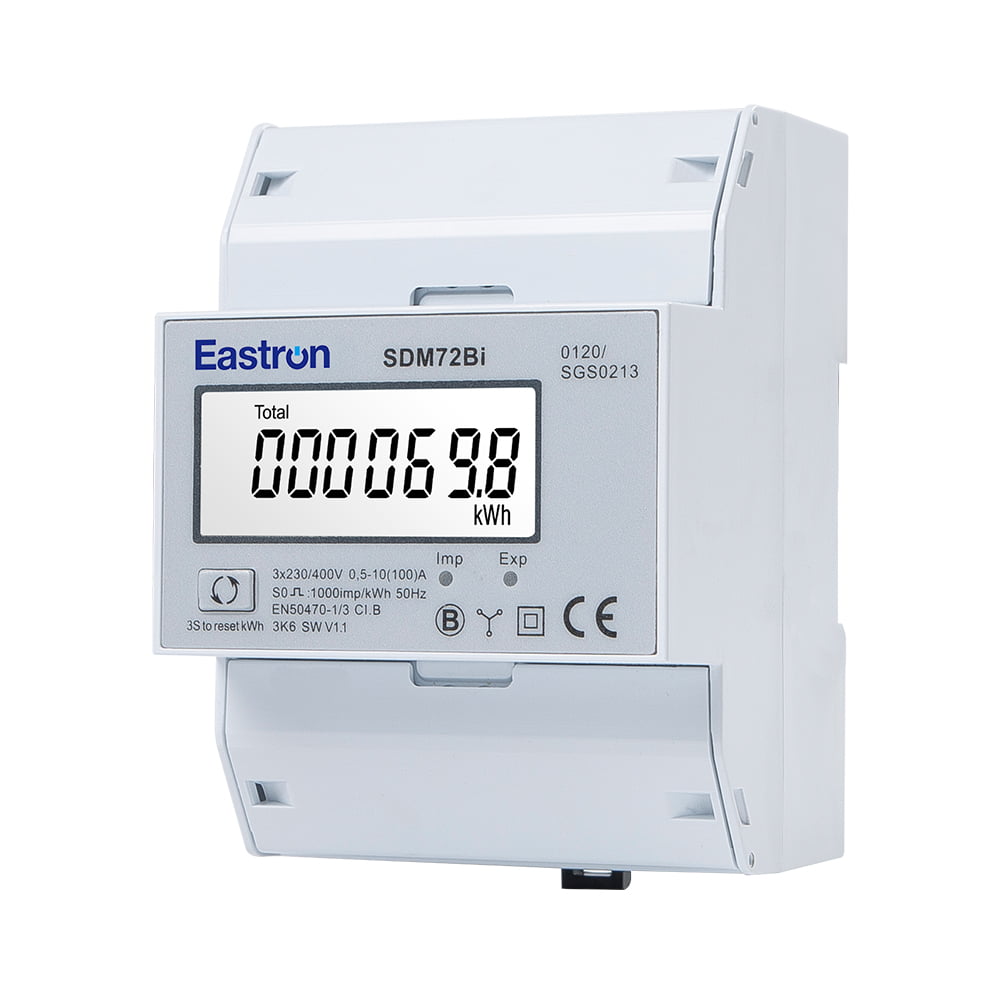
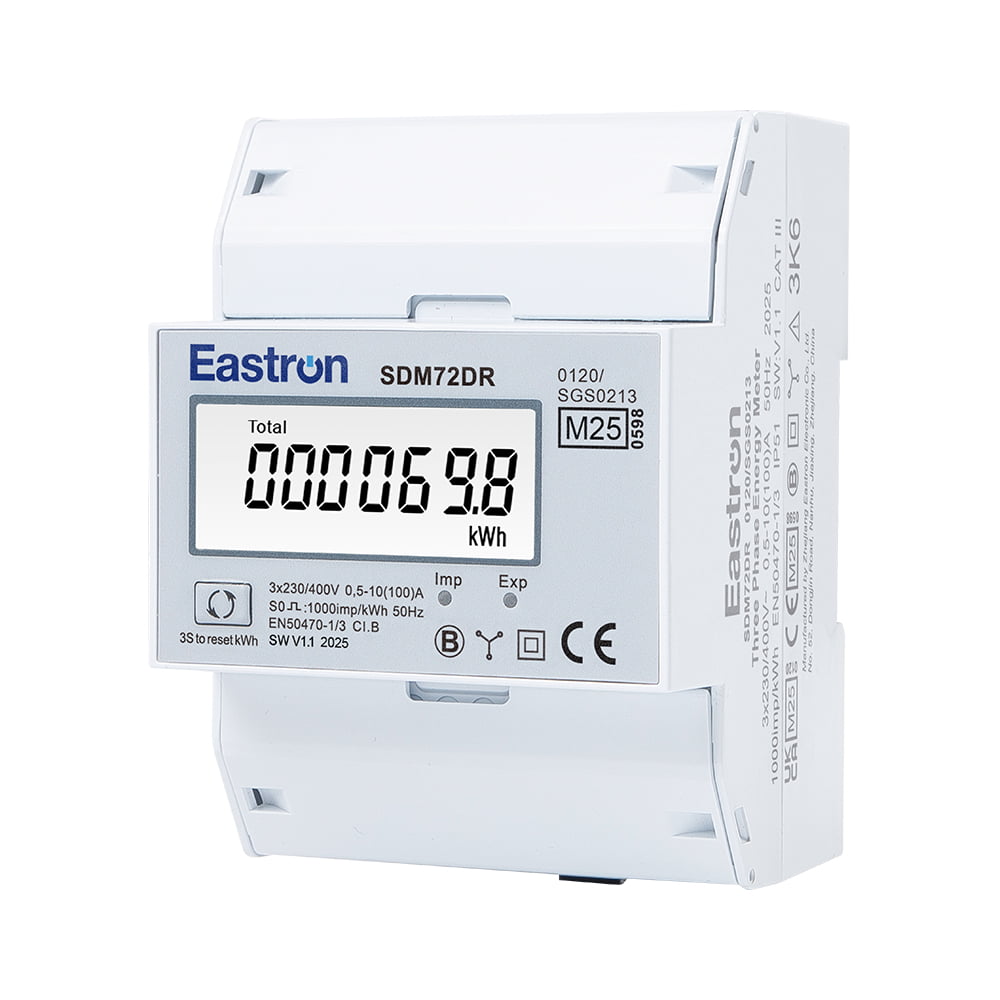
The Measuring Instruments Directive (MID) is the European Union framework — formalized under Directive 2014/32/EU — that establishes legal requirements for measuring instruments used in commercial transactions. A MID approved power analyzer (or energy meter) has passed independent type examination and verified calibration, making it legally suitable for billing purposes.
MID approval is legally required when energy data is used as the basis for financial transactions. Common scenarios include:
MID-certified meters are classified under the EN 62053 standard. The most common classes are:
| Accuracy Class | Max Error (Active Energy) | Typical Application |
|---|---|---|
| Class A | ±3.5% | Basic residential metering |
| Class B | ±1.5% | Commercial sub-metering, EV charging |
| Class C | ±0.5% | Industrial billing, grid feed-in |
MID-certified meters carry the M mark with a notified body number (e.g., M 0123) and a year code. This marking confirms the device has been type-examined by an accredited laboratory and is traceable to national standards.
A defining characteristic of MID-approved meters is built-in protection against manipulation. This includes sealed terminal covers, non-resettable energy registers, event logs for parameter changes, and in many cases, optical or communication port access controls. These features ensure the meter's readings cannot be altered without leaving a traceable record.
Not every application requires a full-featured multi-function analyzer. Selecting the right device depends on what parameters you need, your installation environment, and whether legal billing is involved.
| Feature | Standard Power Analyzer | Multi-Function Power Analyzer |
|---|---|---|
| Active Energy (kWh) | Yes | Yes |
| Reactive / Apparent Power | Limited | Yes |
| Harmonic Analysis (THD) | No | Yes (up to 63rd) |
| Per-Phase Monitoring | Sometimes | Yes |
| Data Logging | Basic | Advanced (time-stamped) |
| Communication Interfaces | Pulse / RS-485 | Modbus, BACnet, Ethernet |
| MID Approval Available | Yes (common) | Yes (select models) |
| Typical Cost Range | €30–€150 | €150–€1,500+ |
For straightforward energy monitoring without billing requirements, a standard DIN-rail power analyzer in the €50–€100 range is sufficient. If the goal is power quality diagnostics, load profiling, or integration into a BMS, investing in a multi-function analyzer pays off in diagnostic depth and system integration capability.
Most panel-mounted power analyzers use a standard DIN rail (EN 50022, 35mm) for installation inside distribution boards or control panels. Key installation factors include:
For currents up to 80A or 100A, direct-connection analyzers are typical and straightforward. For higher loads, external current transformers (CTs) with a standard secondary output of 5A or 1A are required. Always match the CT ratio to the analyzer's input specification — a mismatch directly affects measurement accuracy.
Multi-function power analyzers support multiple wiring schemes:
Selecting the wrong wiring mode in the analyzer's configuration will produce systematically incorrect readings, even if all physical connections are correct.
Many power analyzers require a separate auxiliary supply (typically 85–265V AC universal range) for the measurement electronics, independent of the measured circuit. Verify this before installation to ensure the device remains powered even when the monitored circuit is de-energized.
A multi-function power analyzer is the primary tool for identifying power quality issues that increase energy costs and damage equipment. Two of the most impactful metrics are Total Harmonic Distortion (THD) and Power Factor (PF).
A power factor of 1.0 means all drawn power is converted to useful work. In facilities with inductive loads (motors, transformers), the PF can drop to 0.7 or lower, meaning roughly 30% more current is drawn than necessary. This excess current causes additional I²R losses in cables and transformers, and many utility tariffs impose reactive energy surcharges when PF falls below 0.95. A power analyzer identifies the source and severity of this problem, enabling targeted capacitor bank compensation.
Modern loads like VFDs, UPS systems, and switch-mode power supplies inject harmonic currents into the supply. The IEC 61000-3-2 standard limits harmonic injection for equipment up to 16A per phase. For higher-current equipment, site-specific harmonic studies — performed using a multi-function analyzer — are required. THD levels above 5% on voltage or 15–20% on current typically warrant investigation and mitigation.
Before purchasing, answer these questions to narrow down the right device:
Taking time to answer these questions before purchasing avoids the common and costly mistake of deploying a basic energy meter where a multi-function analyzer is needed — or vice versa, overspending on advanced diagnostics for a simple sub-metering application.
A property manager installs MID-approved Class B single-phase meters on each tenant's circuit in a shared commercial building. The MID certification ensures readings are legally defensible for monthly invoicing. Pulse outputs connect to a building energy management system (BEMS) for centralized reporting. Total project cost per metering point: approximately €80–€120 including installation.
An energy auditor investigates unexplained transformer overheating in a plastics factory. Using a three-phase multi-function power analyzer with harmonic analysis, the auditor identifies current THD of 34% at the 5th and 7th harmonics — caused by multiple unfiltered VFDs. Installation of passive harmonic filters reduces THD to 6%, eliminating overheating and reducing transformer losses by an estimated 4.2%.
An EV charge point operator (CPO) deploys public charging stations across Germany. EU regulations require MID-certified metering at each charging point to enable accurate billing per kWh. The operator selects MID Class B, three-phase analyzers with Modbus TCP/IP output, feeding real-time consumption data to their cloud billing platform. Each unit is sealed at installation, with the M mark and notified body number visible on the enclosure.
Your email address will not be published. Required fields are marked *
We develop and produce high performance electricity meters, power analyzers, current sensors, communication modules and management systems. China Custom Smart Meters Manufacturers and Factory
Address:NO 52, Dongjin Road, Nanhu, Jiaxing, Zhejiang, China
Copyright @ Eastron Electronic Co., Ltd. All rights reserved Electricity Meters Manufacturers