

 English
 Español
 Deutsch
 中文简体
中文简体
Product Consultation
Your email address will not be published. Required fields are marked *
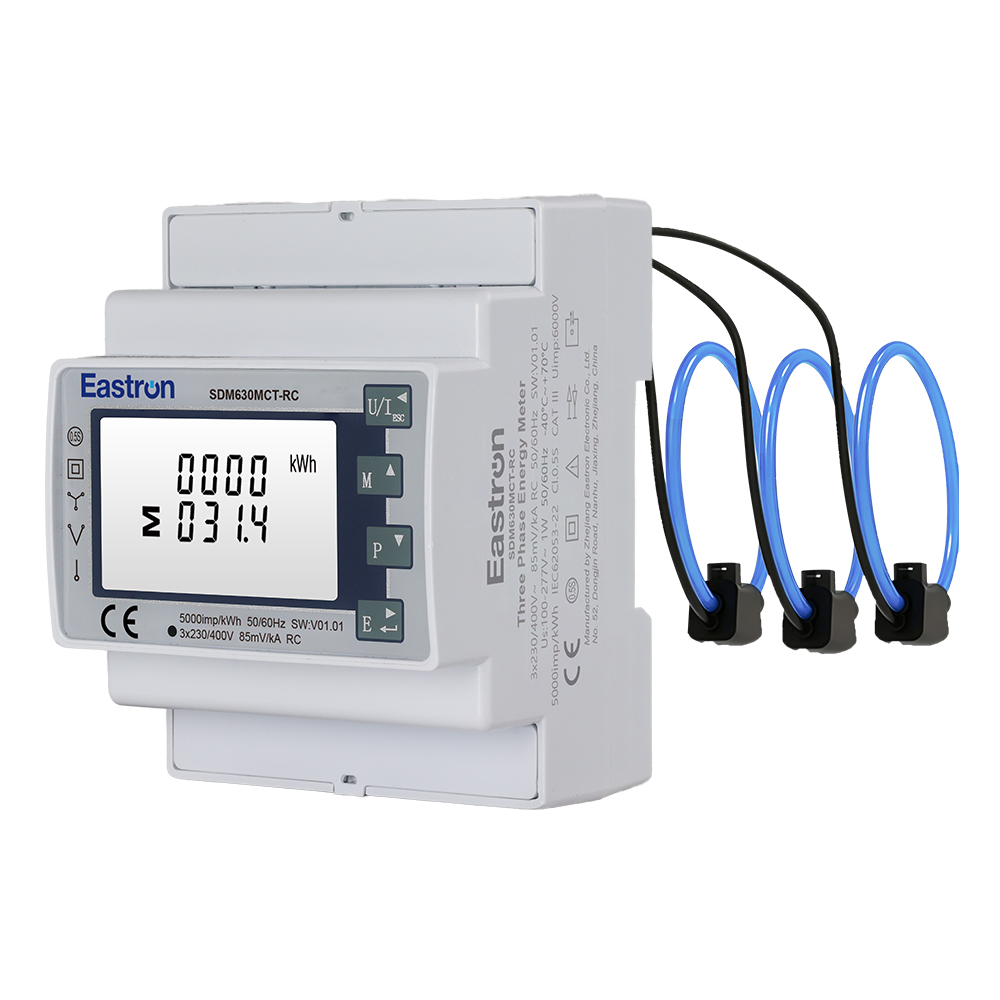
Multi-function Energy Meter: How to Choose the Right One for Billing and Monitoring
Sep 17,2026
Smart Meter FAQ (Part 2) | An Analysis of Communication, Accuracy, and Core Functions
Sep 11,2026
As the demand for AI computing power heats up, how is power management in data centers evolving?
Sep 11,2026The World Artificial Intelligence Conference (WAIC) was recently held in Shanghai. As a key global platform for exchange in the AI sector, WAIC consistently focuses on technological innovation, industrial applications, and future development trends. From large models and AI agents to embodied AI, artificial intelligence is rapidly penetrating a wide range of industries; a core foundation enabling the deployment of these applications is the ever-growing demand for computing power.
Amidst this rapid AI expansion, infrastructure facilities—such as data centers and intelligent computing centers—are facing new challenges. In this context, "power quality"—a technical concept previously primarily of interest to the electric power industry—is garnering increasing attention.
In everyday electricity usage, the fact that equipment operates normally often implies that the power supply is problem-free. However, for high-performance applications like AI servers and industrial automation equipment, a stable power supply means more than just avoiding outages; it requires ensuring that the electricity remains consistently stable and reliable.
This highlights the critical importance of power quality.
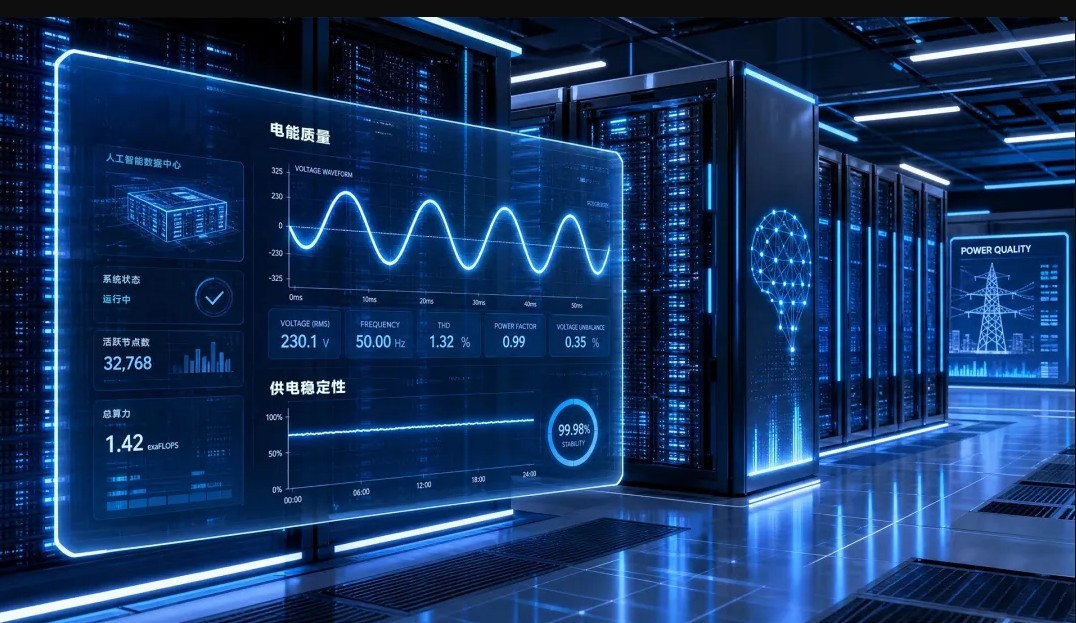
What is power quality?
Simply put, power quality is a key indicator used to assess the "health" of the power supply within an electrical system.
Ideally, the voltage and current supplied by the grid should remain stable and exhibit regular waveforms. However, in actual operation, the connection of various types of equipment to the grid can give rise to issues such as voltage fluctuations, harmonic interference, and three-phase imbalance. For instance, voltage dips can cause sensitive equipment to malfunction; harmonics can distort current waveforms, leading to increased equipment losses and heat generation; and persistent power quality issues can even impact equipment lifespan and system operational efficiency.
Therefore, the focus of power quality extends beyond the mere availability of electricity to whether the power supply is stable, safe, and efficient.
Why does AI need high-quality electricity?
The development of AI computing power has further highlighted the importance of power quality.
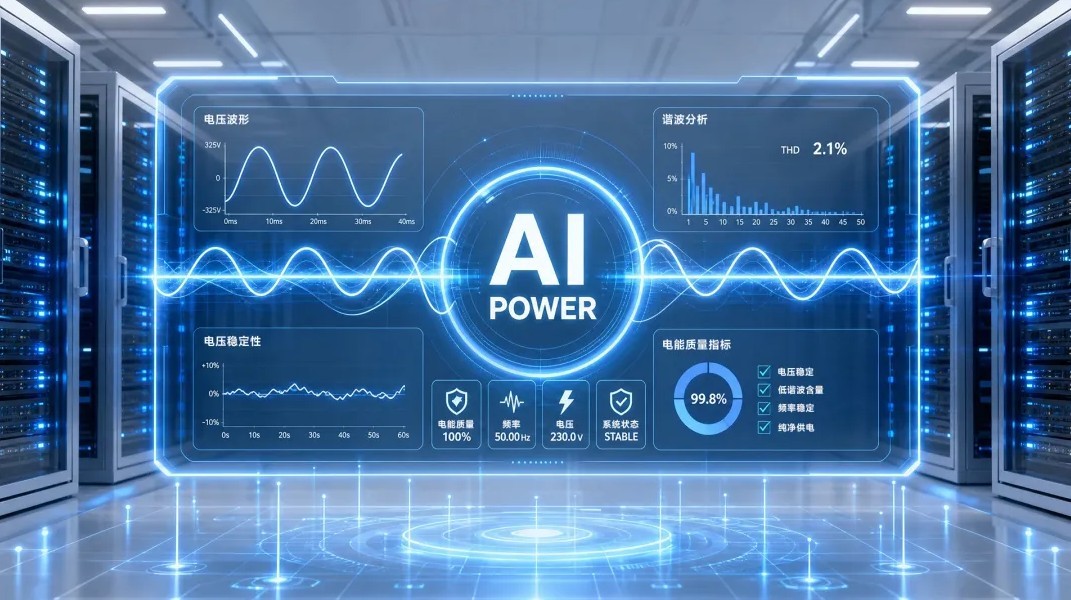
Compared to traditional computing tasks, AI model training and inference require massive parallel computing capabilities provided by GPUs; consequently, data centers typically deploy high-density server clusters equipped with UPS units, power modules, and intelligent cooling systems. While the extensive use of power electronics in this equipment enhances energy conversion efficiency, it can also introduce new power quality issues.
For instance, devices such as server power supplies and UPS units are typical non-linear loads that can generate harmonics during operation, causing power waveforms to deviate from the ideal state. Furthermore, as AI computing tasks often require continuous, long-term operation, any voltage anomalies or power supply fluctuations can compromise equipment stability or even lead to the interruption of computing tasks.
Therefore, as the scale of AI computing power expands, the focus of data center power requirements is shifting from merely ensuring power availability to guaranteeing power quality and stability.
How can you ensure the health of your power supply?
To improve power quality management, one must first understand the operating status of the power system.
Power quality monitoring equipment enables the real-time collection of data—such as voltage, current, power, harmonics, and waveform variations—helping users promptly identify potential issues and implement targeted optimizations.
Unlike traditional meters, which primarily track electricity consumption, smart monitoring devices focus on the "health" of power usage. Through continuous data collection and analysis, users can gain a more accurate understanding of their energy status and enhance the operational reliability of their equipment.
What is the value of smart meters?
With the digitalization of energy, smart meters are evolving from basic metering devices into equipment capable of energy data acquisition and power quality analysis.
Take, for instance, the Smart X96-5S series multifunction power quality analyzer from Donghong Electronics. Designed for applications such as smart power distribution, industrial automation, and energy management, this product not only offers high-precision metering (Class 0.5S) but also features advanced capabilities including power quality analysis, harmonic monitoring, and waveform recording.
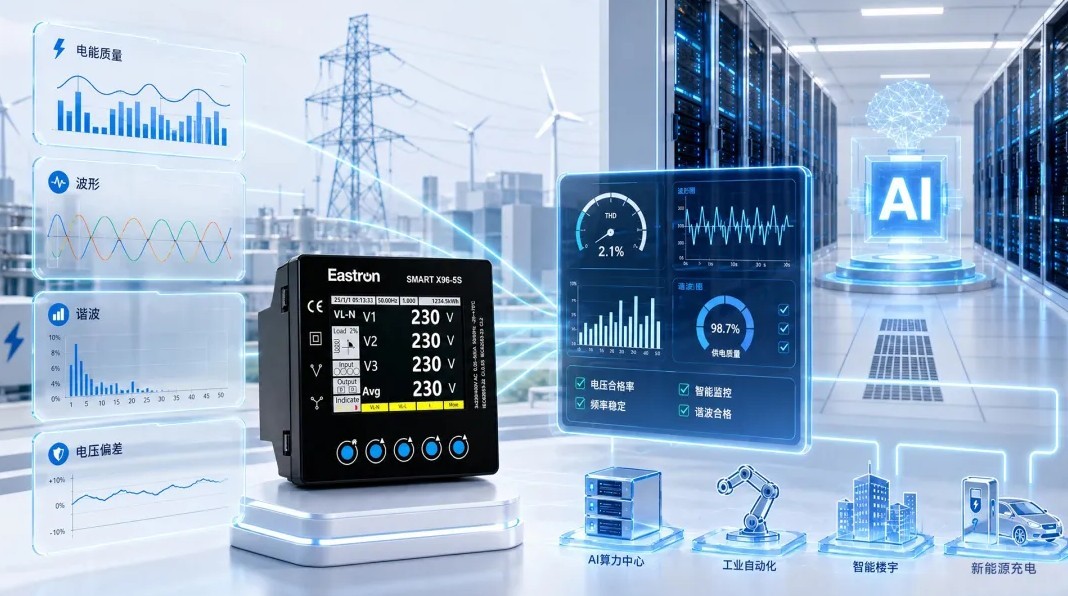
By capturing real-time data on voltage, current, and power quality parameters, the Donghong Smart X96-5S series enables users to gain an intuitive understanding of power system operating conditions. It connects to energy management systems via communication interfaces such as RS485 and Ethernet, providing the data support necessary for stable equipment operation and refined energy management.
Why is the future more important?
From AI data centers to new energy systems, and from intelligent manufacturing to smart buildings, modern industries are continuously raising their requirements for power reliability.
In the future, the focus of energy management will shift beyond merely reducing electricity costs to ensuring that every kilowatt-hour powers equipment operations with greater stability and efficiency. Power quality monitoring will become a crucial element in safeguarding the stable operation of digital infrastructure, while smart meters will play an increasingly vital role in future energy management systems.

Your email address will not be published. Required fields are marked *

We develop and produce high performance electricity meters, power analyzers, current sensors, communication modules and management systems.
Address:NO. 52, Dongjin Road, Nanhu, Jiaxing, Zhejiang, China
Copyright @ Eastron Electronic Co., Ltd. All rights reserved
