

 English
 Español
 Deutsch
 中文简体

Product Consultation
Your email address will not be published. Required fields are marked *
If your electricity meter shows normal consumption, does that mean there are no issues with your power supply?
Not necessarily.
Problems such as voltage sags, harmonic distortion, and three-phase unbalance may not be immediately apparent in routine electricity consumption statistics. Yet, they can cause equipment to overheat or malfunction, and may even disrupt production processes or the continuity of the power supply.
As the use of power electronic equipment continues to grow, the electrical environments within industrial manufacturing facilities, data centers, and photovoltaic energy storage systems are becoming increasingly complex. Beyond simply measuring how much electricity is consumed, it is equally important to understand the quality of the power itself.
Industrial Manufacturing: Harmonic Monitoring to Reduce Equipment Wear and Tear

Variable-frequency drives (VFDs), servo drives, rectification equipment—such devices have made production control in modern factories more flexible, but they have also altered the current waveforms within power distribution systems.
Unlike traditional linear loads, certain power electronic devices generate non-sinusoidal currents, introducing harmonic components into the power supply system. Excessive harmonic levels can increase losses and heat generation in cables and transformers, and may also interfere with the proper operation of other equipment.
Consequently, managing power distribution in a factory requires looking beyond basic voltage, current, and power metrics; it is also essential to monitor the Total Harmonic Distortion (THD), the levels of individual harmonic orders, and the balance of three-phase loads. By analyzing this data, operations and maintenance personnel can assess the severity of any anomalies, identify potential sources of harmonics, and establish a foundation for implementing effective mitigation measures.
Data Centers: Anomaly Tracing to Enhance Power Supply Reliability
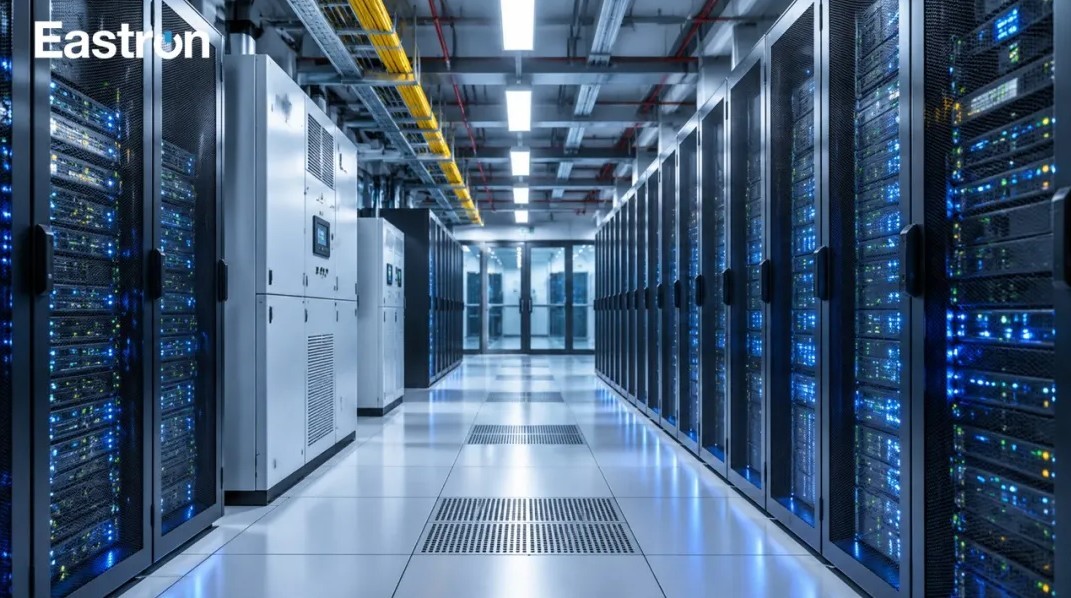
Servers, UPS systems, and precision power distribution equipment have stringent requirements for power quality. Server switching power supplies and UPS rectifiers can generate harmonics, while power anomalies—such as voltage dips and short-duration interruptions—can disrupt the operation of sensitive equipment, even if they last for only a fraction of a second.
The challenge lies in the fact that some power anomalies are extremely transient. Relying solely on conventional voltage and current readings often makes it difficult to reconstruct the specific conditions present when an anomaly occurs.
By establishing monitoring points at transformer incoming lines, UPS inputs and outputs, and critical power distribution circuits, one can continuously track fluctuations in power supply parameters. Analyzers equipped with event logging and waveform capture capabilities further enable operations and maintenance personnel to trace the timing, magnitude, and waveform characteristics of these anomalies.
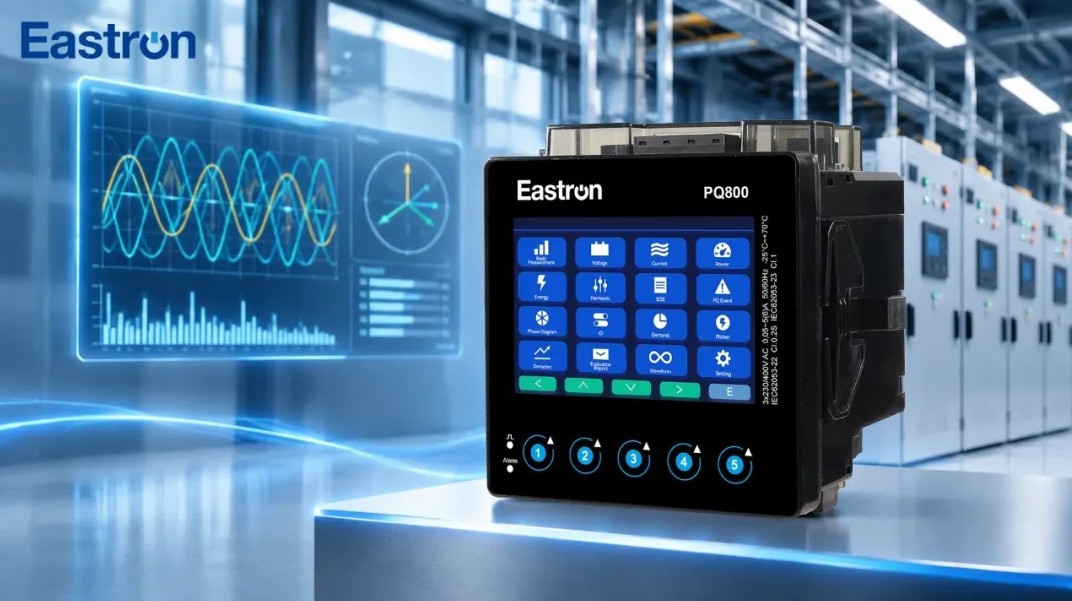
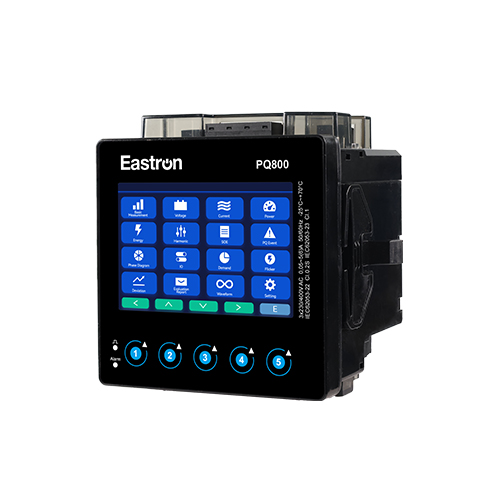
The Eastron Electronic PQ800 power quality analyzer offers Class A measurement accuracy and supports the analysis of harmonics and interharmonics up to the 127th order, making it well-suited for power distribution environments that demand high-level power quality monitoring and analysis.
Photovoltaic Energy Storage: Grid-Connection Monitoring for System Status Oversight
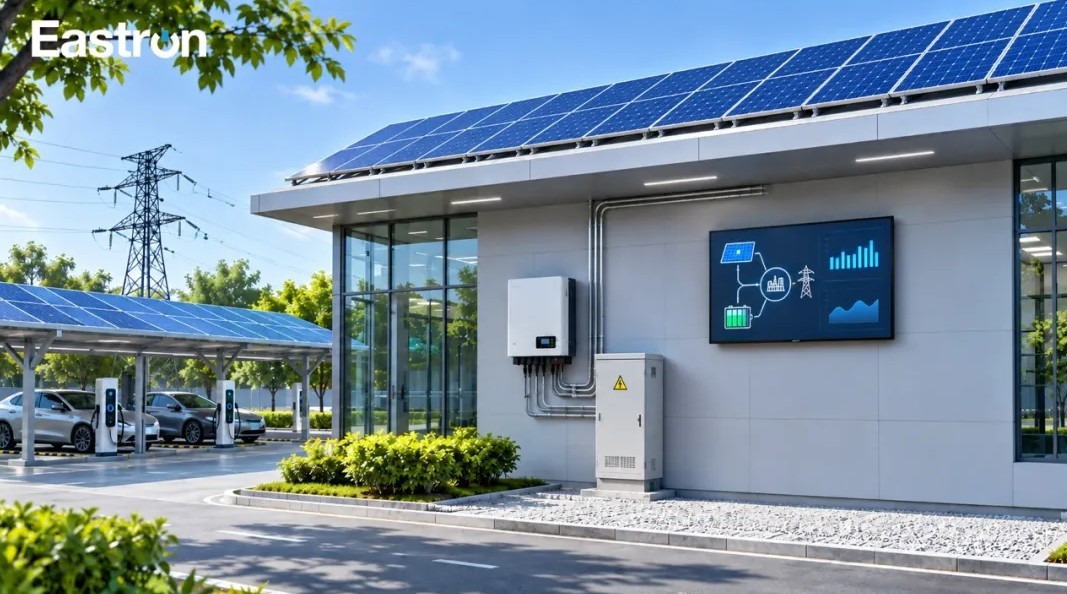
Photovoltaic (PV) inverters and power conversion systems (PCS) for energy storage facilitate the conversion between direct current (DC) and alternating current (AC) electrical energy. As these devices are integrated into the power grid, parameters such as voltage, frequency, harmonics, and the three-phase operating status at the point of grid connection become critical focal points for project operation and maintenance (O&M).
While metrics like total power generation and the amount of electricity fed into the grid reflect energy output, they do not provide a complete picture of power quality at the grid-connection interface. For instance, changes in the operating status of an inverter or fluctuations in grid conditions can alter the voltage and current waveforms at the point of connection.
By monitoring parameters such as voltage, current, frequency, power, and harmonics at the point of grid connection, project personnel can gain a more comprehensive understanding of the system's operating status, providing the necessary data to support grid-connection commissioning, troubleshooting, and routine maintenance.
Visualize power quality and take control of your electricity usage
Beyond the scenarios mentioned above, power distribution systems in hospitals, airports, large commercial buildings, substations, and industrial parks also require close attention to power quality. This is especially true for facilities with complex load types and high requirements for power supply continuity, where monitoring the electrical performance at critical nodes is essential.
To address diverse monitoring needs, Donghong Electronics offers panel-mounted power quality analyzers—such as the PQ800 and Smart X96-5S series—designed to cover a wide range of electrical parameters and power quality monitoring applications.
While electrical metering answers the question of "how much electricity has been consumed," power quality analysis focuses on "how well the power system is performing." Together, these two approaches provide a more comprehensive view of the operational status of a power distribution system.
Your email address will not be published. Required fields are marked *

We develop and produce high performance electricity meters, power analyzers, current sensors, communication modules and management systems.
Address:NO. 52, Dongjin Road, Nanhu, Jiaxing, Zhejiang, China
Copyright @ Eastron Electronic Co., Ltd. All rights reserved
