

 English
 Español
 Deutsch
 中文简体
中文简体
Product Consultation
Your email address will not be published. Required fields are marked *
Content
Reading your electric meter and understanding your electricity bill are practical skills that take minutes to learn and can save you significant money. Electricity consumption is measured in kilowatt-hours (kWh) — the unit you'll see on every meter and every bill. Your meter records cumulative kWh used, your bill charges you for the difference between two readings, and a plug-in power meter or smart monitor can break that usage down appliance by appliance. Once you understand how these tools work together, tracking and reducing your electricity consumption becomes straightforward.
Electricity usage is measured in kilowatt-hours (kWh). One kilowatt-hour equals the energy consumed by a 1,000-watt device running for one hour. A 100-watt light bulb running for 10 hours uses 1 kWh. A 2,000-watt electric kettle boiling for 30 minutes uses 1 kWh. Understanding this unit is the foundation of everything else.
Power (watts) and energy (kilowatt-hours) are related but different. Power is the rate of electricity use at a given moment; energy is the cumulative amount used over time. Your utility company bills you for energy — how many kWh you consumed over a billing period — not for instantaneous power draw.
The formula is simple: kWh = (Watts × Hours) ÷ 1,000. A 500-watt television running 4 hours per day uses (500 × 4) ÷ 1,000 = 2 kWh per day, or roughly 60 kWh per month. At a rate of $0.13 per kWh (the U.S. national average as of 2024), that television costs approximately $7.80 per month to run.
| Appliance | Typical Wattage | Avg. Daily Use | Monthly kWh | Monthly Cost |
|---|---|---|---|---|
| Central air conditioner | 3,500W | 8 hrs | 840 kWh | $109.20 |
| Electric water heater | 4,000W | 3 hrs | 360 kWh | $46.80 |
| Refrigerator | 150W | 24 hrs | 108 kWh | $14.04 |
| Clothes dryer | 5,000W | 1 hr | 150 kWh | $19.50 |
| Television (50") | 100W | 5 hrs | 15 kWh | $1.95 |
| LED light bulb (10W) | 10W | 5 hrs | 1.5 kWh | $0.20 |
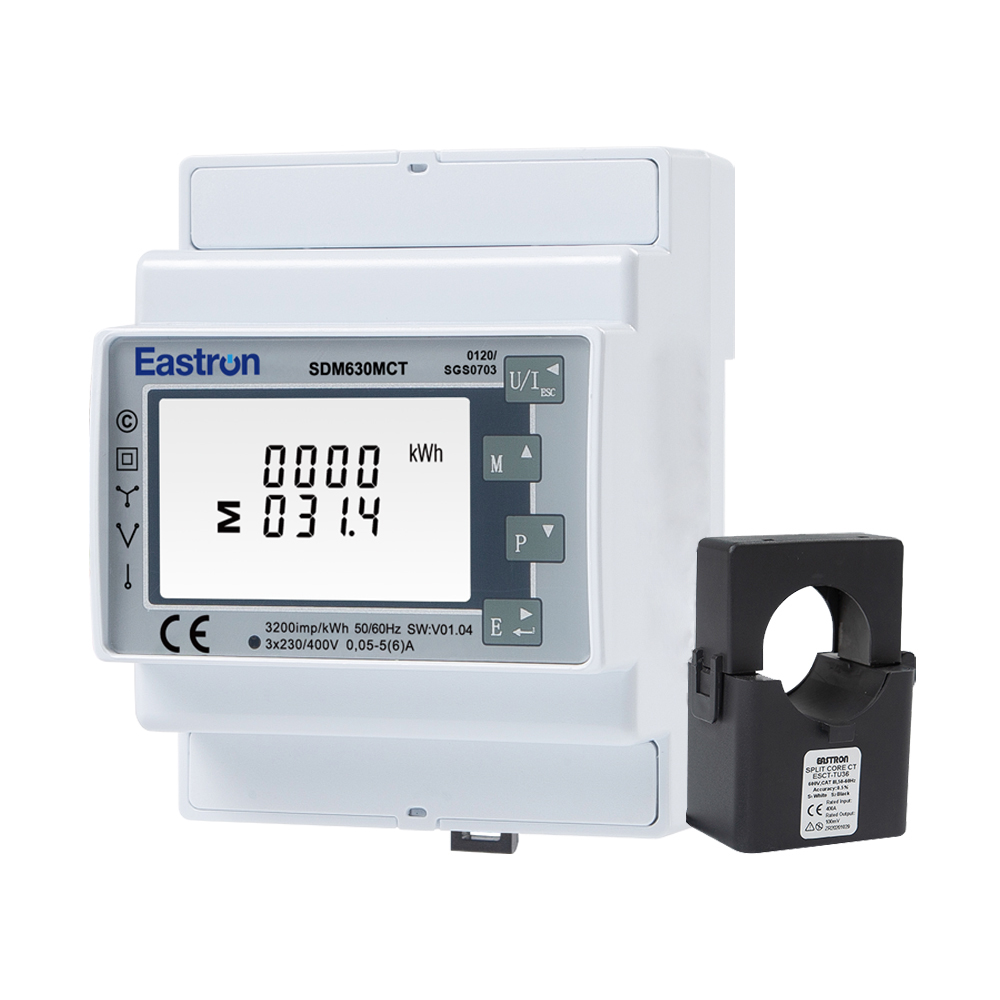
There are three main types of residential electric meters in use today: digital (smart), digital display, and older analog dial meters. Each is read differently, but all display cumulative kWh consumed since the meter was installed or last reset.
Modern digital meters display kWh usage directly as a numeric readout — typically 5–8 digits. Read the digits from left to right, including any leading zeros, and ignore digits after a decimal point (which represent fractions of a kWh). If your meter cycles through multiple displays, the main consumption reading is usually labeled "kWh," "TOTAL kWh," or "IMP kWh" (import kilowatt-hours, meaning power drawn from the grid).
Smart meters may also show additional screens: current power demand in watts or kW, time-of-use readings (Rate 1 and Rate 2 for off-peak and peak periods), and export readings if you have solar panels. For standard billing, you only need the main cumulative kWh total.
Older analog dial meters have five dials arranged in a row, each with a pointer moving around a numbered face (0–9). Reading them correctly requires care because adjacent dials rotate in opposite directions — one clockwise, the next counterclockwise, alternating across the row.
To find your consumption between two readings, simply subtract the earlier reading from the later one. If your meter read 42,500 last month and reads 42,763 today, you've consumed 263 kWh in that period.
Your electric bill is a summary of your consumption and the charges applied to it — but the layout varies significantly between utilities, and several line items are frequently misunderstood. Knowing how to read your electricity bill correctly lets you verify you're being charged accurately and identify opportunities to reduce costs.
Billing errors are more common than most people assume. A 2019 audit by the UK's Citizens Advice found that over 20% of energy bills contained errors, and similar patterns have been documented by consumer advocacy groups in the U.S. and Australia. To verify your bill:
Your utility meter tells you total household consumption, but an electricity use meter (plug-in power meter) tells you exactly how much any individual appliance is consuming. This is the most effective tool for identifying the high-cost items in your home.
Plug-in power meters — such as the Kill A Watt P4400 or similar devices available for $25–$50 — plug into a standard wall outlet. You then plug your appliance into the meter, and it displays real-time watts, cumulative kWh, and often estimated cost over time. Leaving the meter connected for 24–48 hours gives you an accurate picture of both active consumption and standby (phantom) power draw.
For comprehensive tracking, whole-home energy monitors (such as Sense, Emporia Vue, or Smappee) install at your electrical panel and measure consumption across every circuit simultaneously. These devices use current transformers (CTs) clipped around the main service conductors to measure current flow, and pair with a smartphone app to display real-time and historical usage. More advanced models use machine learning to identify individual appliances based on their power signatures — distinguishing the power draw pattern of your dishwasher from your oven without any additional sensors.
Whole-home monitors cost $150–$350 and typically require a licensed electrician for installation in the main panel. For households with high electricity bills or those pursuing significant efficiency improvements, the investment usually pays back within 12–24 months through identified savings.
Single readings are snapshots; tracking consumption over time reveals patterns, confirms the impact of efficiency changes, and provides early warning of abnormal usage. A simple tracking routine takes less than five minutes per month and builds an invaluable record.
Nightly meter monitoring — reading your meter at the same time each evening — is a more granular tracking method useful for isolating specific consumption patterns or investigating a suspected problem. It's particularly effective for:
Smart meter users can access this data automatically through their utility's app or online portal, which typically provides half-hourly interval data going back 12–24 months — eliminating the need for manual nightly readings while providing far more granular information.
If you don't have a plug-in power meter, you can estimate appliance consumption using the nameplate wattage (printed on the appliance label or in the manual) and your typical usage hours.
The formula: Monthly kWh = (Watts × Daily Hours × 30) ÷ 1,000. A 1,200-watt microwave used 15 minutes per day consumes (1,200 × 0.25 × 30) ÷ 1,000 = 9 kWh per month. At $0.13/kWh, that's $1.17 per month — negligible. A 1,500-watt space heater used 6 hours per day costs (1,500 × 6 × 30) ÷ 1,000 × $0.13 = $35.10 per month — highly significant.
Keep in mind that nameplate wattage is the maximum rated draw; many appliances consume less under normal operating conditions. A plug-in power meter gives a more accurate real-world figure, but nameplate calculations are a reliable starting point for prioritizing which appliances to investigate further.
| Method | Cost | Detail Level | Best For |
|---|---|---|---|
| Utility meter reading | Free | Whole-home total only | Billing verification, monthly tracking |
| Smart meter app / portal | Free (if available) | Half-hourly whole-home data | Pattern analysis, nightly monitoring |
| Plug-in power meter | $25–$50 | Per-appliance, real-time | Identifying high-consumption devices |
| Whole-home energy monitor | $150–$350 | All circuits, appliance-level AI | Comprehensive efficiency analysis |
| Nameplate wattage estimate | Free | Approximate per-appliance | Quick estimates, prioritizing investigation |
Your email address will not be published. Required fields are marked *

We develop and produce high performance electricity meters, power analyzers, current sensors, communication modules and management systems.
Address:NO. 52, Dongjin Road, Nanhu, Jiaxing, Zhejiang, China
Copyright @ Eastron Electronic Co., Ltd. All rights reserved
