

 English
 Español
 Deutsch
 中文简体
中文简体
Product Consultation
Your email address will not be published. Required fields are marked *
Smart Meter FAQ (Part 3) | Certification, Installation, and Procurement: Addressing 5 Practical Application Issues
Sep 20,2026
National Quality Month | A Look Inside Eastron Electronic: Quality Embedded in Every Stage
Sep 20,2026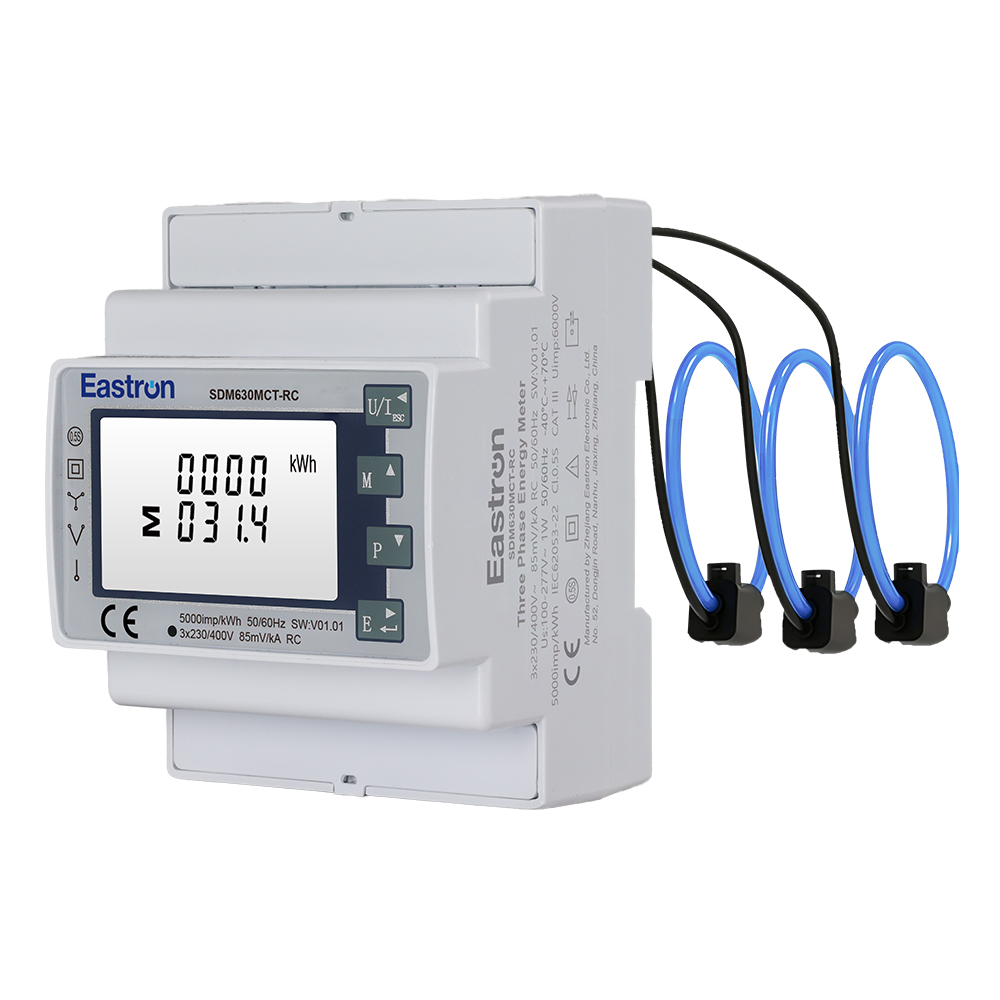
Multi-function Energy Meter: How to Choose the Right One for Billing and Monitoring
Sep 17,2026Content
To read an electricity meter, locate the display, record the digits shown from left to right ignoring any red-framed or decimal digits, and subtract your previous reading from the current one to calculate kilowatt-hours (kWh) consumed. That single number, the difference between two readings, is what your utility company uses to calculate your bill. Whether your meter is a digital LCD, an older dial-type, or a modern smart meter, the core principle is identical: it counts cumulative energy consumption in kWh, and your actual usage for any period is always the current reading minus the previous one. This article explains how to read every major meter type, how to decode your electricity bill, how to monitor your energy consumption in real time, and how to use that data to reduce what you pay.
Every electricity meter measures energy in kilowatt-hours (kWh), sometimes called units. One kilowatt-hour is the amount of energy consumed when a 1,000-watt appliance runs continuously for one hour. A standard electric kettle rated at 2,000 watts uses 1 kWh in 30 minutes. A 100-watt light bulb uses 1 kWh in 10 hours. Understanding this unit is the foundation of reading any meter, understanding any bill, and making sense of any energy monitoring device.
The figure displayed on your meter is a cumulative total, not a rate. It counts every kWh consumed since the meter was installed or last reset. A reading of 14,872 means the property has consumed 14,872 kWh in total since the meter was first activated. If the reading three months ago was 14,320, consumption over that period was 14,872 minus 14,320 equals 552 kWh. That 552 kWh figure is what appears on your electricity bill as the metered consumption.
Most residential meters display between five and seven digits. The standard residential meter has five digits before the decimal point and, in some cases, one or two decimal digits shown in a differently colored window or box. The decimal digits are not included in the reading submitted to your utility. Only the black-framed or full-size digits are counted.
Digital electric meters, also called electronic or LCD meters, are the most common type installed in homes and businesses today. They replaced older dial meters from the 1990s onward and are far easier to read accurately. Despite their variations in brand and style, all digital meters follow the same reading method.
Example: the display shows 08451.7. The reading to record is 08451. The .7 is a decimal fraction of a unit and is ignored for billing purposes.
Some households are on a two-rate tariff, commonly called Economy 7 or off-peak tariff, where electricity consumed at night is charged at a lower rate than daytime consumption. These meters display two separate registers, typically labeled Rate 1 and Rate 2, or Day and Night, or T1 and T2.
To read a two-rate digital meter, press the display button to cycle through the registers. Each register will show its label and then its cumulative kWh figure. Both readings must be recorded separately and both must be submitted when providing a meter reading to your supplier, since each rate is billed at a different unit price. A common error is submitting only one of the two register readings, which leads to incorrect billing on both tariff bands.
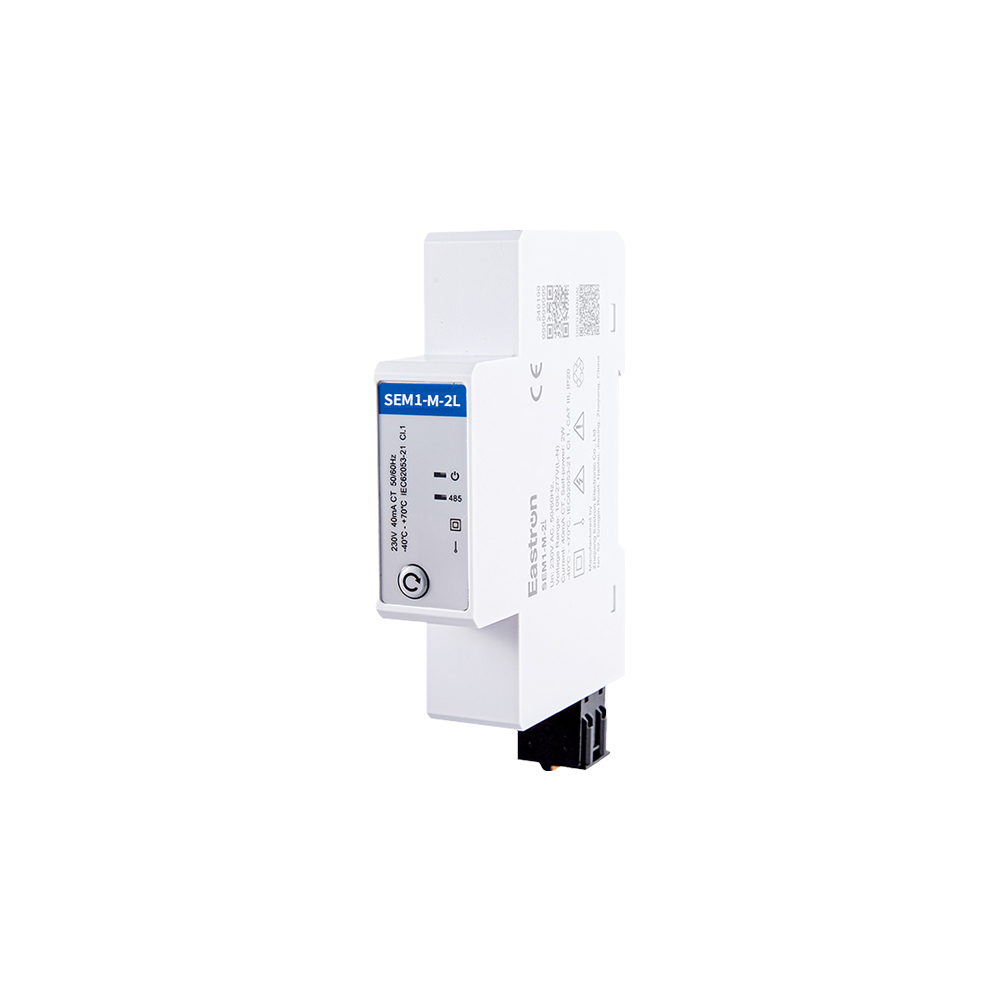
Properties with high electricity demand, including most commercial premises and some large homes with electric heating systems, are supplied on a three-phase connection. Three-phase digital meters typically display either a single combined total across all three phases or individual totals per phase, cycling through each on the display. Unless your billing arrangement specifies per-phase readings, record only the combined total displayed as the main kWh figure. If the meter displays phase-by-phase readings and no combined total, add the three individual readings together to obtain the billable consumption figure.
Dial meters are older electromechanical meters that display consumption through a series of circular dials, each with a pointer like a clock hand. While they are being phased out in most countries, a significant number remain in service in older housing stock. Reading them correctly requires care because adjacent dials rotate in opposite directions.
Example: the five dials show pointers at 3, 8, 4, 6, and 2 (ignoring the red dial). The reading is 38462 kWh. If this reading was 37910 the previous month, consumption was 552 kWh.
Smart meters are digital meters with a built-in communication module that transmits readings automatically to the utility company at regular intervals, typically every 30 minutes in countries with advanced metering infrastructure. They eliminate the need for manual reading and estimated billing, and they enable real-time energy monitoring through a companion in-home display (IHD) or a smartphone app.
Although smart meters transmit readings automatically, the meter itself still displays the current cumulative kWh figure and can be read manually at any time. Press the button on the meter face to cycle through the display screens. The screen labeled IMP KWH or IMPORT shows the total energy imported from the grid, which is the figure equivalent to a standard meter reading. On most SMETS2 smart meters (the second-generation standard used in the UK and several other countries), the import register is shown on screen 1, 6, or 9 depending on the meter manufacturer. Your utility will specify which screen to read if a manual reading is ever needed.
The in-home display that accompanies a smart meter shows live electricity consumption in pounds, pence, dollars, or local currency per hour or per day, along with a kWh figure updated in near real time. This makes it an accessible electric consumption monitor for households who want to understand their usage without interpreting raw kWh data. Studies from the UK Department of Energy found that households with an active in-home display reduced their electricity consumption by an average of 2.8 to 3.3% compared to households without one, primarily through behavior change prompted by real-time cost visibility.
An electricity bill translates the raw kWh consumption recorded by your meter into a monetary charge. Most bills share a common structure, but understanding each line item prevents overpayment and helps identify errors. Billing disputes are common: a UK consumer survey found that 1 in 5 households had received at least one estimated or incorrect bill in the prior 12 months.
To verify any electricity bill, use the following calculation:
Total charge = (units consumed x unit rate) + (number of days x standing charge) + applicable taxes
Example: 552 kWh consumed at a unit rate of 28.62 pence per kWh over 91 days with a standing charge of 53 pence per day and 5% VAT. The calculation is (552 x 0.2862) = 157.98 pounds for units, plus (91 x 0.53) = 48.23 pounds standing charge, giving a pre-tax subtotal of 206.21 pounds. Adding 5% VAT gives a total of 216.52 pounds. If your bill shows a significantly different figure and the readings are correct, contact your supplier with the calculation to request a review.
| Bill Component | What It Shows | Common Error to Watch For | How to Verify |
|---|---|---|---|
| Meter Reading | Opening and closing kWh figure | Estimated reading marked E instead of A | Compare to your own recorded reading |
| Units Consumed | kWh used in billing period | Abnormally high figure vs. prior months | Subtract opening from closing reading yourself |
| Unit Rate | Price per kWh | Wrong tariff rate applied after switching | Check against your tariff agreement letter |
| Standing Charge | Fixed daily connection cost | Charged for more days than billing period | Multiply daily rate by number of days billed |
| Tax and Levies | VAT and government charges | Incorrect VAT rate applied | Confirm current rate with tax authority |
Meter displays and bills use several unit labels that can be confusing if you are unfamiliar with them. The table below explains the most common terms found on residential and small commercial electricity meters and bills.
| Label | Full Name | What It Measures | Where It Appears |
|---|---|---|---|
| kWh | Kilowatt-hour | Energy consumed (1 kW used for 1 hour) | Meter display, bill units consumed |
| kW | Kilowatt | Power demand at a given moment | Smart meter IHD, energy monitors |
| IMP KWH | Import kilowatt-hours | Total energy drawn from the grid | Smart meter display screens |
| EXP KWH | Export kilowatt-hours | Energy sent back to grid (solar panels etc.) | Smart meter display screens |
| MWh | Megawatt-hour | 1,000 kWh (used for large commercial meters) | Commercial bills, large site meters |
| kVAh | Kilovolt-ampere-hour | Apparent energy (used in commercial tariffs) | Commercial meters with power factor billing |
Reading your meter once a month tells you total consumption but reveals nothing about which appliances are responsible or when peak usage occurs. Monitoring energy consumption in more detail requires either a plug-in energy monitor, a whole-home clamp meter, a smart meter with an in-home display, or a dedicated electric consumption monitor installed at the distribution board level.
Plug-in energy monitors insert between a wall socket and a single appliance to measure that appliance's real-time power draw and accumulated kWh consumption. They are inexpensive, typically costing between 10 and 30 pounds or dollars, and require no installation. They are most useful for measuring high-consumption appliances whose running cost is uncertain, such as tumble dryers, electric heaters, older refrigerators, and gaming consoles.
A practical monitoring exercise: plug your refrigerator into a plug-in monitor and leave it running for 24 hours. Multiply the 24-hour kWh figure by 365 to get annual consumption. A modern A-rated refrigerator uses approximately 100 to 150 kWh per year. An older D or E-rated model from 2005 may use 350 to 500 kWh per year, costing two to three times more to run at current energy prices.
A whole-home electricity monitor uses a current transformer (CT) clamp that attaches around the main live cable at the consumer unit or fuse box, without requiring any rewiring or interruption to the electricity supply. The clamp detects the magnetic field produced by current flowing through the cable and transmits a signal to a display unit or app showing real-time whole-home power consumption in kW and cumulative daily or monthly kWh.
Popular whole-home monitors such as the Efergy Engage, Sense Energy Monitor, and Emporia Vue typically cost between 50 and 150 pounds or dollars and connect via Wi-Fi to a smartphone app. They provide historical usage graphs, daily and monthly totals, and in some cases appliance-level disaggregation using load signature recognition algorithms. Households using whole-home monitors have been shown to reduce electricity consumption by 5 to 15% on average within the first year of use, according to multiple studies including research by the American Council for an Energy-Efficient Economy (ACEEE).
If your home has a smart meter, your utility provider's app or a compatible third-party app can function as an electric meter monitor without any additional hardware. These apps pull data directly from the smart meter via the utility's data infrastructure, showing half-hourly consumption data, daily totals, monthly comparisons, and estimated bill projections. Some utilities allow customers to download their full half-hourly consumption history as a CSV file, which can be analyzed in a spreadsheet to identify patterns such as overnight standby loads, weekend versus weekday consumption differences, or consumption spikes linked to specific events like hosting guests or cold weather.
Understanding which appliances drive your electricity bill requires knowing both the rated power of each device and how many hours per day it actually runs. The formula for calculating any appliance's daily consumption is straightforward:
Daily kWh = (appliance wattage divided by 1,000) multiplied by hours used per day
A 2,500-watt electric shower used for 8 minutes per day runs for 0.133 hours. Daily consumption is 2.5 multiplied by 0.133, which equals 0.33 kWh per day or approximately 121 kWh per year. At a unit rate of 28 pence per kWh, that shower costs about 33 pounds per year per person using it.
| Appliance | Typical Wattage | Typical Daily Use | Estimated Annual kWh | Annual Cost at 28p per kWh |
|---|---|---|---|---|
| Refrigerator (A-rated, modern) | 40 to 60W average | 24 hours | 150 to 220 kWh | 42 to 62 pounds |
| Tumble Dryer | 2,000 to 2,500W | 45 min per cycle, 5 cycles per week | 290 to 365 kWh | 81 to 102 pounds |
| Electric Shower (8.5kW) | 8,500W | 8 minutes per use | 103 kWh per user | 29 pounds per user |
| Television (55 inch LED) | 80 to 120W | 4 hours | 117 to 175 kWh | 33 to 49 pounds |
| Desktop Computer and Monitor | 150 to 300W | 6 hours | 328 to 657 kWh | 92 to 184 pounds |
| Electric Storage Heater | 1,500 to 3,000W | 6 to 8 hours (off-peak) | 1,000 to 2,000 kWh | 280 to 560 pounds |
Taking regular meter readings and maintaining a simple log is one of the most effective actions a household or small business can take to control energy costs. It enables rapid detection of unusual consumption increases, supports accurate bill verification, and provides the data needed to assess the impact of energy-saving changes.
The value of knowing how to read your meter and monitor your energy consumption is not purely informational. Households that actively track their usage consistently spend less on electricity than those that do not, because visibility of consumption creates natural pressure to change behavior and identify waste.
A targeted approach to reducing consumption starts with establishing your current baseline through a month of accurate readings, then applying the following priority order based on potential saving per pound of investment:
Your email address will not be published. Required fields are marked *

We develop and produce high performance electricity meters, power analyzers, current sensors, communication modules and management systems.
Address:NO. 52, Dongjin Road, Nanhu, Jiaxing, Zhejiang, China
Copyright @ Eastron Electronic Co., Ltd. All rights reserved
