

 English
 Español
 Deutsch
 中文简体
中文简体
Product Consultation
Your email address will not be published. Required fields are marked *
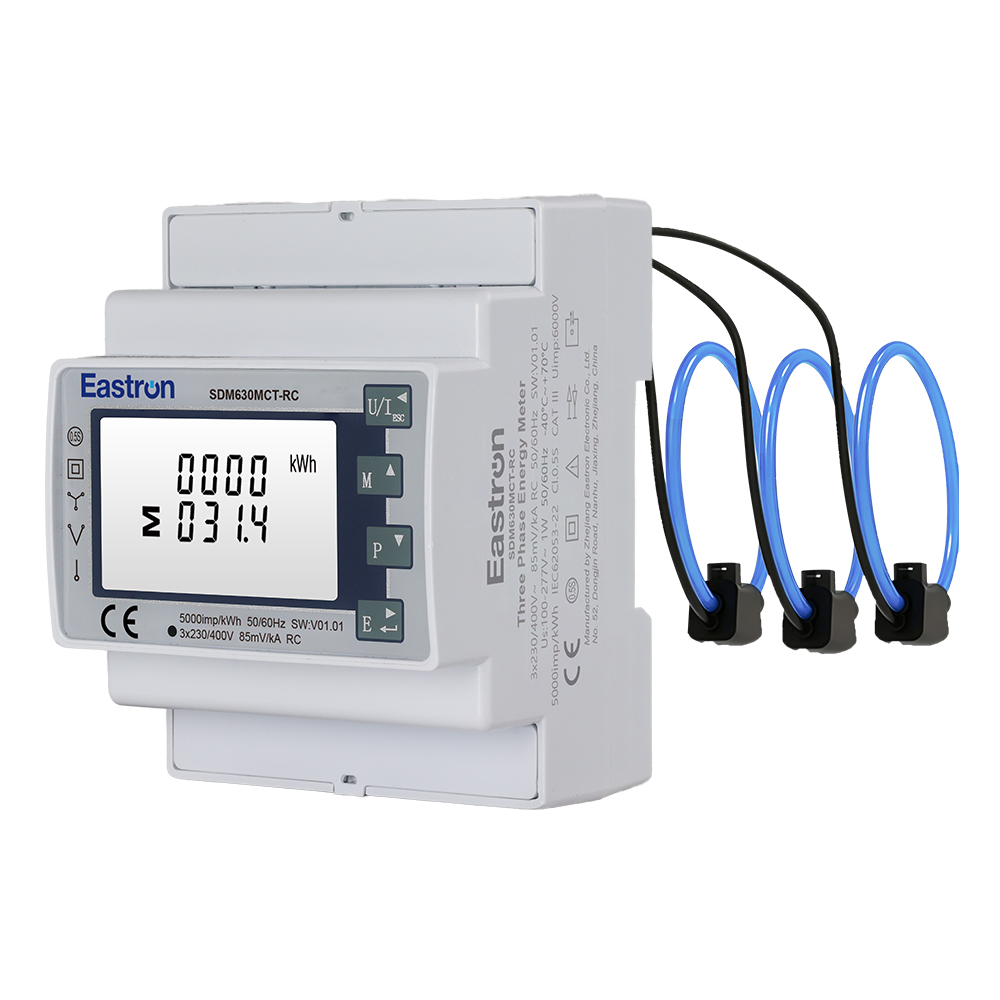
3 Phase CT Meter Guide: How to Choose, Install and Wire CT-Operated Meters
Sep 28,2026
UL and ETL Listed Energy Meters: Safety Certification, Applications, and Buying Guide
Sep 21,2026
Smart Meter FAQ (Part 3) | Certification, Installation, and Procurement: Addressing 5 Practical Application Issues
Sep 20,2026Content
Suppose you are building a small public charging hub, or you are a charger manufacturer who needs a metering module fitted inside the enclosure. The meter you select does more than count kilowatt-hours. It converts charging sessions into invoices, tells the operator whether a station is performing correctly, and determines whether the installation is legally allowed to bill the public.
The short version is this: an EV charger meter must match the charging topology, satisfy the legal metrology requirements of the destination market, and communicate with the charging management software. Checking these three points early prevents the most expensive retrofit projects, such as rewiring a DC cabinet because the shunt range was wrong, or replacing a DIN-rail meter because its certification does not cover the market the station was built for.
An AC charger and a DC charger measure energy at completely different points, and no meter can serve both roles without major external components. This is the first filter in any selection.
In AC charging, the AC-to-DC conversion happens inside the car, in the onboard charger. The meter therefore sits at the input of the wallbox or charging post and measures AC energy. A single-phase 7.4 kW home charger typically uses a single-phase 100 A direct-connection meter. A three-phase 22 kW commercial unit uses a three-phase meter, either 100 A direct or CT-operated for larger site feeders.
When the wallbox is sold into a market that requires legal billing, the AC meter should carry the relevant type approval. The same DIN-rail platform used across Eastron's SDM series covers most of these cases, from the SDM630-EV three-phase meter datasheet for 100 A installations down to compact single-phase versions for residential wallboxes.
In a DC charger, the conversion happens inside the charging station, so the measuring point moves to the DC bus after the power stage. This requires a DC energy meter with a shunt, rated for the charging voltage and current. Fast chargers typically operate from 200 V up to 1000 V DC, with currents from 60 A to 600 A, which is why DC metering products are defined by their shunt connection and continuous current rating rather than by a current transformer ratio. Eastron's DCM230 and DCM232 series, for example, cover single-load and dual-channel DC metering from 500 V to 1000 V with shunt options from 150 A to 600 A.
The DC electricity meter for DC EV charging stations follows exactly this architecture: a DIN-rail DC meter with shunt input and RS485 Modbus output, matched to the power levels found in fast-charging cabinets.
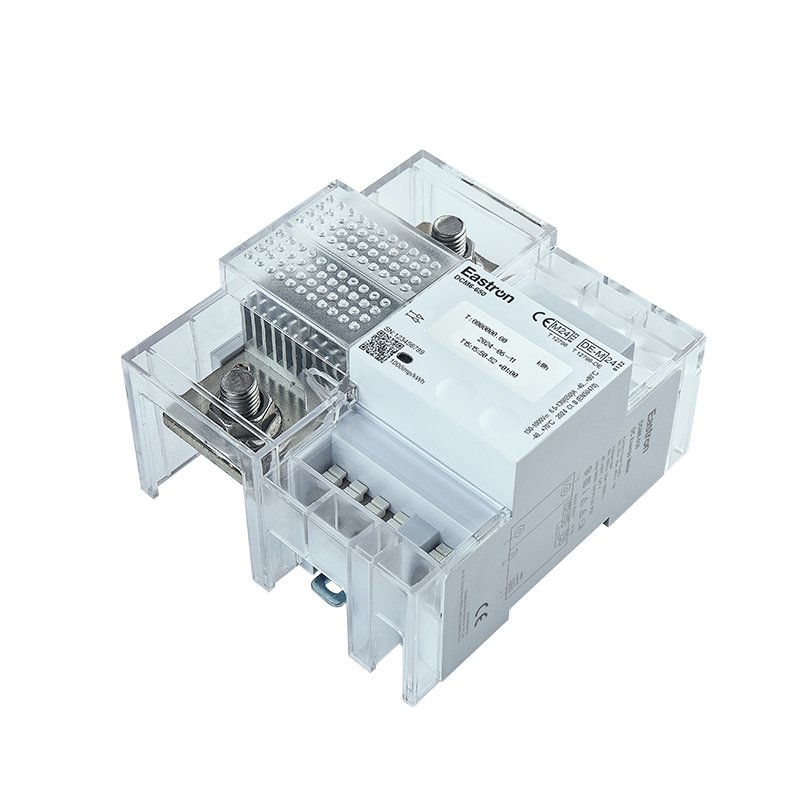 DCM6-650 MID/PTB/LNE Approved DC Electricity meter for DC EV Charging station MaEastron is China DCM6-650 MID/PTB/LNE Approved DC Electricity meter for DC EV Charging station Manufacturers and Custom Suppliers, Factor...View Product →
| Comparison point | AC charger metering | DC charger metering |
|---|---|---|
| Measurement point | Supply side, before the car's onboard charger | DC output side, after the power stage |
| Typical charging power | 7-22 kW | 30-350 kW |
| Typical voltage range | 230 V single phase / 400 V three phase | 200-1000 V DC |
| Typical current range | Up to 100 A direct, or via CT | 60-600 A via DC shunt |
| Meter type | Single-phase or three-phase AC kWh meter | DC energy meter with external shunt |
A meter that cannot legally bill is only a counting device. In the European Union, billing instruments fall under the Measuring Instruments Directive (MID). In Germany, the calibration rules known as Eichrecht impose additional requirements, and the Mess EV regulation specifically addresses the measurement of charging electricity at EV charging stations. In North America, the equivalent acceptance path runs through UL and ETL listings.
For a public charging station in the EU, the practical rule in most member states is that the meter must carry MID type approval, and in some markets the operator must also demonstrate conformity with local calibration law. This matters because an invoice produced by an unapproved meter has limited legal weight, and a metrology authority can order the operator to replace the entire metering chain.
On the DC side, the MID-certified DC energy meter for EV charger metering shows what a billing-ready product looks like: the MID assessment covers the metering characteristics that a paid charging session depends on, and the DIN-rail format keeps integration cost far below custom metrology hardware.
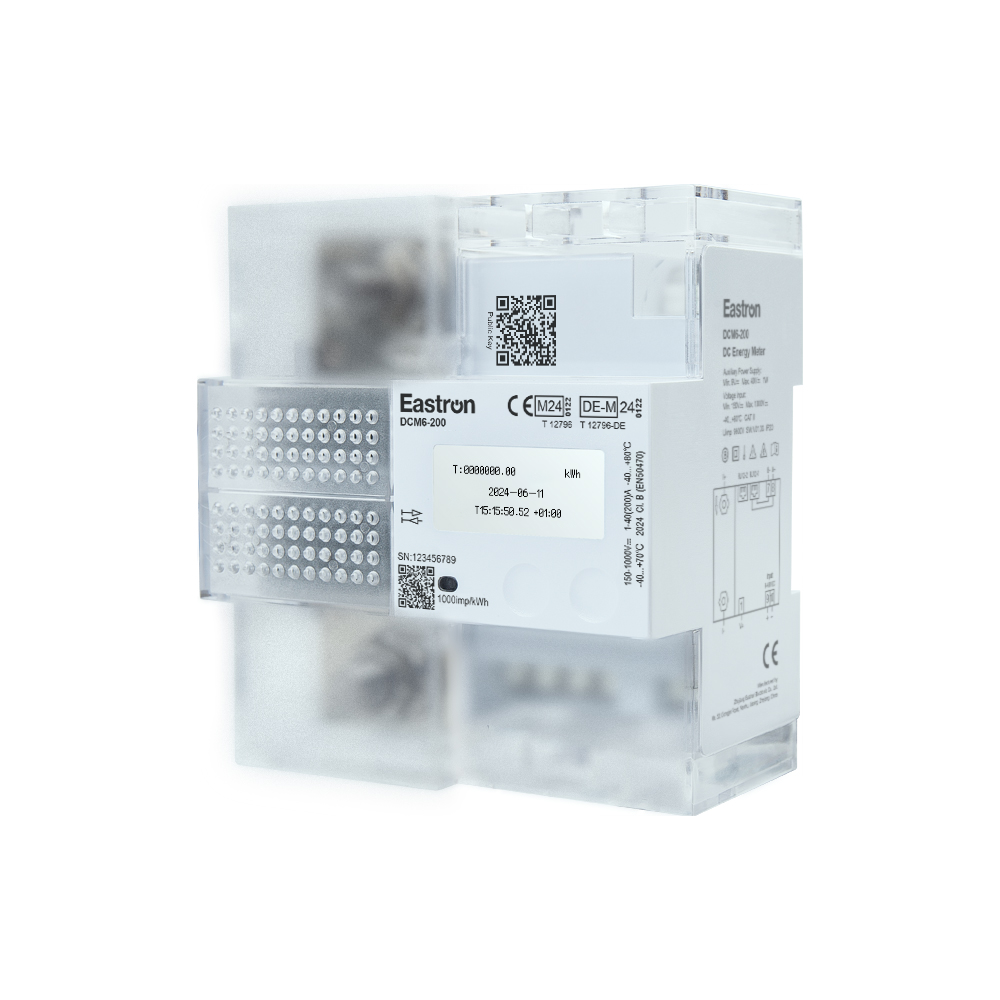 DCM6-200 MID Certified DC Energy Meter for EV Charger Metering Manufacturers, FaEastron is China DCM6-200 MID Certified DC Energy Meter for EV Charger Metering Manufacturers and Custom Suppliers, Factory,DCM6-200 belo...View Product →
Accuracy class is the maximum permitted error over the measuring range. Class 1 allows a 1 percent deviation, Class 2 allows 2 percent, and Class 0.5S allows 0.5 percent. Most MID billing meters for EV charging are rated Class 1 or Class B, which is the same 1 percent limit. Class 0.5S is more often specified for CT-operated industrial meters and for control tasks such as zero-export, where tighter readings make the control loop more stable.
Avoid over-specifying accuracy. A Class 0.5S meter will not compensate for a poorly installed shunt or an undersized cable, and it will cost more. The accuracy class should match the legal requirement and the commercial value of the energy being measured.
The meter is only useful if the charging software can read it, so the communication output is a core specification rather than an option list. RS485 Modbus RTU is the de facto standard for charger-to-meter communication and appears on most commercial meters, including the SDM and DCM families. Pulse outputs remain useful for simple installations because a pulse counter needs no protocol driver and works with almost any controller.
For sites that already have IP networking, Ethernet or Modbus TCP versions remove the need for serial adapters. In buildings, M-Bus variants integrate well with energy management systems. For outdoor charging sites without communication cabling, Wi-Fi and LoRaWAN versions support remote reading without new wiring. The selection rule is straightforward: confirm which protocol the charging management platform supports, then choose the meter that speaks it natively.
Update speed also matters. For dynamic load management or zero-export functions, a faster data refresh, for example 50 ms, helps keep control loops stable. For billing records alone, a slower polling interval is perfectly adequate.
Certification and protocol cover the functional side, but hardware selection depends on physical details that are easy to overlook at the specification stage.
The highest-risk item is unverified certification. Ask for the certificate or approval number and check that it covers the exact model and firmware version. The second risk is assuming that two variants in the same family share a register map; always validate the precise model ordered. The third risk is undocumented firmware, which turns a simple debugging session into a long investigation. Choosing a supplier that maintains versioned manuals and protocol documents reduces all three risks.
With topology, certification, and communication settled, the final step is choosing within a product family. The table below summarizes common deployment scenarios.
| Use case | Meter type | Key specification |
|---|---|---|
| Home AC wallbox, single phase | Single-phase AC kWh meter | 100 A direct, MID certified |
| Workplace or commercial AC hub | Three-phase AC multifunction meter | 100 A direct or CT, Modbus RTU, MID certified |
| DC fast charger | DC energy meter with shunt | 200-1000 V DC, 60-600 A, Modbus, MID or PTB variant |
| German AC billing deployment | Three-phase MID meter with Eichrecht approval | Mess EV-compliant active energy metering |
| North American AC charger | UL/ETL listed single- or three-phase meter | UL listed, 100 A direct or CT |
For operators that need both MID and German calibration compliance on three-phase AC charging, the Eichrecht-approved three-phase multifunction energy meter for EV charging covers the 100 A direct case in the same DIN-rail form factor as the rest of the SDM630 platform, so wiring and Modbus integration follow familiar patterns.
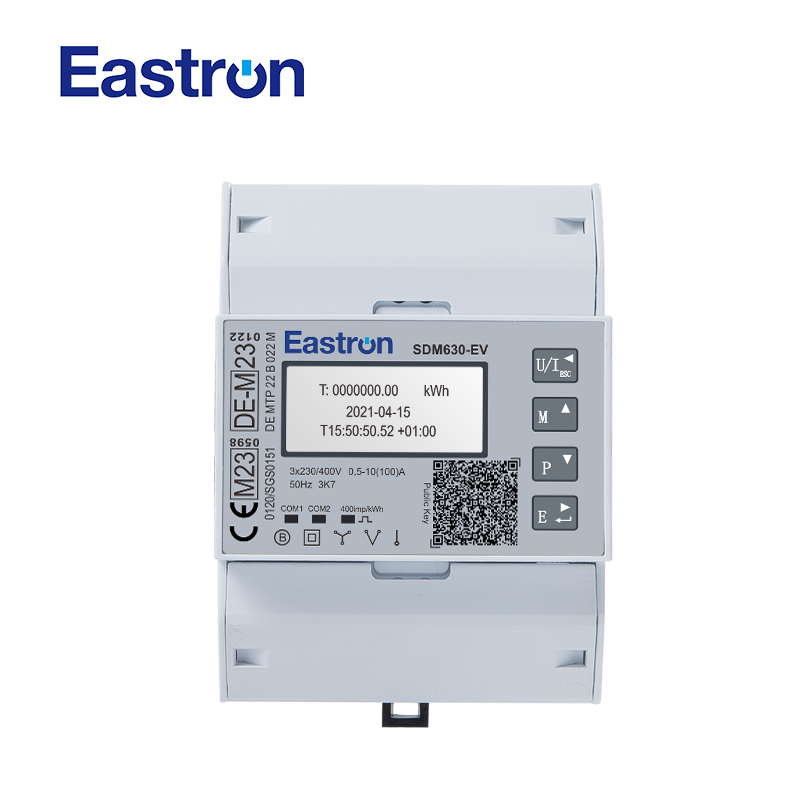 SDM630-EV Eichrecht Approved Three Phase Multi-function Energy Meter for EV CharEastron is China SDM630-EV Eichrecht Approved Three Phase Multi-function Energy Meter for EV Charging Metering Manufacturers and Custom S...View Product →
Work from the outside in. First decide whether the measuring point is AC or DC and where the meter will be installed. Second, verify that the exact model and firmware version carries the certification accepted by the destination market for billing. Third, confirm the communication protocol and review the documentation, including the register map and installation manual, before the first sample is ordered.
This order prevents the most expensive mistakes and makes the procurement easy to audit. A manufacturer with a documented product range, such as the engineering and manufacturing background described on Eastron's about page, supports this process by keeping datasheets, manuals, and protocol notes for each product variant in one place. The meter that arrives with clear paperwork is the meter that will not delay your charging project.
Your email address will not be published. Required fields are marked *

We develop and produce high performance electricity meters, power analyzers, current sensors, communication modules and management systems.
Address:NO. 52, Dongjin Road, Nanhu, Jiaxing, Zhejiang, China
Copyright @ Eastron Electronic Co., Ltd. All rights reserved
