

 English
 Español
 Deutsch
 中文简体


Product Consultation
Your email address will not be published. Required fields are marked *
Content
If you work with DC power, you have probably met a shunt-based meter at some point. A 75mV shunt DC meter is not a mysterious box; it is a DC energy meter built to read the small voltage that appears across a shunt resistor at full load, then turn that signal into current, power, and energy data. It is a common choice in EV charging, battery storage, solar DC circuits, telecom power, and industrial DC systems.
This guide walks through what the meter measures, how to match it to a 75mV shunt, common shunt values, wiring details that affect accuracy, and how to choose a meter for your application. We have spent years helping customers solve these matching problems, and most issues come down to a few practical details rather than the meter itself.
A shunt is a low-resistance resistor placed in series with the DC circuit. At its rated current, it produces a defined voltage drop, and 75mV is that full-scale output. The meter measures the millivolt signal across the shunt, along with the DC bus voltage, and calculates current, power, and energy. The 75mV figure is not a constant voltage; it is the voltage you should see when the shunt is at its rated current.
This is different from an AC current transformer. The shunt sits directly in the DC path, and the meter's shunt input must be designed for that low-level DC signal. A 100A/75mV shunt will produce 75mV at 100A, while a 200A/75mV shunt will also produce 75mV at 200A. The meter needs the correct current scaling, because the same 75mV signal can represent very different currents depending on the shunt ratio.
The first rule is simple: match the meter's shunt input range to the shunt's full-scale output. A 75mV meter should be used with a 75mV shunt. If you connect a 50mV shunt to a 75mV input, the meter will under-read unless it supports configurable scaling. Also check the shunt's rated current, accuracy class, and continuous duty rating. A 100A shunt may be rated for 100A continuously, but enclosure temperature, cable lugs, and ventilation can reduce that in practice.
Use the shunt's sense terminals, not the main power terminals, for the meter's voltage sense leads. Keep the sense leads short, twisted, and away from high-current cables. A small voltage drop in the sense wiring becomes a current error, especially at low currents. If the meter and shunt are in a noisy environment, shielded twisted-pair cable and a clean earth reference help.
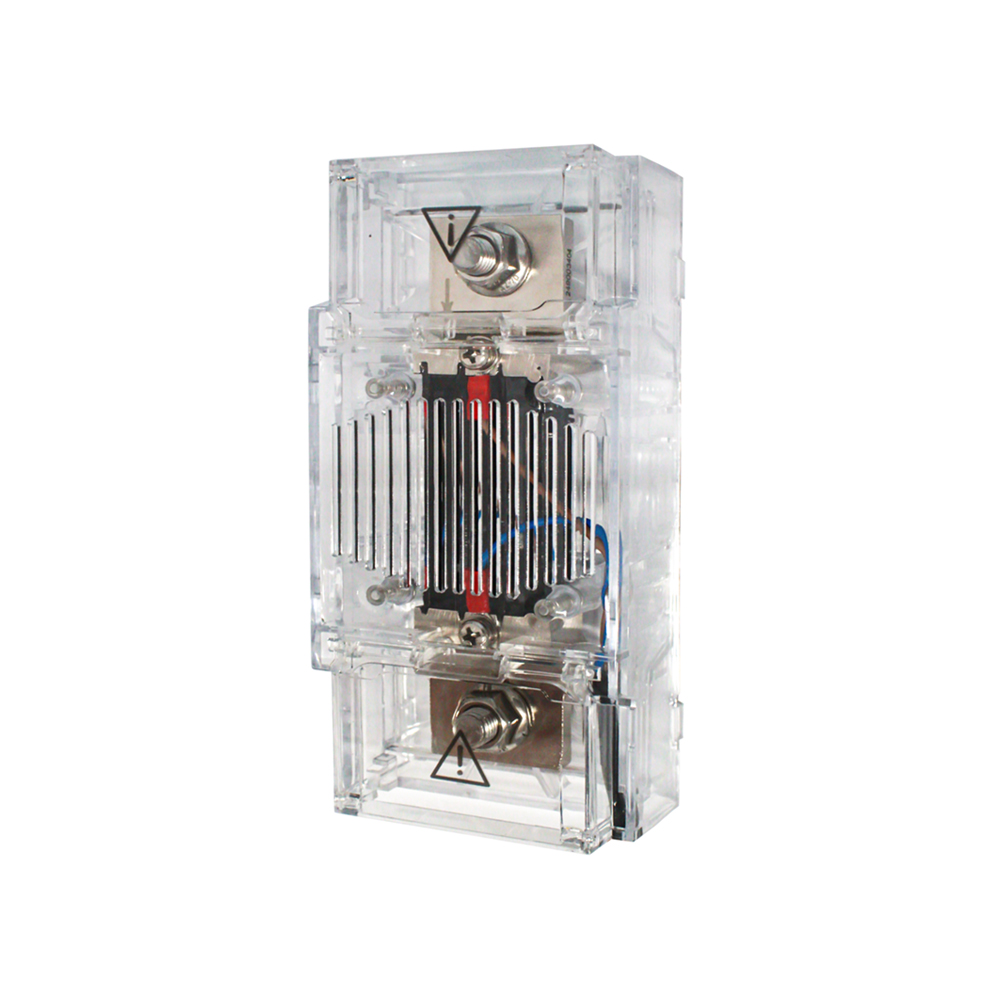 Eastron DCM230-2-400A DC Energy Meter with ShuntDIN-rail 400A DC meter for EV charging projects, with 75mV shunt connection, Modbus RTU and bi-directional energy measurement.View Product →
For EV charging and similar DC metering projects, our 75mV shunt connection DC energy meter is designed around this exact interface, with 150A to 600A options.
Shunt resistance is set by the voltage drop and rated current: R = V / I. With 75mV full scale, a 100A shunt has 0.00075 Ω, and a 600A shunt has 0.000125 Ω. The shunt itself dissipates heat at full load: P = V × I. That is why large shunts are physically bigger and need ventilation.
| Rated current | Shunt resistance at 75mV | Power at full scale | Typical use |
|---|---|---|---|
| 50 A | 0.00150 Ω | 3.75 W | Small chargers, telecom DC |
| 100 A | 0.00075 Ω | 7.50 W | Battery cabinets, solar DC |
| 150 A | 0.00050 Ω | 11.25 W | EV charging, industrial DC |
| 200 A | 0.000375 Ω | 15.0 W | EV charging, storage |
| 300 A | 0.00025 Ω | 22.5 W | Fast DC charging |
| 400 A | 0.0001875 Ω | 30.0 W | High-power DC |
| 500 A | 0.00015 Ω | 37.5 W | High-power DC |
| 600 A | 0.000125 Ω | 45.0 W | High-power DC |
Do not choose a shunt only by current. A 300A/75mV shunt used at 150A produces only 37.5mV, which is still readable, but resolution and noise matter. If you need better low-current accuracy, choose a shunt whose rated current is closer to your normal load, while leaving headroom for peaks.
Most accuracy problems we see are wiring problems, not meter problems. Keep the following in mind:
After installation, compare the meter reading with a clamp meter or calibrated shunt reading at a steady load. If there is a fixed offset, check the meter's zero and shunt scaling. If the error grows with current, check the sense wiring and shunt rating. Our manuals and protocol documents in the download area include wiring diagrams and register maps for our DC meters.
Both 50mV and 75mV shunts are common. The difference is signal level and heat. A 75mV shunt gives the meter a larger millivolt signal for the same current, which can improve noise immunity and low-current resolution. The trade-off is higher power dissipation: at 100A, a 75mV shunt dissipates 7.5W, while a 50mV shunt dissipates 5W.
Choose 75mV when the meter input is 75mV, when cable runs are long or electrically noisy, or when you want a stronger signal for a wide current range. It is common in EV charging, battery cabinets, and industrial DC systems where stable readings matter.
Choose 50mV when heat is tight, when the shunt is already installed, or when the meter is designed for 50mV input. Do not mix the two unless the meter supports configurable scaling and you can verify accuracy.
Start with the application, then choose the meter features. For EV charging, you may need a DIN-rail meter with a shunt input, RS485 Modbus, and optional MID or PTB/Eichrecht approval for billing. For battery storage and solar DC circuits, voltage range, dual-channel measurement, and fast data updates matter. For telecom or industrial DC, compact size and wide voltage input are often more important than billing certification.
 Eastron DCM230-2-150A MID-Certified DC Energy MeterDIN-rail 150A DC meter with 75mV shunt, RS485 Modbus RTU and bi-directional measurement for EV charger and DC monitoring.View Product →
Our DIN-rail DC energy meters with shunt input cover 150A, 200A, 300A, 600A, and higher-voltage options. If you need certified DC metering for EV charging, the MID-certified 300A model is a practical starting point.
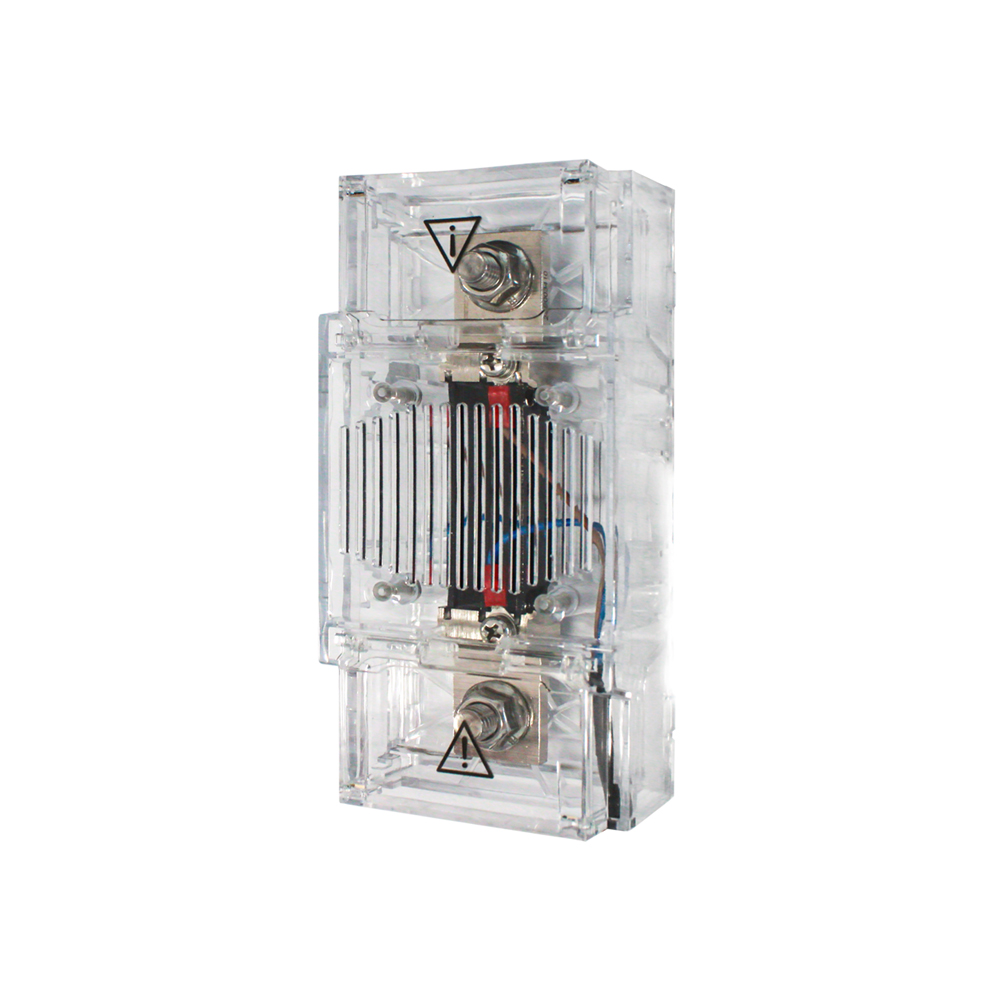 Eastron DCM230-2-300A MID-Certified DC Energy MeterDIN-rail 300A DC meter with 75mV shunt, RS485 Modbus RTU and bi-directional measurement for certified EV charging metering.View Product →
For projects that need documentation, our team can share datasheets, user manuals, and protocol files. You can also read more about our background and DC metering experience on the about page.
Use this checklist before you order:
A 75mV shunt DC meter is a straightforward way to measure DC current and energy, provided the shunt, meter input, and wiring are treated as one system. Match the millivolt range, use the sense terminals, keep the signal clean, and choose a meter with the communication and certification your project needs.
If you are unsure which shunt and meter combination fits your charger, battery cabinet, or solar DC circuit, talk to us. We are happy to review your current range, voltage, and installation details and point you to a practical solution.
Your email address will not be published. Required fields are marked *

We develop and produce high performance electricity meters, power analyzers, current sensors, communication modules and management systems.
Address:NO. 52, Dongjin Road, Nanhu, Jiaxing, Zhejiang, China
Copyright @ Eastron Electronic Co., Ltd. All rights reserved
