

 English
 Español
 Deutsch
 中文简体
中文简体
Product Consultation
Your email address will not be published. Required fields are marked *
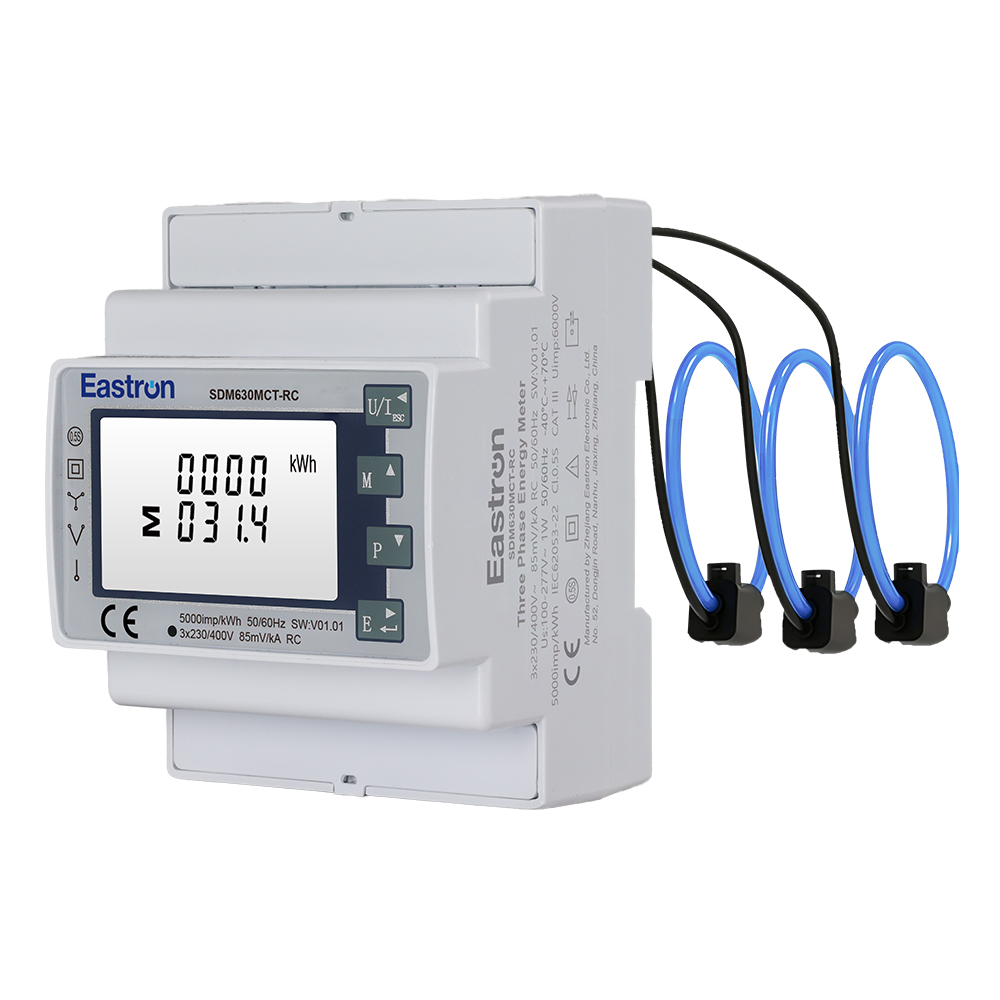
3 Phase CT Meter Guide: How to Choose, Install and Wire CT-Operated Meters
Sep 28,2026
UL and ETL Listed Energy Meters: Safety Certification, Applications, and Buying Guide
Sep 21,2026
Smart Meter FAQ (Part 3) | Certification, Installation, and Procurement: Addressing 5 Practical Application Issues
Sep 20,2026Content
Energy meters are devices designed to measure the amount of electrical energy consumed by residential, commercial, or industrial users. Their primary purpose is to provide accurate data for billing, energy management, and monitoring purposes. By tracking electricity usage over time, energy meters allow utilities and consumers to understand consumption patterns and make informed decisions to optimize energy efficiency.
Modern energy meters can record real-time consumption, store historical data, and even communicate usage information to remote systems. This capability is essential for smart grid applications, load balancing, and demand-side management.

Energy meters measure electrical power by calculating the product of voltage, current, and time. In alternating current (AC) systems, the meters also consider the phase difference between voltage and current, known as the power factor. Accurate measurement of energy requires monitoring both active power (used for performing work) and, in some cases, reactive power (associated with non-working energy in the system).
Depending on the type, energy meters use different methods for measurement. Electromechanical meters rely on a rotating disc and magnetic fields, while digital meters use electronic sensors and microprocessors for precise calculation and data logging.
Electromechanical meters use a rotating aluminum disc driven by the interaction of magnetic fields generated by voltage and current coils. The speed of rotation is proportional to the power consumption, and the total number of revolutions represents total energy used. These meters are simple, reliable, and have been widely used for decades, but they lack remote reading capabilities and advanced data analysis functions.
Digital meters employ electronic sensors to measure current and voltage signals. Microprocessors calculate energy usage with high precision, taking into account power factor, harmonic distortion, and other electrical parameters. These meters often include memory storage, communication modules for remote reading, and features such as time-of-use billing and load monitoring.
Energy meters can be categorized based on application, phase type, and technology. Selecting the appropriate type depends on the voltage, current, and load characteristics of the system.
| Meter Type | Primary Application | Key Features |
| Single-Phase Electromechanical | Residential homes | Simple, reliable, mechanical display |
| Single-Phase Digital | Residential and small commercial | High accuracy, remote reading, data logging |
| Three-Phase Electromechanical | Industrial facilities | Handles high loads, robust construction |
| Three-Phase Digital / Smart | Large commercial and utility grids | Remote monitoring, advanced analytics, demand management |
Accuracy is critical for energy meters because billing and energy management decisions depend on precise readings. Meters are assigned an accuracy class, indicating the allowable deviation from true energy consumption under specified conditions. Regular calibration ensures that both electromechanical and digital meters maintain reliable performance over time.
For digital meters, calibration involves verifying the electronic sensors, microprocessor calculations, and communication modules. For electromechanical meters, it focuses on the correct speed of the rotating disc and proper alignment of voltage and current coils.
Advanced energy meters provide features that extend beyond basic measurement. These features improve energy efficiency, monitoring, and management capabilities:
Energy meters are essential tools for measuring, monitoring, and managing electricity consumption. By accurately calculating power usage through voltage, current, and time measurement, they enable precise billing and efficient energy management. Understanding how different types of meters work, their applications, and features helps consumers and utilities optimize energy use while ensuring reliable operation across residential, commercial, and industrial systems.
Your email address will not be published. Required fields are marked *

We develop and produce high performance electricity meters, power analyzers, current sensors, communication modules and management systems.
Address:NO. 52, Dongjin Road, Nanhu, Jiaxing, Zhejiang, China
Copyright @ Eastron Electronic Co., Ltd. All rights reserved
