Product Consultation
Your email address will not be published. Required fields are marked *
In the rapidly evolving landscape of industrial automation and energy management, smart panel meters have emerged as the cornerstone of intelligent data acquisition and process control. Far surpassing the capabilities of traditional analog gauges, these advanced digital instruments integrate precise measurement, versatile communication protocols, and local data processing into a single, compact device. By converting critical parameters like voltage, current, power, temperature, and pressure into actionable digital information, smart meters empower engineers and facility managers to achieve unprecedented levels of operational visibility, energy efficiency, and system reliability. This comprehensive guide delves into the architecture, functionality, and strategic implementation of smart panel meters, providing a roadmap for selecting and deploying these essential tools in modern industrial and commercial environments.
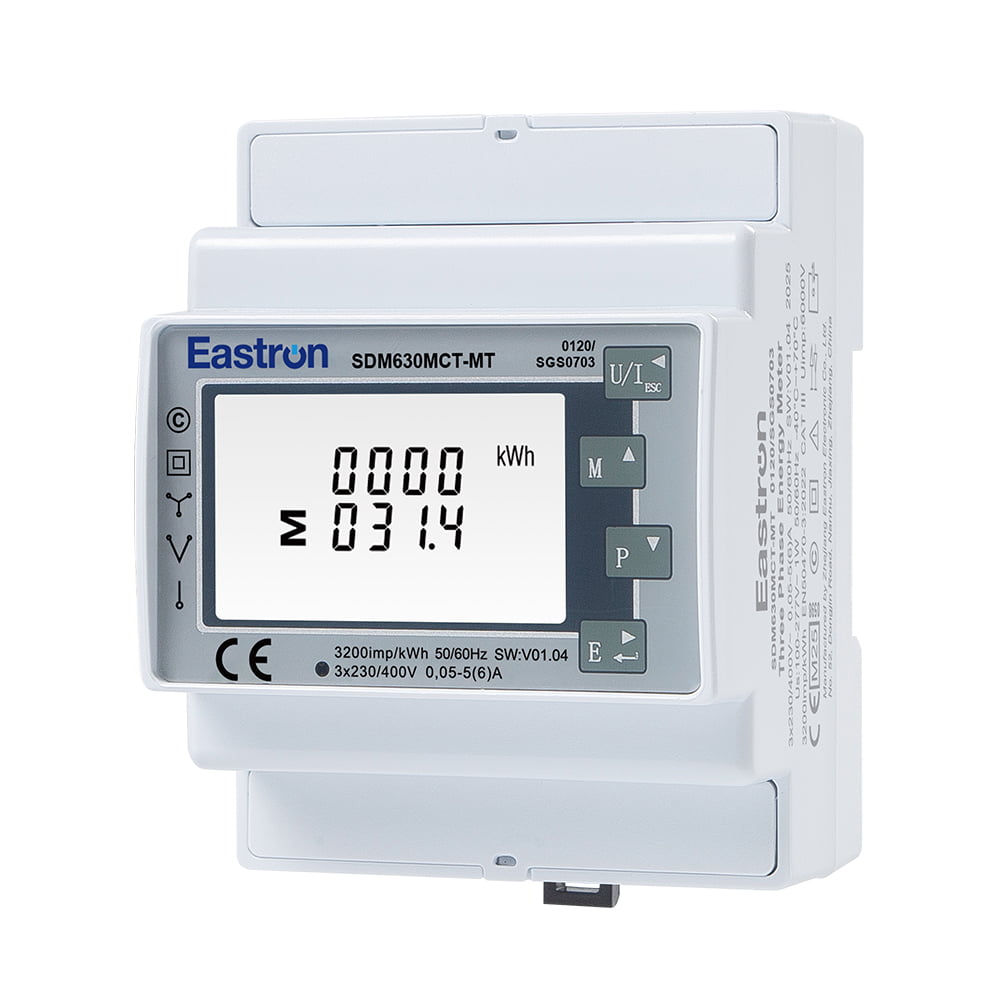
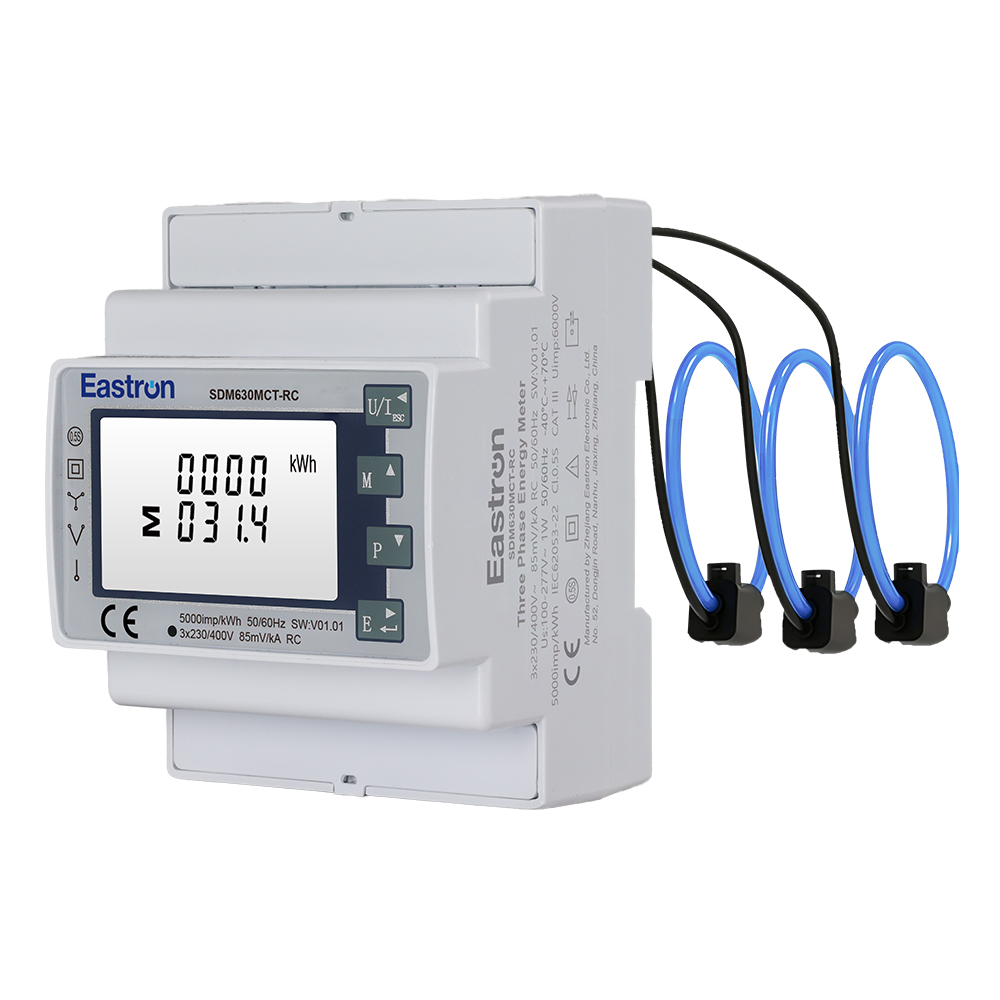
A smart panel meter is a microprocessor-based electronic instrument designed for mounting on control panels, switchgear, and machinery. Its primary function is to measure an electrical or process signal from a transducer (like a current transformer or thermocouple) and display the processed value on a digital readout (LCD or LED). The "smart" designation originates from its embedded intelligence, which enables programmable scaling, alarm setpoints, data logging, and bidirectional digital communication.
The operational workflow of a smart panel meter follows a sophisticated signal chain:
Input Conditioning: Raw signals from sensors (e.g., milliamp, millivolt, or high current/voltage) are first filtered and conditioned to remove noise.
Analog-to-Digital Conversion (ADC): A high-resolution ADC converts the conditioned analog signal into a digital value. The resolution (e.g., 16-bit, 24-bit) directly impacts measurement accuracy.
Microprocessor Processing: The core microcontroller applies user-configured scaling factors (e.g., translating mA to °C or MPa), performs calculations (like computing RMS values or totalizing energy), and drives the display.
Communication & Output: Processed data is made available via the display and transmitted through communication ports (RS-485, Ethernet) or output as analog retransmission or relay signals.
Unlike their analog predecessors, smart panel meters offer:
Digital Precision: Eliminate parallax errors and provide exact numerical readouts.
Configuration Flexibility: A single meter model can be programmed for multiple input types and ranges via software or front-panel buttons.
Data Integration: Serve as a node on industrial networks, feeding data to SCADA, PLCs, and energy management systems.
Smart panel meters are categorized by their primary measurement function. Understanding these types is crucial for proper selection.
| Meter Type | Primary Measured Variables | Common Applications |
|---|---|---|
| Power & Energy Meters | Volts (V), Amps (A), kW, kVAR, kVA, Power Factor (PF), kWh | Sub-metering, energy audits, load profiling, power quality monitoring in electrical distribution panels. |
| Process Meters | Temperature (°C/°F), Pressure (PSI/Bar), Flow, Level, Humidity | Process control in HVAC, water treatment, manufacturing; monitoring pressures in hydraulic/pneumatic systems. |
| Multifunction Meters | Combines electrical and process parameters. Often includes advanced power quality analysis (harmonics, transients). | Comprehensive system monitoring in data centers, industrial plants, and critical facilities. |
| Frequency & Speed Meters | Rotational Speed (RPM), Linear Speed, Frequency (Hz) | Monitoring motors, conveyors, generators, and rotating machinery. |
| Counters & Totalizers | Pulses, Units, Events | Production counting, batch control, flow totalization from pulse-output sensors. |
The value of a smart panel meter is defined by its feature set. Key capabilities to evaluate include:
Display Type: Large, high-contrast LCDs or bright LEDs for visibility. Touchscreen interfaces are becoming more common in high-end models.
Multi-Variable Display: Ability to cycle through or simultaneously show multiple parameters on one screen.
Universal Inputs: A single meter that accepts a wide range of voltage, current, resistance, and thermocouple/RTD signals reduces inventory complexity.
Programmable Analog Outputs: Retransmit the measured value as a standard 4-20mA or 0-10V signal for connection to legacy chart recorders or PLCs.
Relay Outputs (Alarm/Control): Programmable setpoints activate relays for alarms (over-temperature, under-voltage) or direct control functions (pump start/stop).
This is the cornerstone of "smart" functionality. Modern meters support a variety of industrial protocols:
Standard Serial: Modbus RTU over RS-485 is the most ubiquitous protocol, allowing daisy-chaining of multiple meters.
Industrial Ethernet: Modbus TCP/IP, EtherNet/IP, and PROFINET enable direct integration into high-speed plant networks and IIoT (Industrial Internet of Things) architectures.
Wireless Options: Integration of LoRaWAN, WirelessHART, or cellular modules (4G/5G) for remote monitoring in hard-to-wire locations.
Internal Data Logging: Onboard memory to record time-stamped measurements, essential for troubleshooting intermittent issues and trend analysis.
Advanced Power Metrics: Higher-end electrical meters provide harmonic distortion analysis (THD), demand profiling, and event capture for power quality investigations.
Selecting the optimal smart panel meter requires a systematic analysis of the application. Follow this decision framework:
What needs to be measured? (e.g., 3-phase power, temperature from a J-type thermocouple).
What is the required accuracy class? (e.g., ±0.5% of reading for billing-grade energy metering vs. ±1.0% for general monitoring).
What are the environmental conditions? (Panel mount IP rating, operating temperature range, presence of vibrations).
How will the data be used? Local display only? Sent to a PLC? Integrated into a cloud-based analytics platform?
What communication protocol is required by the host system? (Mandates Modbus TCP, EtherNet/IP, etc.).
Is future expandability a concern? Choose meters with extra I/O or protocol support.
Panel Cutout Dimensions: Must match the standard DIN sizes (e.g., 92mm x 92mm, 96mm x 48mm).
Power Supply: Common requirements are 85-265V AC/DC or 24V DC.
Sensor Compatibility: Ensure the meter's input specifications match the output of the connected transducer (e.g., a 5A CT output for an amp input, a 4-20mA pressure transmitter signal).
Look beyond the initial purchase price. Factor in:
Installation & Configuration Time: Meters with intuitive software and auto-configuration features reduce labor costs.
Maintenance & Calibration: Long-term stability and calibration intervals impact ongoing costs.
Scalability: A slightly more expensive meter with needed comms may prevent a full system upgrade later.
Smart panel meters deliver value across a vast spectrum of industries:
Industrial Manufacturing: Monitor machine health (motor currents, bearing temperatures), track energy consumption per production line (sub-metering), and ensure process parameters (oven temperature, line pressure) are within limits.
Commercial Building Management: Core component of Building Management Systems (BMS) for HVAC control, lighting load management, and whole-building energy analytics to comply with efficiency standards.
Water & Wastewater Treatment: Measure and totalize flow rates, monitor pump status and efficiency, and control chemical dosing based on process meter readings.
Renewable Energy Systems: In solar PV installations, meters monitor DC/AC side power, inverter performance, and net energy export to the grid.
Data Centers: Critical for Power Usage Effectiveness (PUE) monitoring, rack-level power metering, and ensuring redundancy in power distribution units (PDUs).
Electrical Safety: Always follow local electrical codes. De-energize panels during installation. Properly ground the meter and use correctly rated current transformers (CTs) with their secondary sides never left open-circuited.
Environmental Protection: Ensure the meter's Ingress Protection (IP) rating is suitable for its location (e.g., front-panel IP65 for washdown areas).
Wire Separation: Keep low-voltage communication wires (RS-485, Ethernet) separated from high-power AC lines to prevent electrical noise interference.
Parameter Setup: Use the front panel or, more efficiently, PC configuration software to set input types, scaling, display units, and communication addresses (crucial for Modbus networks).
System Integration Test: Verify data is correctly read by the SCADA/PLC/BMS software before final sign-off.
Regular Verification: Periodically compare meter readings against known standards or handheld calibrators.
Firmware Updates: Check the manufacturer's website for firmware updates that may add features or improve stability.
Preventive Replacement: Proactively replace meters in critical applications as they near the end of their recommended service or calibration cycle.
The next generation of smart panel meters is evolving into intelligent edge devices:
Enhanced Connectivity & Cloud Integration: Native support for MQTT and direct secure tunneling to cloud platforms (AWS IoT, Azure IoT) will become standard, simplifying IIoT deployment.
Embedded Edge Computing: Meters will perform more advanced analytics locally, such as predictive maintenance algorithms detecting motor winding failure from current signature analysis, sending only alerts and insights rather than raw data streams.
Advanced Visualization: High-resolution, color touchscreen displays will offer built-in graphing, charting, and dashboarding capabilities directly on the device.
Cybersecurity by Design: With increased connectivity, features like TLS/SSL encryption, user role management, and secure boot will be integral to protect critical infrastructure from cyber threats.
The smart panel meter has firmly established itself as the fundamental gateway for digitizing physical processes. Its role transcends simple measurement, encompassing data generation, local control, and network integration. By making informed choices based on accuracy requirements, communication needs, and application-specific features, engineers and facility managers can leverage these devices to unlock significant operational benefits: optimized energy consumption, predictive maintenance, improved process quality, and robust regulatory compliance. As Industry 4.0 and IIoT initiatives continue to mature, the smart panel meter will remain an essential, evolving component at the edge of the network—transforming analog operations into actionable intelligence for a more efficient and connected industrial future.
Your email address will not be published. Required fields are marked *
We develop and produce high performance electricity meters, power analyzers, current sensors, communication modules and management systems. China Custom Smart Meters Manufacturers and Factory
Eastron China (HQ) : NO 52, Dongjin Road, Nanhu, Jiaxing, Zhejiang, China
Eastron UK : Suite 1 Cornwallis House, Howard Chase, Basildon, UK
Eastron EU : Unit 3 Finglas Business Centre, Jamestown Road, Finglas, Dublin, Ireland
Copyright @ Eastron Electronic Co., Ltd. All rights reserved Electricity Meters Manufacturers