

 English
 Español
 Deutsch
 中文简体
中文简体
Product Consultation
Your email address will not be published. Required fields are marked *
Smart Meter FAQ (Part 3) | Certification, Installation, and Procurement: Addressing 5 Practical Application Issues
Sep 20,2026
National Quality Month | A Look Inside Eastron Electronic: Quality Embedded in Every Stage
Sep 20,2026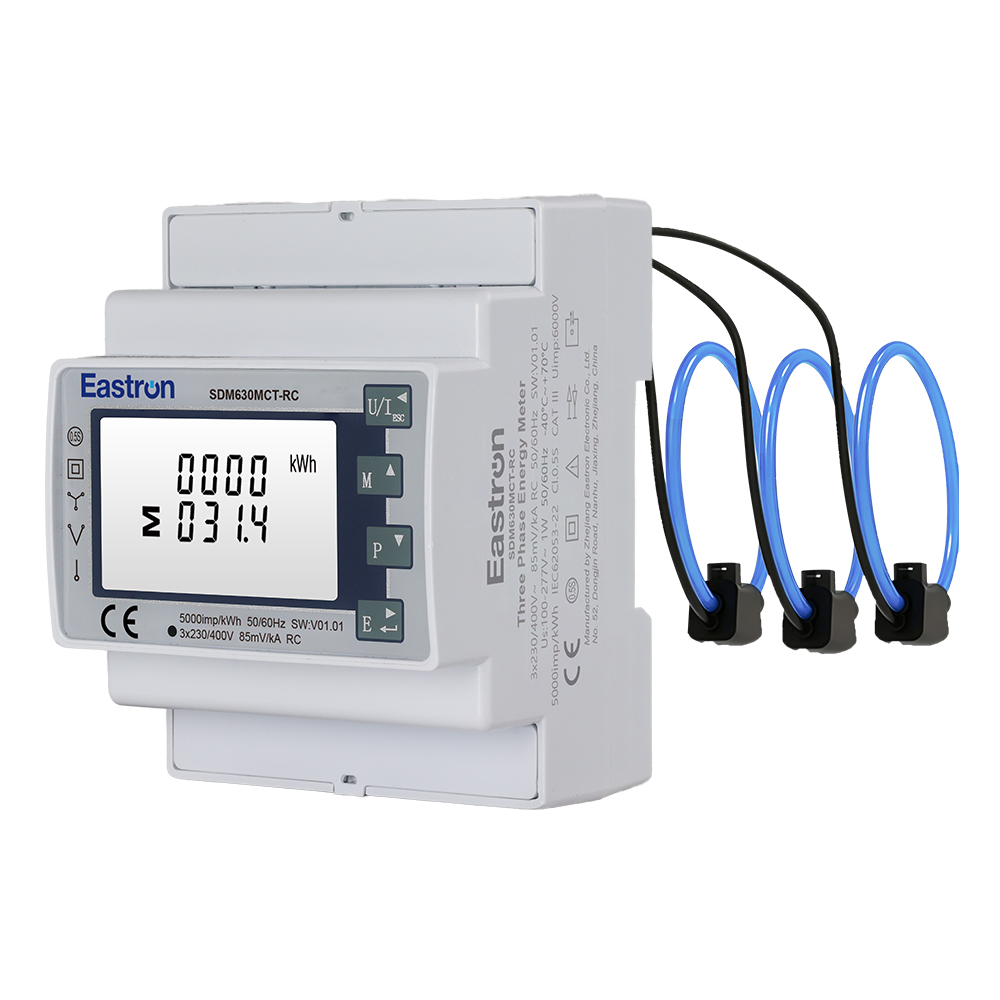
Multi-function Energy Meter: How to Choose the Right One for Billing and Monitoring
Sep 17,2026In the previous two FAQ installments, we covered the fundamentals, selection criteria, and core functions of smart meters. However, when it comes to smart meter projects, customers also prioritize certification requirements, installation methods, and system compatibility alongside metering capabilities and communication technologies. These factors—particularly in the European market, renewable energy projects, and retrofit applications—often directly determine whether a product can be successfully deployed.
In this installment, we address five common questions regarding smart meter applications, focusing on certification, installation, and procurement.
Q: How should a CT (Current Transformer) be selected?
A: A CT is a crucial component of CT-type smart meters, primarily used to step down high currents into low-current signals that the meter can measure.
When selecting a CT, the first step is to determine the primary rated current. It is generally necessary to select a standard current rating that accounts for the maximum on-site load current while allowing for a safety margin; this prevents long-term operation at full load, which could compromise measurement stability.
Next, consider the CT's output specifications. Common secondary output ratings include 5A, 1A, and 40mA. While 5A and 1A CTs are widely used in traditional power distribution metering, 40mA output CTs—characterized by their compact size and low power consumption—are better suited for space-constrained smart devices and embedded applications.
Additionally, factors such as accuracy class, mounting method, and aperture size (inner hole diameter) influence measurement performance. In high-current applications—such as industrial and commercial energy storage or industrial power distribution—selecting the appropriate CT specification is key to ensuring the measurement accuracy of the smart meter.
Q: What is MID certification, and why do smart meter projects in Europe prioritize it?
A: The MID (Measuring Instruments Directive)—specifically Directive 2014/32/EU—is a set of EU regulatory requirements governing measuring instruments. For electricity meters used in trade settlement or commercial metering, MID certification is a crucial compliance requirement for entering the European market.
Unlike general energy monitoring, applications involving electricity trading and billing demand higher standards of measurement accuracy and reliability. Meters holding MID certification must meet relevant EU standards for metrological performance, ensuring that measurement results are legally recognized.
In the European market, smart meters are widely used in residential energy management, photovoltaic systems, EV charging, and commercial metering; consequently, MID certification has become a key factor for customers during the procurement process.
Selecting MID-certified smart meters helps projects better comply with local regulations and reduces risks associated with future deployment.
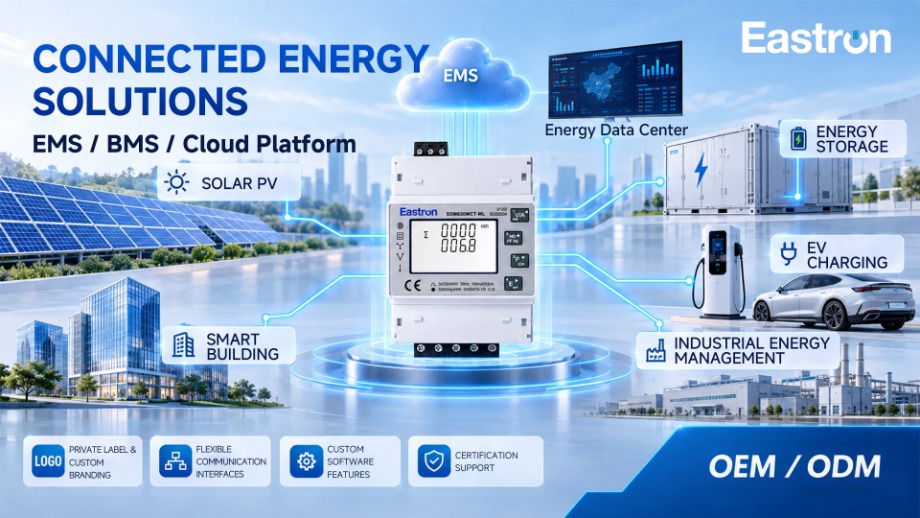
Q: Can smart meters connect to EMS, BMS, or energy management platforms?
A: Yes. Smart meters serve as key data acquisition devices within energy management systems.
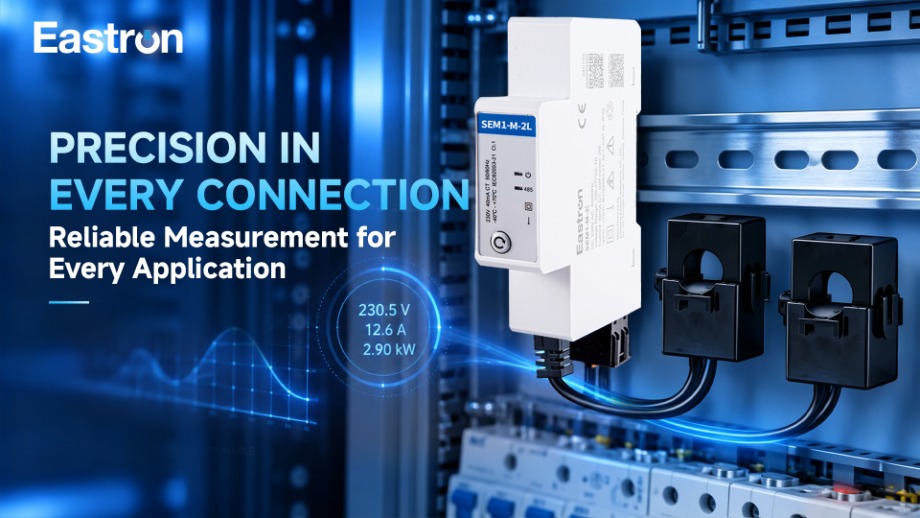
Using communication methods such as RS485, Ethernet, or Wi-Fi, smart meters can transmit real-time data—including voltage, current, power, and energy consumption—to an EMS (Energy Management System), BMS (Building Management System), or cloud-based platform.
For instance, in industrial and commercial energy storage projects, an EMS requires real-time data on energy flow between batteries, loads, and the grid; smart meters provide accurate metering data to facilitate energy analysis and operational control. In commercial buildings, installing smart meters across various zones enables zone-specific energy consumption tracking, helping managers understand electricity usage patterns in different areas.
Therefore, when selecting equipment, it is essential to verify system communication protocols and interface requirements beforehand to ensure seamless integration between the meter and the existing platform.
Q: Does installing a smart meter require a power outage?
A: Whether a power outage is required for installation depends primarily on the meter type and the installation method.
For direct-connected meters, the load current flows directly through the meter's internal circuitry; consequently, the main circuit usually needs to be disconnected during installation or replacement, potentially necessitating a power outage.
In contrast, CT-type (current transformer) smart meters acquire current signals via external current transformers, meaning the main power cables do not need to connect directly to the meter itself. This allows for greater installation flexibility and can reduce downtime during retrofit projects—a key reason why CT-type meters are widely used in factories, commercial buildings, and energy storage projects.
However, actual installation must always be carried out in accordance with the site's electrical design and safety regulations to ensure safety during the process.
Q: Do smart meters support OEM/ODM customization?
A: With the continuous development of new energy projects, the demands for smart meters from clients across various industries have become increasingly diverse.
Beyond standard products, some clients may require customization for specific applications—such as tailored aesthetics and branding, adjustments to communication interfaces, modifications to current ranges, software feature development, or compliance with specific certification requirements.
For equipment manufacturers, system integrators, and energy platform providers, smart meter solutions that support OEM/ODM services allow for better alignment with project requirements and ensure a higher degree of compatibility between the product and the specific needs of the project.
When selecting a supplier, it is important to consider not only the technical specifications of the meters but also the supplier's capabilities regarding product development, certifications, and long-term technical support.
Selecting a smart meter involves a comprehensive assessment—ranging from fundamental concepts and core technologies to certification and procurement—that takes into account application scenarios, metering requirements, communication methods, and project standards. For projects involving photovoltaics, energy storage, EV charging, and industrial energy management, choosing the right smart meter is crucial; it impacts not only data accuracy but also the overall performance of the energy management system.
We hope this three-part "Smart Meter FAQ Series" helps users quickly gain an understanding of smart meters and make informed selection decisions for their projects. If you have any questions regarding smart meters, please feel free to leave a comment or contact us directly.
Your email address will not be published. Required fields are marked *

We develop and produce high performance electricity meters, power analyzers, current sensors, communication modules and management systems.
Address:NO. 52, Dongjin Road, Nanhu, Jiaxing, Zhejiang, China
Copyright @ Eastron Electronic Co., Ltd. All rights reserved
