

 English
 Español
 Deutsch
 中文简体
中文简体
Product Consultation
Your email address will not be published. Required fields are marked *
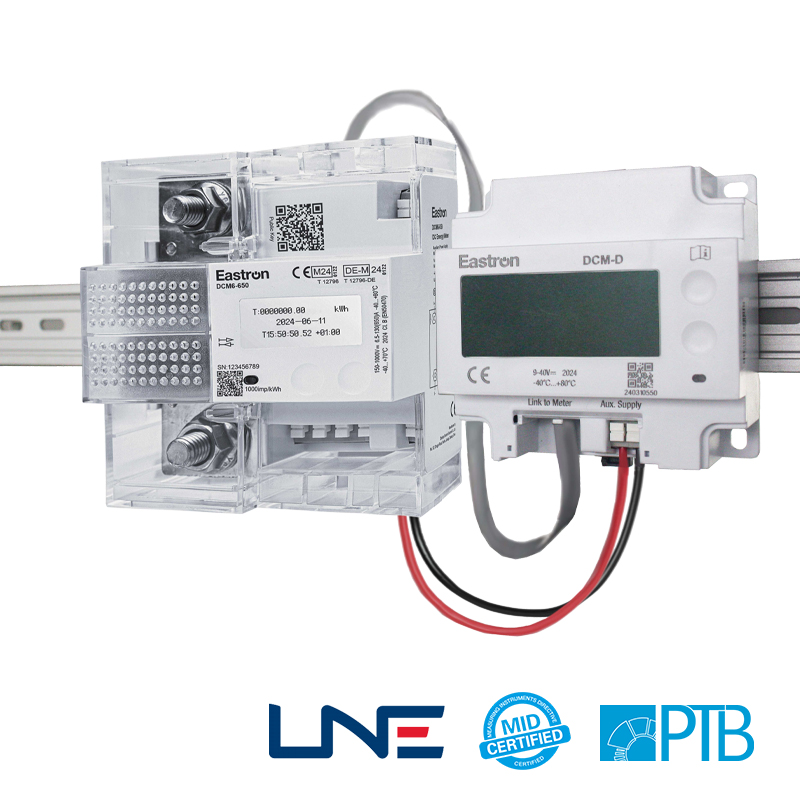
DIN Rail Energy Meter Guide: Types, Accuracy, Communication and Selection
Sep 09,2026
2026 National "Quality Month" | Eastron Electronics Officially Launches Quality Month
Sep 04,2026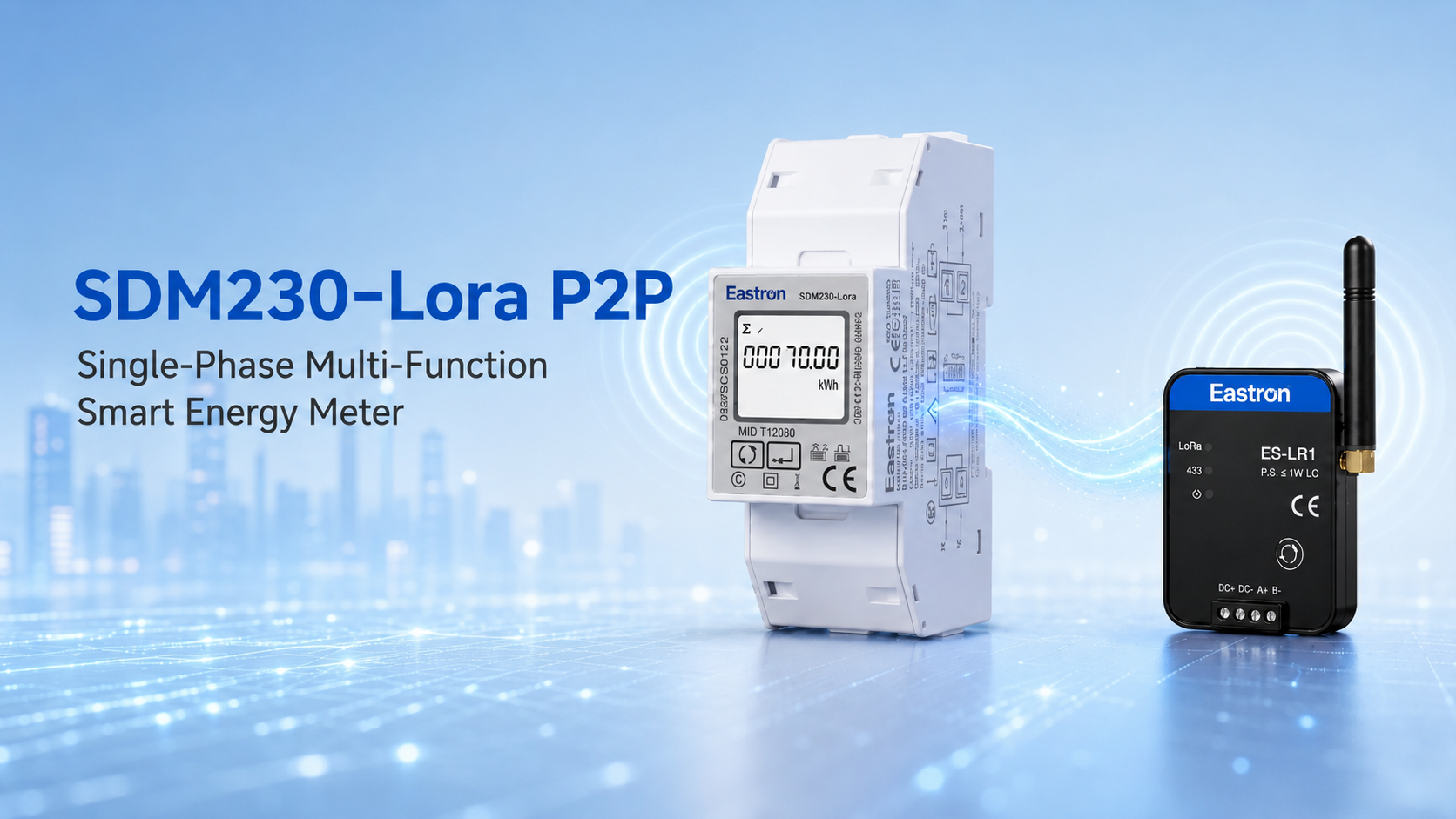
Gateway-Free, Simplified Connectivity | Eastron SDM230-Lora P2P Ushers in a New Era of Wireless Energy Monitoring
Sep 04,2026Content
A DC energy meter is a measurement device designed to monitor direct current electrical systems, tracking voltage, current, power, and cumulative energy consumption over time. Unlike traditional AC energy meters used in standard household and commercial grids, DC meters are purpose-built for systems where alternating current conversion either does not occur or occurs after the point of measurement. This makes them essential in applications such as solar power systems, battery storage installations, electric vehicle charging infrastructure, and telecommunications power systems, where accurately tracking DC-side energy flow is critical for performance monitoring, billing, and system diagnostics.
As DC-based technologies continue to expand across renewable energy and electric mobility sectors, the demand for accurate, reliable DC metering has grown accordingly. Understanding how these meters work, what specifications to prioritize, and how they differ across various applications can help engineers, installers, and facility managers select the right metering solution for their specific needs.
DC energy meters rely on continuous sampling of voltage and current values, multiplying them together at each sampling interval to calculate instantaneous power, then integrating that power over time to determine cumulative energy in kilowatt-hours. Because DC circuits do not have the oscillating waveform characteristics of AC power, measurement is generally more straightforward, though it still requires careful sensor selection to maintain accuracy across varying load conditions.
Most DC energy meters use either a shunt resistor or a Hall effect sensor to measure current. Shunt-based meters measure the voltage drop across a precision resistor placed in series with the circuit, offering high accuracy but requiring direct electrical connection to the current path. Hall effect sensors measure the magnetic field generated by current flow without requiring a direct connection, making them suitable for higher current applications where inserting a shunt resistor would introduce excessive power loss or heat generation.
Voltage measurement in DC systems typically uses a resistive voltage divider network to scale down the system voltage to a level the meter's internal circuitry can safely process. Meters intended for high-voltage DC applications, such as solar arrays operating at 600V to 1500V, require voltage dividers rated for these elevated levels with appropriate isolation to protect the measurement circuitry.
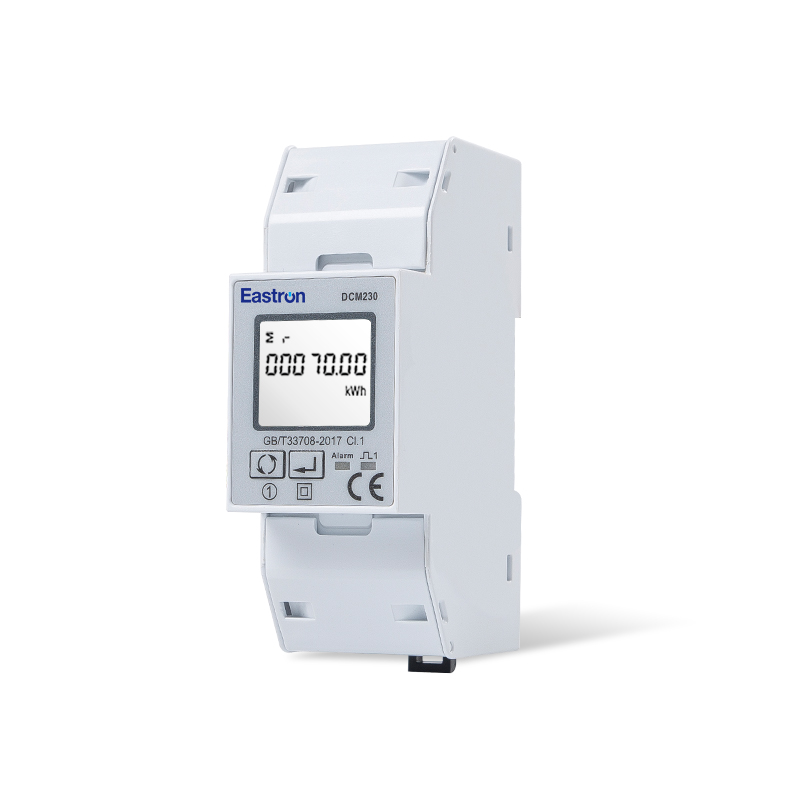
Choosing between shunt-based and Hall effect current sensing depends heavily on the current range, required accuracy, and installation constraints of the specific application.
| Sensing Method | Typical Accuracy | Best Suited Current Range |
| Shunt Resistor | 0.2% to 0.5% | Low to medium current (up to 200A) |
| Hall Effect Sensor | 0.5% to 1.5% | Medium to high current (100A to 2000A+) |
Shunt-based meters generally offer better accuracy at lower current levels but introduce a small voltage drop and generate heat proportional to current squared, which becomes problematic at higher amperages. Hall effect meters avoid this power loss entirely since they measure current without direct electrical contact, making them the preferred choice for high-current applications like large battery banks or utility-scale solar arrays.
DC energy meters serve distinct purposes depending on the industry and system they are integrated into, each with specific measurement priorities.
In solar installations, DC energy meters are often placed between the solar array and the inverter to measure raw DC output before conversion losses occur. This allows system owners to compare actual panel performance against expected production, helping identify underperforming strings or panels that may need maintenance or replacement.
Battery energy storage systems use DC meters to track charge and discharge cycles, providing data essential for calculating state of charge, monitoring battery health, and verifying that the battery management system is operating within expected parameters. Bidirectional metering capability is particularly important here, since batteries both draw and supply power depending on operating mode.
DC fast charging stations rely on precise energy metering for billing purposes, since customers are typically charged based on the exact amount of energy delivered to their vehicle. Meters used in this application often require certification to legal metrology standards to ensure billing accuracy meets regulatory requirements.
Telecom facilities running on -48V DC power systems use energy meters to track power consumption across multiple equipment racks, helping facility managers identify inefficient equipment and allocate power costs across different departments or tenants sharing the same DC power plant.
Selecting the right DC energy meter requires reviewing several technical specifications relevant to the intended application.
Communication protocol compatibility deserves particular attention during system design, since a meter that cannot integrate with an existing building management system or monitoring platform creates additional complexity and cost during installation, often requiring a protocol converter or replacement of the originally selected meter.
Proper installation significantly affects long-term measurement accuracy. Shunt resistors should be mounted with adequate ventilation to dissipate generated heat, and connection points should be torqued to manufacturer specifications to prevent resistance changes from loose connections over time, which can introduce measurement drift.
Periodic calibration verification, typically performed by comparing meter readings against a certified reference instrument, helps confirm that accuracy remains within specification as the installation ages. This is especially important for meters used in billing applications, where regulatory requirements often mandate calibration checks at defined intervals to maintain legal compliance and ensure customers are billed accurately for energy consumed.
Your email address will not be published. Required fields are marked *

We develop and produce high performance electricity meters, power analyzers, current sensors, communication modules and management systems.
Address:NO. 52, Dongjin Road, Nanhu, Jiaxing, Zhejiang, China
Copyright @ Eastron Electronic Co., Ltd. All rights reserved
