

 English
 Español
 Deutsch
 中文简体
中文简体
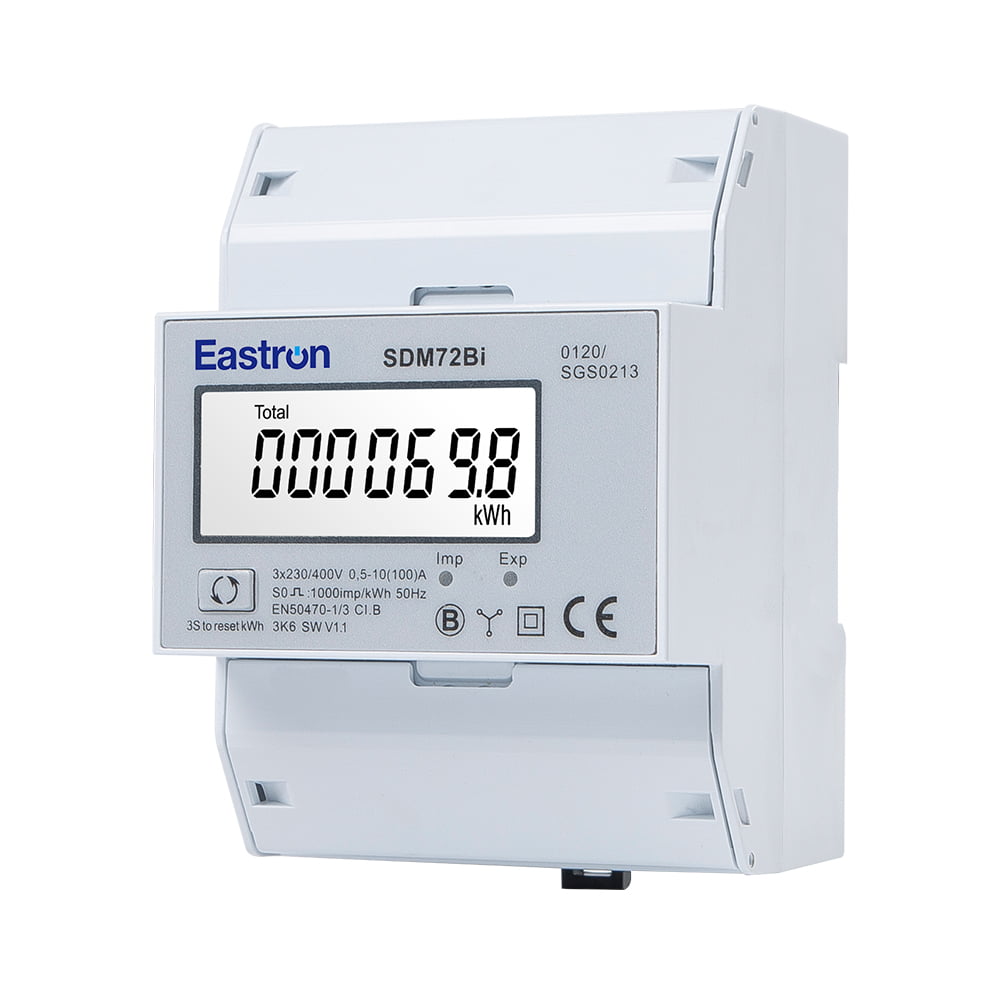
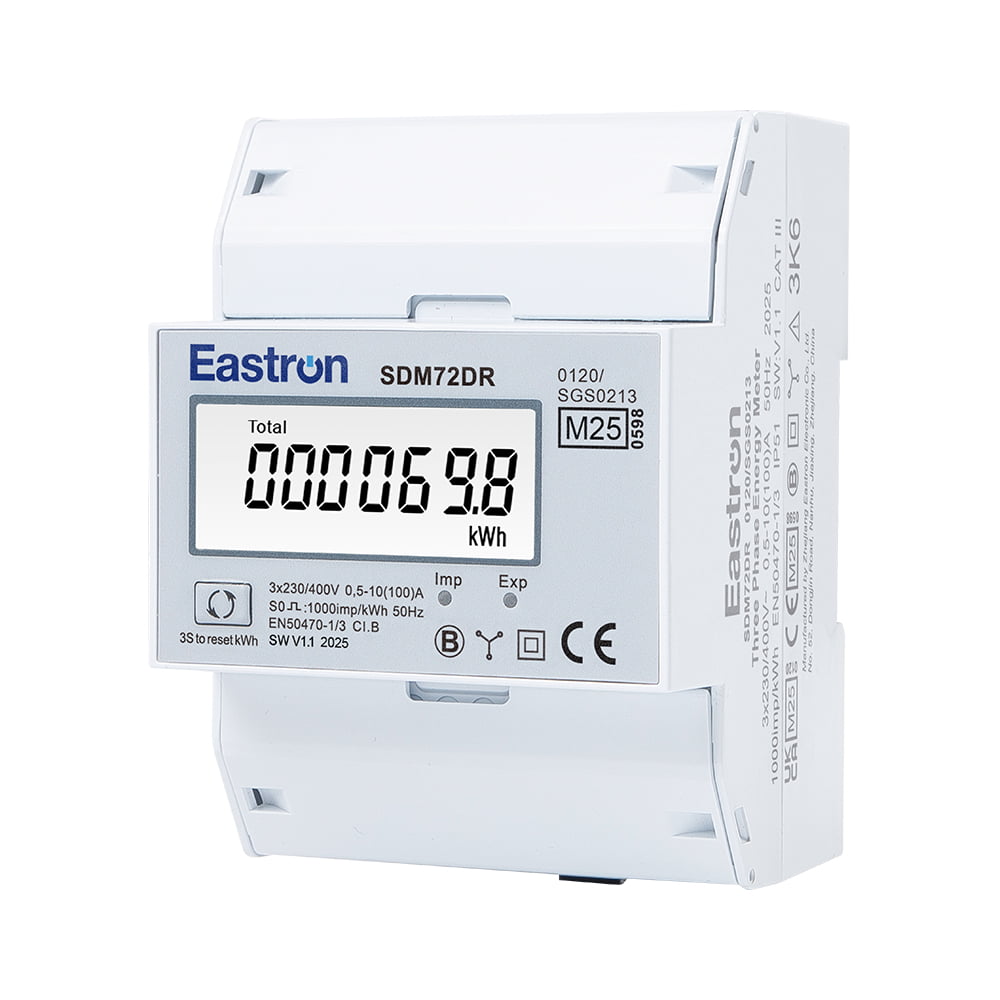
Product Consultation
Your email address will not be published. Required fields are marked *
Content
An electronic KWh meter measures the total amount of electrical energy consumed by a load over time, expressed in kilowatt-hours. One kilowatt-hour equals one kilowatt of power drawn continuously for one hour -- the fundamental billing unit for electricity worldwide. Unlike the electromechanical disc meters that preceded them, electronic KWh meters use solid-state sampling circuits to continuously measure voltage and current, calculate instantaneous power, and integrate it over time to produce an accurate cumulative energy reading.
The shift from mechanical to electronic metering has been one of the more consequential infrastructure transitions in electrical engineering over the past three decades. Electronic meters offer accuracy classes as tight as 0.2S under IEC 62053 standards, compared to the 1.0 to 2.0 class typical of older induction-type meters. They also support features -- time-of-use (TOU) recording, tamper detection, remote communication, reactive energy measurement, and power quality logging -- that are simply impossible in a mechanical design.
For utility companies, the difference translates directly to reduced technical losses and more accurate billing. For industrial and commercial users, it enables energy auditing, demand management, and carbon reporting with the granularity those applications require.
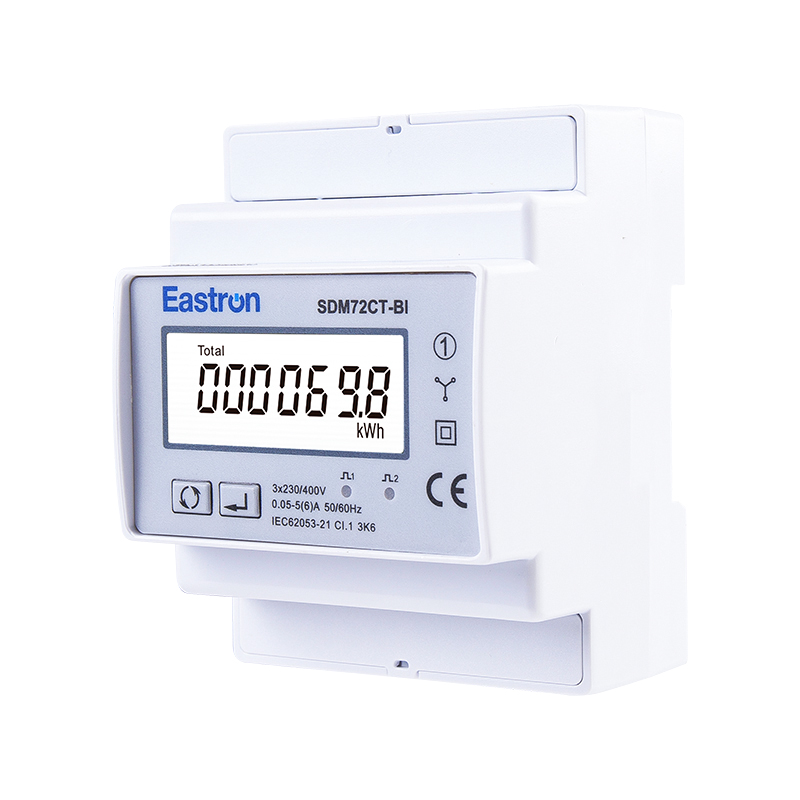
Every electronic KWh meter -- regardless of phase configuration or application class -- shares the same fundamental measurement architecture. Understanding this chain clarifies why certain specifications matter in procurement and why meter accuracy is sensitive to specific installation conditions.
The meter samples the line voltage and the current flowing through each phase at high frequency -- typically 2,000 to 8,000 samples per second per channel in modern designs. Voltage is sensed through a resistive divider network connected directly to the line. Current is sensed either through a shunt resistor (direct connection, suitable for lower current ratings) or through a current transformer (CT) that steps down high line currents to a standard signal level of 5A or 1A at the meter input terminals.
A dedicated energy measurement IC -- such as the ADE series from Analog Devices or equivalent -- multiplies the instantaneous voltage and current samples to compute instantaneous real power. This multiplication is performed digitally after analog-to-digital conversion, eliminating the phase errors and temperature drift that affected electromechanical designs. The instantaneous power values are summed and accumulated over time to produce active energy (KWh), and the same process applied to reactive components yields reactive energy (KVARh).
The accumulated energy value drives both the meter's display and its pulse output -- a standardized LED or open-collector pulse output that emits a defined number of pulses per KWh, allowing external data loggers or sub-metering systems to read energy consumption without accessing the meter's communication port.
Most electronic KWh meters present data on an LCD display showing cumulative energy and, depending on the feature set, instantaneous voltage, current, power factor, and demand. Non-volatile memory retains accumulated energy readings through power outages without battery backup. Communication options range from optical IR ports (compliant with IEC 62056-21) for local readout to RS-485 Modbus RTU, M-Bus, DLMS/COSEM over GPRS, or PLC for AMI (Advanced Metering Infrastructure) integration.
| Feature | Basic Electronic Meter | Advanced / Smart Meter |
|---|---|---|
| Active energy (KWh) | Yes | Yes |
| Reactive energy (KVARh) | Optional | Yes |
| Time-of-use (TOU) tariffs | No | Yes |
| Tamper detection | Basic | Multi-event logging |
| Remote communication | IR / RS-485 | GPRS / PLC / RF / NB-IoT |
| Load profile recording | No | Yes (interval data) |
| Power quality parameters | No | THD, sag/swell events |
A single phase electronic KWh meter measures energy consumption on a two-wire (line and neutral) or occasionally three-wire (line, neutral, ground) single-phase supply. This is the standard configuration for residential electricity service in most of Asia, Africa, Latin America, and parts of Europe, and for small commercial loads drawing power from a single-phase branch circuit.
Single phase meters are typically rated for 230V nominal (with an operating range of 176V to 266V to accommodate voltage fluctuation on distribution networks) and a basic current (Ib) of 5A, 10A, or 20A. The maximum current rating (Imax) defines the highest continuous load the meter can handle without accuracy degradation -- commonly 60A, 80A, or 100A in direct-connection designs.
IEC 62053-21 governs class 1 and class 2 active energy meters, while IEC 62053-22 covers class 0.2S and 0.5S precision meters. For utility billing applications, class 1 (plus or minus 1% error at reference conditions) is the standard minimum. For revenue-grade sub-metering in tenant billing or solar PV net metering, class 0.5S or class 1 with extended temperature range is typically specified.
Physical form factors for single phase meters follow standardized DIN rail mounting (common in distribution boards across Europe and Asia) or flush-mount and surface-mount enclosures for panel integration. Polycarbonate or ABS enclosures rated IP54 or IP65 are standard for meters installed in exposed or semi-outdoor locations.
Single phase electronic KWh meters are deployed across residential utility metering, multi-tenant energy sub-metering (apartment blocks, student accommodation, serviced offices), prepayment metering systems, EV charging point energy measurement, and solar net-metering applications. The common thread is a two-wire supply serving a load up to the meter's Imax rating without the complexity or cost of three-phase metering infrastructure.
A three phase electronic KWh meter measures energy consumption across a balanced or unbalanced three-phase supply -- the standard power distribution configuration for industrial facilities, commercial buildings, large HVAC systems, motors, and any load drawing more power than a single-phase circuit can economically supply. Three-phase metering is significantly more complex than single-phase metering because the meter must independently sample all three voltage-current pairs and correctly sum their contributions to total energy, even when the phases are unbalanced.
Three-phase systems are wired in two primary configurations, and the meter selected must match the installation:
Three phase meters are available in two connection types, and selecting the wrong type is one of the most common specification errors in industrial metering projects:
For high-voltage metering (above 1kV), both voltage transformers (VTs) and CTs are used, and the combined VT x CT multiplier can reach several thousand. Metering errors introduced by CT burden mismatch, CT saturation under fault conditions, or incorrect ratio programming represent the dominant source of revenue loss in industrial energy billing.
Three phase electronic KWh meters for industrial and commercial applications typically measure a significantly broader parameter set than single phase residential meters. Standard parameters in a modern multifunction three phase meter include:
Three phase meters for industrial applications are almost universally specified with at least one digital communication interface. RS-485 Modbus RTU is the most widely used protocol for SCADA and BMS integration, given its simplicity, robustness in electrically noisy environments, and near-universal support in building automation systems. Ethernet with Modbus TCP or DLMS/COSEM over TCP is increasingly specified for meters at higher-voltage metering points or where integration with enterprise energy management systems is required.
Pulse outputs (S0 interface per EN 62053-31) remain common for legacy integration with sub-metering controllers and energy management platforms that predate serial communication support.
| Parameter | Single Phase Meter | Three Phase Meter |
|---|---|---|
| Supply configuration | 2-wire (L + N) | 3-wire or 4-wire (3P3W / 3P4W) |
| Typical load range | Up to approx. 23kW (100A at 230V) | Up to thousands of kW (CT-operated) |
| Typical application | Residential, small commercial, sub-metering | Industrial, large commercial, utility feeders |
| Measurement elements | 1 | 2 or 3 (configuration-dependent) |
| Phase imbalance measurement | Not applicable | Yes (per-phase readings) |
| Reactive / apparent energy | Optional | Standard in most models |
| IEC accuracy standard | IEC 62053-21 / 62053-22 | IEC 62053-21 / 62053-22 / 62053-23 |
| CT connection option | Rare | Standard for high-current installations |
The supply configuration at the installation point is the primary determinant of meter type -- a single phase load cannot be metered with a three phase meter, and a three phase load metered with only a single phase meter will record only a fraction of the actual consumption. Beyond that hard constraint, the selection criteria that most frequently drive specification decisions are the accuracy class required by the tariff or sub-metering application, the maximum load current relative to the meter's direct-connection rating, the communication protocol needed for system integration, and whether reactive energy or power quality data is required alongside basic KWh recording.
Electronic KWh meters for utility revenue metering must comply with national legal metrology requirements in addition to IEC technical standards. In most markets, this means type approval by the national metrology authority and periodic re-verification at intervals defined in local regulations. Procurement teams should verify that the meter type holds valid type approval for the country of installation -- a meter compliant with IEC 62053 but lacking local metrology approval cannot legally be used for billing purposes in most jurisdictions.
For sub-metering applications (tenant billing, EV charging, solar PV, industrial cost allocation) where the meter is not used for utility revenue collection, type approval requirements are often less stringent or absent, but accuracy class documentation and calibration traceability are still recommended for audit and dispute resolution purposes.
Additional certifications commonly specified in procurement include:
Lead time, spare parts availability, and manufacturer support for firmware updates are practical procurement factors that carry particular weight for utility-scale deployments where meters may remain in service for 15 to 20 years. Selecting a meter platform with an active installed base and documented AMI upgrade path reduces the risk of stranded assets as smart metering mandates expand across most major markets over the coming decade.
Your email address will not be published. Required fields are marked *

We develop and produce high performance electricity meters, power analyzers, current sensors, communication modules and management systems.
Address:NO. 52, Dongjin Road, Nanhu, Jiaxing, Zhejiang, China
Copyright @ Eastron Electronic Co., Ltd. All rights reserved
